.jpg)


.jpg)

 English daily published in Bengaluru & Doha

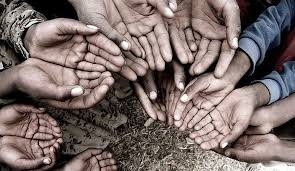
A just equitable world, still a far dream
‘Overcoming poverty is not a gesture of charity. It is an act of justice. It is the protection of a fundamental human right, the right to dignity and a decent life,’ remarked Nelson Mandela, former South African President and the iconic fighter against the hated practice of Apartheid.
His prophetic words no doubt ring true at a time when the United Nations, in a grim report, warns that at the current rate of global progress, 575 million people will still be living in extreme poverty and 84 million children won’t be going to school in 2030 – a full seven years from now.
And nothing would be more depressing for those who dream of a just and equitable world than the UN prediction that it will take 286 years to reach equality between men and women!
The ambitious goals for 2030 set by world leaders include ensuring that hunger is eradicated and nobody lives on less than USD 2.15 a day.
And as UN SecretaryGeneral Antonio Guterres said in his foreword to the report, “Failure to make progress means inequalities will continue to deepen, increasing the risk of a fragmented world.”
It is a grim reminder to the world that despite all the mind-boggling technological advancements we have witnessed, a good proportion of the world population continues to wallow in poverty.
The Covid pandemic no doubt has taken the world many years backward and what has exacerbated the situation is the never-ending conflict in Ukraine which has disrupted oil and food supplies.
The UN report also states that the pandemic saw the largest decline in childhood vaccinations in three decades, an increase in tuberculosis and malaria deaths, and learning losses in 80 per cent of the 104 countries studied.
To add to the woes of the poorest, food prices are galloping like never before. So what ails the modern world where digital tools have helped achieve immense success in doubling and tripling food yields, formulate drugs for almost every conceivable ailment and enabled us explore new frontiers in the universe?
There are reports that 10 per cent of the world’s population owns 76 per cent of its wealth and that is a grim pointer to the fact that the dream of an equitable society no longer ranks high on the priorities of Governments across the globe.
In India itself, it is the dream of a 5 trillion dollar economy which our leaders keep harping on whether people are able to afford basic necessities like food grains and vegetables to fill their bellies or not. And across the world, there is a migrant crisis growing with hapless citizens from lesser endowed nations trying to gain entry to the developed world risking their lives, with many drowning in the seas.
There is no doubt a dire need to reset our goals and make sure human values remain at the core of our developmental philosophy.
A humanistic world where basic needs like jobs, food and housing remain our top priorities, is a dream every right-thinking individual should persevere to achieve. And that calls for empathy for fellow beings and a burning desire for liberty and justice.
As John Lewis once wrote, ‘When you see something is not right, not fair, not just, you have to speak up. You have to say something; you have to do something.’ And that’s no impossible dream.
.jpg)
.jpg)
.jpg)
.jpg)
.jpg)
.jpg)