.jpg)


.jpg)

 English daily published in Bengaluru & Doha

Paying for neglect of environment
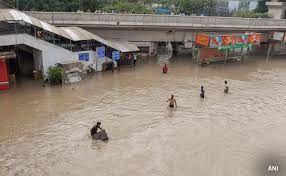
Scary visuals emanating from the deluge suffered by several states in north India suggest that Himachal Pradesh seems to have borne the brunt of the devastation caused by the torrential rains.
Ever since the monsoon broke over the Indo-Gangetic plains on June 20, the state had over 41 landslides, 29 flashfloods and a cloud-burst.
Of these, fourteen landslides and 10 flashfloods were reported during the last one week itself. Around 100 people have lost lives, nearly 700 roads have been blocked, seven major bridges have collapsed and countless buildings have suffered irreparable damage.
Hundreds of vehicles have been washed away and have been seen tumbling down the streams. Several hundreds more have been rendered defunct following submergences in swirling waters.
Crop and livestock losses may take some time to be computed. While schools and offices are closed, it is feared that prices of essential commodities would be shooting through the roof as freight movement has been severely affected in the wake of national highways being paralysed.
Pilgrims and tourists have been stranded at several tourism sites and sacred places belonging to Hindus and Sikhs.
At least 785 water schemes, including the one supplying water to capital Shimla, have been rendered defunct as flow of silt has turned the water turbid and thereby unfit for drinking. If reports are to be believed, Beas river has broken a 75-year old record of flooding.
Indeed, the relentless rains had had their role in the deluge and destruction. But viral images of the forest debris descending down hills suggest that much of the damage owes itself to causes that are the outcome of human intervention with nature.
The thoughtless expansion of tourism infrastructure has been a bane with the ecology of the State which has been a victim of land use change and erosion caused by deforestation which have destabilized the hill slopes, and also encroachment of banks of swift flowing rivers.
No wonder that massive edifices of hotels have been collapsing like house of cards. In several cases the rivers and the floodplains were blocked with buildings and forest debris. The State’s State of the Environment Report for 2022 bears tell-tale evidence of what is being witnessed now.
The Report compiled by the Dept. of Environment, Science and Technology had pointed out that about 58.36% of the State’s land is subjected to intense soil erosion, most of which is located in the Himalayas with Himachal being situated in environmentally fragile and ecologically vulnerable zones.
Linkages between removal of vegetation and soil erosion and land subsidence and landslides are well known.
While the National Disaster Relief Force (NDRF) and the Himachal Government have left no stone unturned in matters of rescuing the affected people, the state is in need for recuperation from what is called ‘savagery of tourism’ which has led to huge relaxation of environmental norms.
A policy overhaul is the need of the hour where regulatory norms would need to be looked at immediately after the authorities return from their duties of managing the current situation.
.jpg)
.jpg)
.jpg)
.jpg)
.jpg)
.jpg)