.jpg)


.jpg)

 English daily published in Bengaluru & Doha

B’luru’s civic woes: Need fresh stock taking
A report in this daily’s January 1, 2024 issue highlights the mounting civic woes of Bengaluru which today boasts of an international repute for being a tech-hub.
Twenty-five years after the Bangalore Agenda Task Force (BATF) was set up during the reign of chief minister S. M. Krishna, the city is begging for a review of the progress achieved in the quarter century and new challenges that stare into its eyes.
The report has summed up a few of them even as the city’s population has risen by at least 45 per cent during the intervening period.
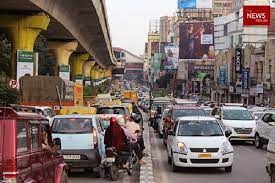
Chief among these are mounting piles of garbage, clogged traffic arteries, noise pollution, vanishing footpaths, disappearing greenery and waterbodies.
Even as the common citizen is the primary victim of the life that has turned perilous due to negligence in maintenance of the infrastructure, the city did witness some happy breakthroughs during the period.
A brash new international airport has linked the city to all the highly sought after international destinations.
The Namma Metro network has been operationalised over 74 km network, at least 30 kms more than the originally planned. Another 80 km network is under construction.
Tendersure has smoothened mobility considerably in the CBD areas of the city. All these bear the testimony that where there is a will, there is a way.
The BATF did make a huge difference to the life of the citizens of the metropolis. But new challenges are calling for fresh stocktaking of the civic woes.
Inefficient garbage collection leaves nearly 25 per cent the squalor unpikced on the roads. Segregation of the waste at the household level has been rendered meaningless as garbage trucks mix them during their voyage to the landfills.
Scavengers complain of the plastic drums regularly being stolen from the trolleys parked near the garbage loading sites. Barely any safai karamchari can be seen using the gloves.
And above all, the total tonnage being picked from the city still remains pegged at 5,000 metric tons. Hasn’t the city’s burgeoning population added to the tonnage?
Around 2008 the city’s total area saw a massive rise to 712 sq. km with inclusion of 110 villages. The infrastructure in the added areas remains pathetic even as the city’s governing body BBMP has increased the number of wards from 198 to 243.
Roads and sewage network is conspicuous by absence. Lack of access provides the BBMP a ruse not to extend its services. The city’s water supply system operated by BWSSB provides piped water to barely 42% of the households leaving the netizens in added areas at the mercy of tanker mafia.
The total water supply remains constant at 1,440 million litres per day, a quantity that barely quenched the thirst of the population a decade ago. As of now, there is remote possibility of 110 villages appearing on the BWSSB’s network in foreseeable future.
City’s environment has taken the worst hit due to maniacal race to expand the urban area of Bengaluru. A 2018 inventory of water bodies by the Environmental Management and Policy Research Institute (EMPRI) revealed that of the 1,521 water bodies in the metropolitan area, just 684 remain.
An IISC study too had pointed out a whopping 58% reduction in the city’s wetlands between 1973 and 2007. Above all, the city’s civic body remains absent since it exhausted its elected term in 2020.
It will be imperative for the Siddramaiah Government to initiate a fresh stocktaking of the civic infrastructure in the face of humongous growth in population, commensurate growth in private vehicles, new mobility issues and induction of villages into the city’s territory
.jpg)
.jpg)
.jpg)
.jpg)
.jpg)
.jpg)