.jpg)


.jpg)

 English daily published in Bengaluru & Doha


A cause worth it: Women who joined hands to fight for Bilkis
NT Correspondent
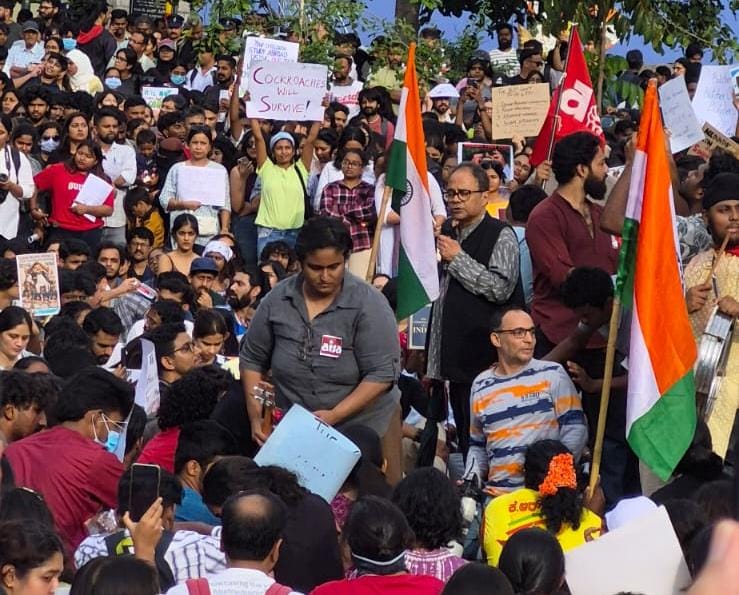
Bengaluru: There is always a story behind a story and in the Bilkis Bano case, it is of three women - a retired Lucknow University professor Roop Rekha Verma, CPI (M) leader Subhashini Ali, and journalist Revati Laul, who fought together for the gangrape victim by filing a public Interest Litigation (PIL) challenging the remission granted to the 11 convicts in the case.
In a big victory for them, the Supreme Court on Monday nullified the remission granted by the Gujarat government to the 11 convicts and ordered that they must surrender within two weeks.
"I have wept tears of relief. I have smiled for the first time in over a year and a half. I have hugged my children. It feels like a stone the size of a mountain has been lifted from my chest and I can breathe again. This is what justice feels like," Bilkis Bano, the woman who was gang-raped and whose seven family members were murdered in the Gujarat riots, said while reacting to the verdict.
Subhashini Ali had personally met Bilkis Bano at a relief camp in 2002. "I was shocked when I heard about the remission in 2022. I wondered what we are all doing?" she said.
Professor Roop Rekha Verma, 80, has been working for the welfare of the oppressed classes and has been fighting for women's rights.
"The convicts who filed for remission, have nowhere said that they haven't committed the crime, as strong evidence and long legal proceedings had proved them guilty. As per Section 432(7) of the CrPC, it is the state where the trial was held which has the power to decide on remission. Also, remission is not for heinous crimes like rape and murder," she said.
The petition was ready and two petitioners, Verma and Ali, were on board. Now, the team was looking for a third petitioner, and it found her in journalist Revati Laul.
Laul has been a vital catalyst in Bilkis Bano's long journey to justice. In 2018, Laul authored and published the book, The Anatomy of Hate, which is known to be the first-ever account of the perpetrators of the 2002 Gujarat riots.
"I am embarrassed claiming any part of this victory. I didn't draft the petition, I didn't think of it either, though I felt terrible that 'Azaadi ka amrit kaal' was used to grant remission to these rapists," she said.
About what transpired when the petitioners filed a PIL in the apex court, Ali said, "It was being said that it was not admissible, but the CJI said he was willing to admit it. Because of the enormity of the crime, I think."
Later, Bilkis herself moved the Supreme Court, which admitted her petition. The court said whether the PIL filed by activists was admissible or not was now just an academic question that could be settled in some other case.
"Another shock was the extent to which the government was prepared to go to protect these fellows. Not only did they go beyond the legal boundaries, but the state law machinery and top lawyers were brought to SC to get the case prolonged for as long as possible," claimed Ali.
She further said that Bilkis came with her lawyer and said: ''If so many people are willing to fight for me, I should also join the fight."

.jpg)
.jpg)
.jpg)