.jpg)


.jpg)

 English daily published in Bengaluru & Doha

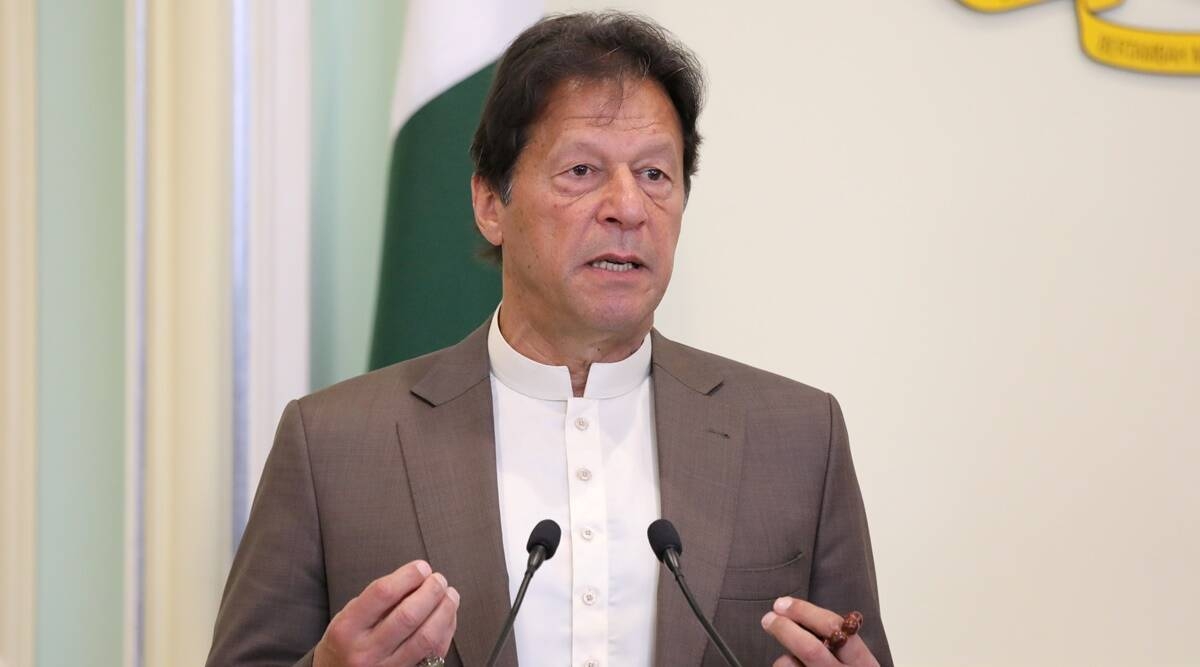
Winning KP: Jamiat jolt for Imran
Sneha M.
On 19 December, Pakistan held its first local body elections after merging Federally Administered Tribal Areas into Khyber Pakhtunkhwa across 17 districts. PTI organized local body (LB) elections were conducted on the orders given by the courts to do so, after nearly a delay of two years. The first phase of local body poll results in KP advanced as shocking for the PTI, but this was a predicted loss given its poor economic performance, incorrect selection of candidates, and poor governance.
The Jamiat Ulema-e-Islam- Fazi (JUI-F) triumphed as the clear winner, claiming 16 tehsil seats against the Pakistan Tehreek-i-Insaf ’s (PTI) 14 tehsil seats. The PTI suffered even more humiliating defeats in four crucial mayoral elections, losing Mardan, Kohat, Peshawar, and Bannu. ANP bagged the mayor seat in Mardan, and JUI-F bagged the rest. This massive paradigm shift from the general elections held in 2018 to 2021 elections calls for analysis. However, before that, let us look at the brief background of PTI and other political parties in KP.
In the 2018 election, the PTI emerged as the largest party in KP and in the National assembly elections while significantly gaining PMLN’s stronghold Punjab and PPP’s citadel Sindh. For instance, in the 2013 elections, the party formed the government in KP with the support of alliance partners. Imran Khan’s “change and modernity” slogan attracted and garnered the support of the people. Additionally, the people appreciated his initiatives, such as the Billion Tree Tsunami project, the 360 Dams project to tackle KP’s water problem. Also, PTI was the only party to form government twice in KP by winning 30 seats and surpassing its record in the 2013 elections, where it won only 17. Whereas other parties such as Awami National Party (ANP), Pakistan People’s Party (PPP), and the Pakistan Muslim League- Nawaz (PMLN) performed poorly in the 2018 elections.
However, the tables have turned in 2021. The JUI-F has made its mark in the provincial capital for the first time, well beyond its conventional power base in southern KP. Surprisingly, the JUI-F won in Charsadda, defeating the Awami National Party (ANP) on their own “home turf.” The two religious parties, JUI-F and ANP, have made a surprise comeback bagging the chairmanship and mayorship in 16 subdistricts. According to the latest news, “the winning streak” has continued for JUI-F, especially in those sub-districts that were marred by violence and subsequently postponing polling.
Overall, including all the opposition parties and the seven independent candidates, the total tally shoots up to 38. This is certainly an alarming number and a cause of concern for the PTI, which until lately could brag of being the only party in the northwestern province to be restored to power twice. Then, what were the reasons for the downfall of the PTI?
Why the Downfall
After the poll results, the PTI has supposedly taken a reactive approach to strengthening its institutional framework by reorganizing the party structure. The decision to reorganize PTI from the bottom and PM Imran Khan’s statements on “personally overlooking the party strategy for the second phase of elections to be held in January” depict the importance of PTI’s political survival in the coming months. Several ruling party ministers have welcomed the results and publicly accepted reform and committed to certainly not repeating the same mistakes. For instance, Information Minister Fawad Chaudhry has asked the PTI officials and members to put their differences aside and work together under Prime Minister Imran Khan’s leadership. Nevertheless, four significant reasons for the downfall of PTI in KP are listed below. First, intra-party conflicts. As early as November, PTI experienced rifts concerning profound disparities in ticket allocation among its members. Nepotism and favouritism in awarding party tickets at the expense of dedicated workers, a lack of an organizational structure, and a complacent leadership at the grassroots level led to a less surprising defeat of the PTI. Additionally, PM Imran Khan can also be seen admitting that the “wrong selection of candidates” was significant for the party’s defeat. Second, poor economic policies. In early November, the faulty economic policies of the PTI faced backlash in the KP assembly, where the opposition opposed unprecedented price hike of edible commodities, gas, petroleum products, and economic policies of the PTI (including denied employment opportunities). The opposition also upheld the commoner’s struggles; however, the authorities turned deaf. In gist, the words of PML-N President Shahbaz Sharif iterates the situation: the poll results were “an expression of people’s anger over the back-breaking infla
.jpg)
.jpg)
.jpg)
.jpg)
.jpg)
.jpg)