.jpg)


.jpg)

 English daily published in Bengaluru & Doha

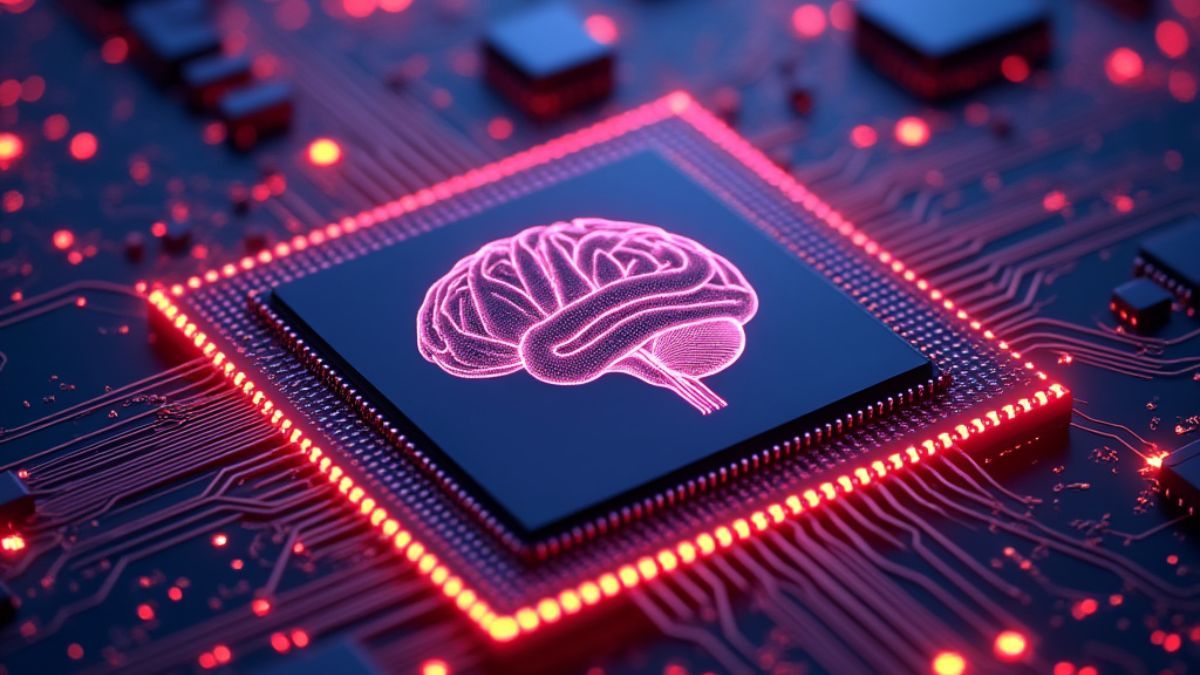
IISc scientists develop brain-inspired analog computing platform
NT Correspondent Bengaluru: Researchers at the Indian Institute of Science (IISc) have developed a brain-inspired analog computing platform capable of storing and processing data in an astonishing 16,500 conductance states within a molecular film. They believe it could be a game-changer, revolutionising industrial, consumer and strategic applications. Published on September 11 in the journal Nature, this breakthrough represents a huge step forward over traditional digital computers in which data storage and processing are limited to just two states, the IISc said.
Such a platform could potentially bring complex AI tasks, like training Large Language Models (LLMs) to personal devices like laptops and smartphones. These developments are currently restricted to resource-heavy data centres, due to a lack of energy-efficient hardware. With silicon electronics nearing saturation, designing brain-inspired accelerators that can work alongside silicon chips to deliver faster, more efficient AI is also becoming crucial. "Neuromorphic computing has had its fair share of unsolved challenges for over a decade," explained Sreetosh Goswami, Assistant Professor at the Centre for Nano Science and Engineering (CeNSE), IISc, who led the research team. "With this discovery, we have almost nailed the perfect system – a rare feat," he said.
The molecular system at the heart of the platform was designed by Sreebrata Goswami, Visiting Professor at CeNSE. In a material film, molecules and ions create countless unique memory states, many of which have been inaccessible so far. Most digital devices can access only two states--high and low conductance, without being able to tap into the infinite number of intermediate states possible. By using precisely timed voltage pulses, the IISc team found a way to effectively trace a much larger number of molecular movements, and map each of these to a distinct electrical signal, thus forming an extensive "molecular diary" of different states. According to IISc, the fundamental operation underlying most AI algorithms is quite basic– matrix multiplication, a concept taught in high school maths. But in digital computers, these calculations hog a lot of energy.
The platform developed by the IISc team drastically cuts down both the time and energy involved, making these calculations a lot faster and easier. Researchers said the key challenge was characterising the various conductance states, which proved impossible using existing equipment. The team designed a custom circuit board that could measure voltages as tiny as a millionth of a volt, to pinpoint these individual states with unprecedented accuracy. It also turned this scientific discovery into a technological feat.



.jpg)

