.jpg)


.jpg)

 English daily published in Bengaluru & Doha

Ken-Betwa river link project is a disaster in making
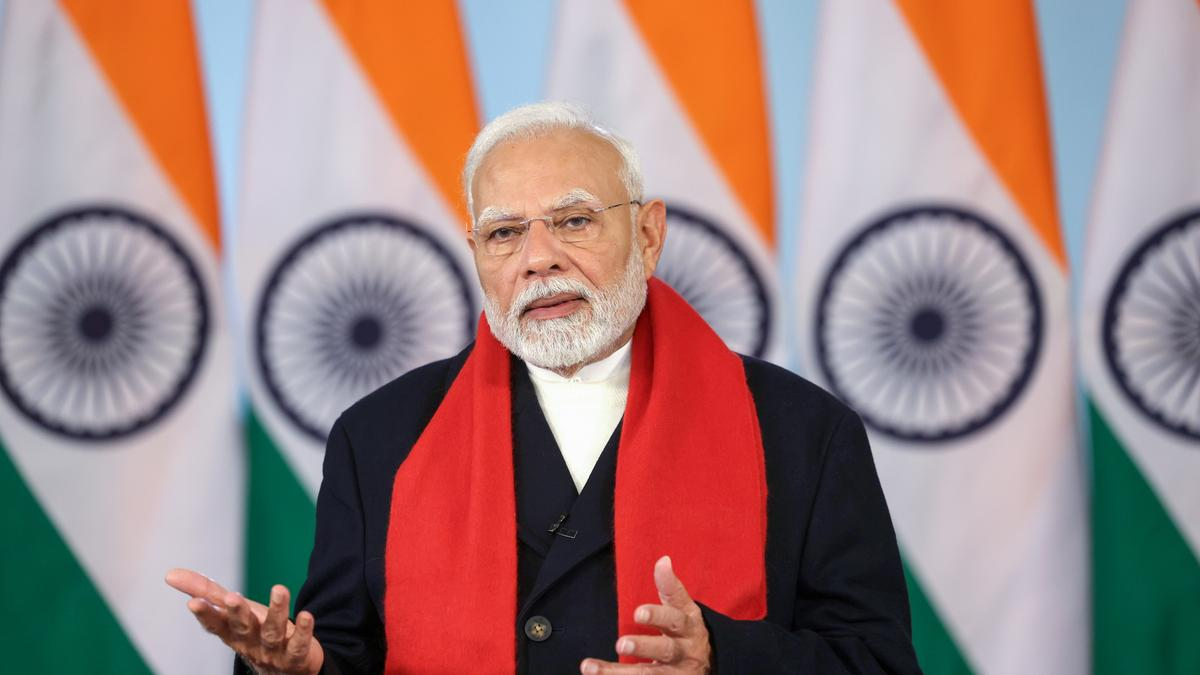
Prime Minister Narendra Modi will today lay the foundation stone of the Ken-Betwa river linking project, the first such initiative under the national river interlinking policy, at Khajuraho in Madhya Pradesh. According to the government, nearly 44 lakh people in 10 districts of Madhya Pradesh and 21 lakh in Uttar Pradesh will get drinking water under the project, which is estimated to cost Rs 44,605 crore. The government adds that nearly 7.18 lakh farmer families of 2,000 villages will benefit from the project, which will also generate 103 MW of hydropower and 27 MW of solar energy.
Ken-Betwa is perhaps the largest irrigation project in the country, adopting an underground pressurised pipe irrigation system. Under the project, a 77-metre high Daudhan dam and two tunnels (upper level 1.9 km and lower level 1.1 km) will be constructed on the Ken river inside the Panna Tiger Reserve (PTR). The government plans to transfer surplus Ken river water to the Betwa river through a 221-km-long link canal from the Daudhan dam, providing irrigation and drinking water to the two states. A tripartite memorandum of understanding (MoU) was signed on March 22, 2021 by the chief ministers of MP, UP and the Union Jal Shakti minister in the presence of PM Modi for the implementation of the project. Unfortunately, in reality, a detailed report based on extensive field visits and interviews of persons concerned show once again why there is no justification for the Ken-Betwa link, starting from the lack of hydrological justification. To begin with, there is no credible evidence or figures proving that Ken has surplus water and Betwa is in deficit.
Secondly, the whole exercise of getting clearances for the project has been an exercise in manipulations at each step of the way, including EIA, Public h, EAC process, Environment clearance, Forest clearance, Wildlife clearance and gram sabha clearances. The scathing CEC (Central Empowered Committee appointed by the Supreme Court) report on its wildliferelated issue has not even been considered by the SC. The forest clearance is in fact on conditions that change the basic parameters of the project, requiring fresh cost benefit analysis, EIA and EC, scientist Himanshu Thakkar, coordinator of the South Asia Network on Dams, Rivers and People (SANDRP) has said. He was a member of the expert committee set up around 2004 by the Ministry of Water Resources (now Jal Shakti) on interlinking of rivers. The PTR has 79 great cats and when the dam drowns a large part of core forest area, the hydrological implication of cutting down some 46 lakh trees (as per assessment given in Forest Advisory Committee meeting in 2017) from natural forest has not even been assessed.
One of India’s only three ghariyal (crocodile) sanctuaries is a few kilometres downstream of the proposed dam. The area is also an important nesting site for the Indian vulture – on the IUCN Red List for Critically Endangered birds. The notion that the Ken has surplus water needs to be questioned, says Dr. Nachiket Kelkar, ecologist at the Wildlife Conservation Trust. Whatever data has been used by the National Water Development Agency under whose aegis the project exists is not being shared with scientists, citing national security concerns.
Researchers from SANDRP who walked the length of the river in 2017 wrote in a report that Ken is now not a perennial river and its regions are irrigation deficit. So what it can give to Betwa will compromise its own command area. One only hopes that better sense will prevail and this massive costly, ecologically disastrous project will not be taken forward.
.jpg)
.jpg)
.jpg)
.jpg)
.jpg)
.jpg)