.jpg)


.jpg)

 English daily published in Bengaluru & Doha

Student launches data platform on city’s groundwater depletion
NT Correspondent
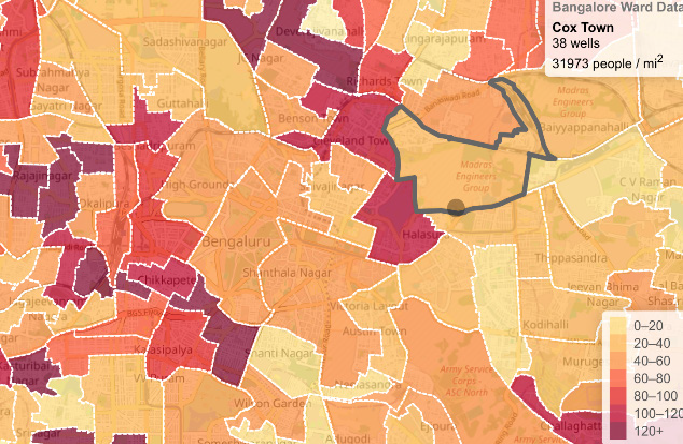
Bengaluru: To address the pressing issue of groundwater depletion in the city, a second year diploma student has recently come up with an internet platform which contains key information sourced from the Central governing agencies and independent researchers. Rehaan, an IB 2 student from Canadian International School (CIS) has developed an internet platform www.thegroundwaterproject. org, which highlights the risks of water depletion across different areas of the city.
According to the research undertaken by Rehaan, Bengaluru is 500 million litres or nearly 20% short of its required water for consumption. He has also decided to upodate the website on a regular basis. Rehaan’s website notes that between 2020 and 2023, nearly all taluks reported zero reserves for future consumption. Nelamangala was an exception, showing 109.46 HAM (hectare-metre) of available water in 2020, which later dropped to 0 HAM by 2023. (One HAM represents a hectare-metre, or the volume of water to cover 10,000 sq metres to a height of 1 metre). The year 2024’s severe water crisis in the city had inspired this young lad to take up this initiative.
Living in a rural residential community that relies on its borewell, he witnessed first-hand the impact of water shortages in surrounding areas and incomplete development projects getting stalled because of lack of access to water. This experience made Rehaan realise the need for accurate and upto- date information that will hopefully inspire more effective citizen-led initiatives to address the issue. The data reveals a sharp increase in water demand from 2020 to 2023 in South and East Bengaluru. A key factor influencing groundwater recharge is leakage from the city’s underground water pipelines, whose density varies significantly across Bangalore’s subregions.
To help battle this, Rehaan proposes improved infrastructure to curb pipeline leaks, rainwater harvesting, and regulation of industrial water use. Helping civic agencies, experts and policy makers in rejuvenating water bodies is also one of his objectives. His initiative also features a crowdsourcing component, allowing residents to contribute data about their water usage, thereby creating a shared resource for tracking and improving conservation efforts.



.jpg)

