.jpg)


.jpg)

 English daily published in Bengaluru & Doha

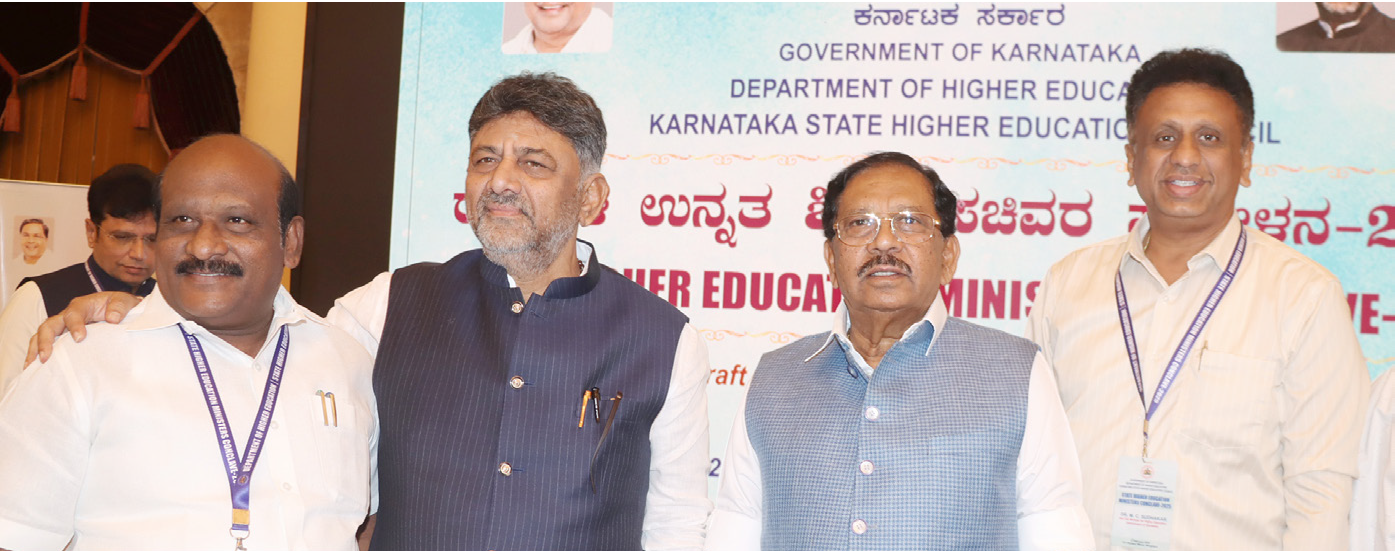
State Higher Education Ministers Conclave demands withdrawal of draft UGC rules
NT Correspondent
Bengaluru: The Conclave of State Higher Education Ministers 2025 was held on Wednesday in Bengaluru, organised by the Department of Higher Education, Government of Karnataka. The key agenda was to discuss the provisions of the draft University Grants Commission (UGC) regulations and grading of Higher Education Institutions based on the National Education Policy (NEP) 2020. Representatives from Karnataka, Tamil Nadu, Kerala, Himachal Pradesh, Jharkhand, and Telangana participated in the deliberations. Karnataka's Higher Education Minister, Dr. M.C. Sudhakar, emphasised the importance of state autonomy in university governance.
He noted that even reputed publications have raised concerns about states' rights being undermined. He stressed that the conclave aimed to collectively oppose any dictatorial policies impacting higher education. Deputy Chief Minister D.K. Shivakumar highlighted India's longstanding reputation in education and the contribution of southern states in attracting students nationwide. He criticised the unilateral imposition of regulations, urging the UGC to respect regional interests. He reiterated that states must have a say in appointing VCs and that quality education should not be compromised. The conclave raised several key concerns regarding the draft UGC regulations, emphasising the need for a more inclusive and consultative approach.
One of the primary issues discussed was the lack of state government involvement in the appointment of Vice Chancellors (VCs). The regulations do not provide any role for state governments in this crucial process, undermining their authority in a federal system. Additionally, the proposed curtailment of state rights in constituting search-cum-selection committees for VCs was seen as a significant encroachment on state autonomy. Another major concern was the provision allowing non-academics to be appointed as VCs. The participants stressed that such appointments could negatively impact academic institutions' leadership and research quality. The removal of the Academic Performance Indicator (API) system was also criticised, as it could lead to increased subjectivity and favouritism in faculty evaluations.
Furthermore, the conclave found the provisions regarding contractual and guest faculty appointments to be unclear and in need of serious reconsideration. The consequences for non-compliance with the draft regulations were deemed excessive, undemocratic, and punitive. Participants argued that imposing all proposals from the National Education Policy (NEP) 2020 as mandatory, with punitive measures for non-compliance, contradicts the spirit of autonomy that states should have in higher education. The mandatory entrance exams for undergraduate courses were another pressing issue, as they could create significant barriers to inclusive education and limit access for students from diverse backgrounds.
The conclave also noted that the draft regulations appeared to favor private institutions at the expense of public universities. There was a call for greater industry-academia collaboration to enhance research and innovation in public institutions, ensuring that they remain competitive and contribute meaningfully to knowledge creation.



.jpg)

