.jpg)


.jpg)

 English daily published in Bengaluru & Doha

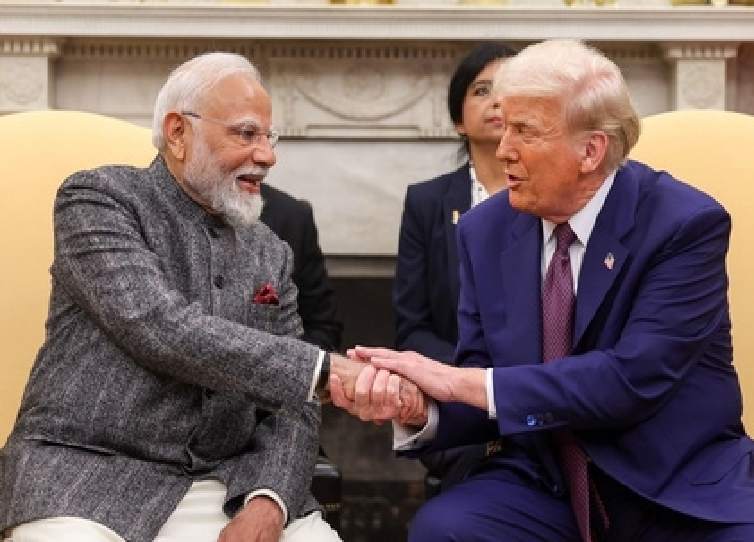
Bargain or blunder? Modi’s handshake with Trump leaves India smarting
NT Correspondent
Bengaluru: Diplomacy is often about give and take, but when one side keeps giving while the other takes, it’s not a partnership it’s a power play. The recent dealings between Prime Minister Narendra Modi and former US President Donald Trump exemplify this imbalance, exposing India’s willingness to bend while America reaps the benefits. Both leaders share a flair for showmanship coining catchy slogans, changing place names, grabbing headlines, and taking credit for past achievements.
But beneath the theatrics, there is a stark reality: while both claim to put their countries first, only one is actually succeeding. Trump has managed to extract key trade concessions while Modi’s government has failed to secure anything of real substance in return. One glaring example is India’s agreement to increase oil and natural gas imports from the US, potentially at the cost of reducing cheaper purchases from Russia. This shift, driven more by American economic interests than Indian strategic calculations, will only deepen our trade deficit. On top of this, Modi has agreed to buy billions of dollars worth of American weaponry, including F-35 fighter jets—aircraft even Elon Musk, Trump’s ally, dismissed as overpriced and underperforming.
What strategic or financial advantage does this bring India? Trump, a businessman before he was a politician, played his cards well. He got Modi to weaken India’s trade barriers, reduce so-called “unfair tariffs,” and spend billions on American goods—all the while keeping up pressure on India over trade imbalances. Modi, on the other hand, had a golden opportunity to push back. America needs access to India’s massive market just as much—if not more—than India needs American goods. But instead of using this leverage, Modi conceded ground, failing to stand firm. Beyond trade, the Modi government’s refusal to address allegations of crony capitalism only reinforces suspicions about its priorities. The US has taken legal action against the Adani Group, alleging it paid over $25 crore in bribes to secure solar power contracts.
The Trump administration even put the project on hold for three months. Yet, when asked about this during a briefing, Modi dodged the question, hiding behind vague philosophical statements about ‘Vasudhaiva Kutumbakam’—as if global unity excuses financial misconduct. Stronger ties with the US are important, but they should not come at the cost of blind concessions.
India must negotiate from a position of strength. Modi’s government needs to recognize that diplomacy isn’t about pleasing global powerhouses—it’s about securing what’s best for the country. And right now, the scales are tipping in favor of Washington.



.jpg)

