.jpg)


.jpg)

 English daily published in Bengaluru & Doha

‘Is this what you mean by empowerment’, Differently-abled rehab workers ask govt
NT Correspondent
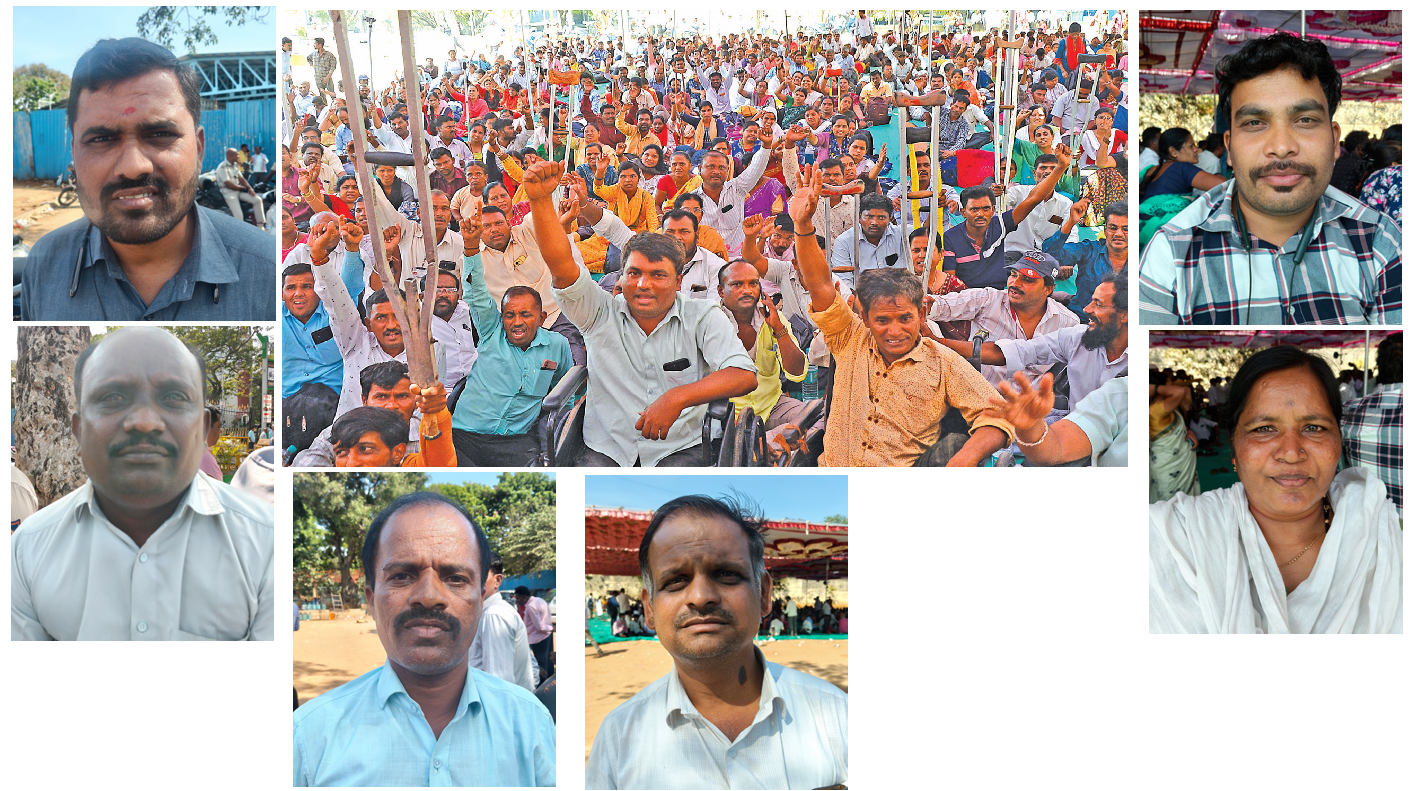
Bengaluru: Differently-abled rehabilitation workers from across the state convened at Freedom Park in the city on Wednesday to collectively advocate for increased honorariums, job regularisation, and additional benefits. The indefinite strike, organised by the Nava Karnataka MRW, VRW, URW Vikalachetanara Gouravadhana Karyakartahra Sangha, has entered its second day, as the Department of Women and Child Welfare has remained unresponsive to their appeals. This is not the first instance of their protests. These workers have been seeking a fair salary increase for their work since they were integrated into the honorarium system 17 years ago.
News Trail interviewed several protesters. who recounted their struggles regarding inadequate pay, challenging working conditions, and commuting issues. Bandappa R Malli from Basavakalyan in Bidar district expressed his financial difficulties. With a salary of only Rs 9,000, he finds it insufficient, especially as basic necessities are priced like fine dining.
“The work we perform for the grama panchayats, which involves surveying at least 200 families in every village, far exceeds our compensation,” he stated. Having been affected by polio in both legs, he emphasised that sustaining a family on such a salary is untenable. “The honorarium should be increased to Rs 18,000,” he asserted, eliciting agreement from his peers.
Basavaraj, from Sasanamari in Raichur district, acknowledged the challenges of supporting his family, which includes two school-going daughters, on such a limited income. “Caring for my parents and daughters, along with my commuting and grocery expenses, is no small feat. The government must promptly raise our honorarium,” he urged. He, too, is affected by polio, relying on crutches for mobility.
Nagaraju, hailing from Sargur taluk in Mysuru district, highlighted the challenges of commuting. “If the Sakthi scheme permits free travel for women, why should rehabilitation workers not receive the same benefit?” he inquired.His daily routine involves travelling from village to village, with distances of at least 25 kilometres. Given that both his arms and legs are impacted by Polio, using public transport has always posed significant difficulties.
“Our bus passes are only valid for regular buses, which are perpetually overcrowded. Where can we find room to stand with crutches?” he expressed with frustration.
Recalling Chief Minister Siddaramiah's time as the leader of the opposition, Nagaraju noted that he had promised improvements in the lives of all rehabilitation workers. “I now ask the Chief Minister: Is this your vision of empowerment? Is this how you interpret Ambedkar’s constitutional principles?” he questioned passionately.
In the case of Subash Donagi, there is a constant fear of being pushed off buses and trains due to insufficient space. “We are forced to rely on private transportation, which is financially burdensome. If the government continues to ignore our requests, we may have no choice but to protest outside Vidhana Soudha,” he stated
With their current salaries, some workers have resorted to extreme measures, such as mortgaging their homes to cover expenses. One such individual is Shabuddin Bukkada from Sindagi taluk in Vijayapura district. “With parents requiring ongoing medical care, I had no alternative but to mortgage my house for a loan,” he explained.
He claims to spend Rs 1 lakh annually solely on medical expenses. The implementation of the e-attendance system has created significant challenges for them. He asserted that it is unjust to reduce salaries due to our inability to arrive at work punctually (from 10 am to 5 pm). Shabuddin has lost both of his legs to polio.
For Sabiya Begum, who lost her left leg in an accident at the age of seven, securing regular employment would be a major achievement. “We require our entitlements, such as medical leave and health insurance."



.jpg)

