.jpg)


.jpg)

 English daily published in Bengaluru & Doha

All eyes on Dharmasthala
NT Correspondent
Bengaluru: The Karnataka government has constituted a Special Investigation Team (SIT) to probe grave allegations of multiple murders, sexual assaults, and cases of missing women in the Dharmasthala region of Dakshina Kannada district spanning the past two decades. The GO, dated July 19, was shared with the press on Sunday.
The Special Investigation Team will be headed by Pranav Mohanty, Director General of Police, Internal Security Division. Its other members include Additional Commissioner of Police (Recruitment) M N Anucheth, Deputy Commissioner of Police (CAR Headquarters) Soumyalatha, and Superintendent of Police (Internal Security Division) Jitendra Kumar Dayama.
The move comes in response to a letter from Karnataka State Women's Commission Chairperson Nagalakshmi Choudhary, who cited a court statement by an individual claiming that "hundreds of bodies were buried in the Dharmasthala area." The Commission also took serious note of media reports highlighting the discovery of a human skull and statements made by the family of a missing medical student.
The Commission said these reports—alongside the court testimony—point to a "disturbing pattern of abuse, unnatural deaths, and disappearances of women and female students spanning more than 20 years." A case has already been registered under Section 211(a) of the Bharatiya Nyaya Sanhita (BNS) at the Dharmasthala Police Station.
The SIT has been empowered to investigate not only the present case but also all related cases registered or to be registered in other police stations across the state. The Director General of Police (DGP) will assign such cases to the SIT and provide necessary personnel.
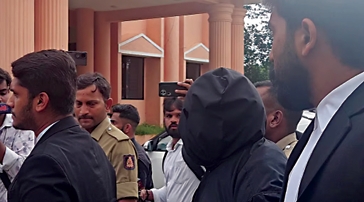
The SIT will function using re sources from the Dakshina Kannada District Police Office and is expected to submit regular updates to the DGP. A comprehensive investigation report will be submitted to the government through the DGP at the earliest. What really happened? On 11 July, a Dalit man covered head-to-toe in black cloth walked into a Belthangady court amid heavy security and an entourage of advocates.
A former sanitation worker at the Dharmashtala temple, he claimed he was coerced into burying, burning and disposing of “hundreds” of bodies, many of which were of girls as young as 12, and showing signs of sexual assault and torture. A few days before that, on 3 July, the man had released a statement through his lawyers alleging that he was coerced into disposing of bodies by people related to authorities of the Dharmasthala temple.
Located in Karnataka’s Dakshina Kannada district, this temple is one of the holiest and most revered Hindu pilgrimage sites in the country. Since then, the police have cited multiple reasons for not launching a full-fledged probe, including questioning the complainant’s intent, the need for narco and brain mapping tests.
The delays only intensified the mystery surrounding the case and those allegedly involved. Finally, the government acted now. 'Openly named Heggade family as accused' Some of these include cases of Vedavalli (1979), Ananya Bhat (2003), and Narayana Sapale and his sister Yamuna (2012).
One of the most notable cases was that of that of a 17-year-old girl allegedly raped and murdered in 2012. Her family and those rallying for her justice, have openly named members of the powerful Heggade family as accused. Rajya Sabha MP Veerendra Heggade and his family are often re ferred to as ‘Doddavaru’ (big people) and ‘Dhanigalu’ (landlords)—terms that are used as much with adulation as with fear and discretion.



.jpg)