.jpg)


.jpg)

 English daily published in Bengaluru & Doha

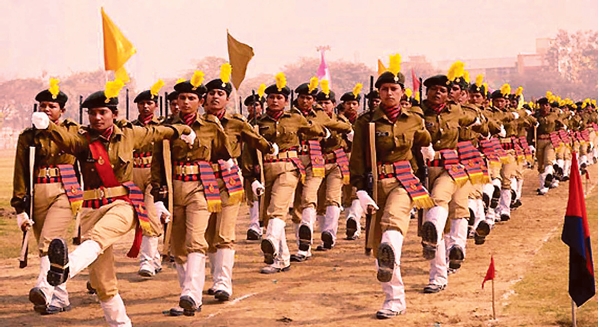
Feminization of police force in Bihar taking a heavy toll
Soroor Ahmed
Bihar reels under the uncalculated increased risks in upping the number of female police personnel
Without sounding a misogynist, one needs to put the facts straight. Bihar Chief Minister Nitish Kumar may boast that the appointment of 35% female constables is a move in the direction of empowerment of women, yet the truth is that this move of his government has contributed immensely to the virtual collapse of the law and order situation in the state.
Their presence in the police force in such a large number has diluted the awe felt by many in the administration as the essential requirement of the law-enforcing agency. If hardened criminals, liquor, sand, land mafia, and extremists are cocking a snook at physically tough policemen, the police-women stand no match before them.
The fact is that the female cops are even unable to take on small-time mohalla-level petty lawbreakers. Not only that even ministers, MPs, and legislators do not want them for their security. With 36,000 police-women out of the total 1.10 lakh personnel in khaki the state tops among states in terms of employing women in police.
But what is left unsaid is that the crime record in the state is also among the top in the country. Since women constables are generally not posted in obscure places or put on night duty, their deployment in the urban centres is disproportionately high. So, criminals have in the last few years taken Patna and other towns by storm, especially in the late hours.
The daring murder of health hub magnate Gopal Khemka in the high security zone of Bihar’s capital late on July 4 night, is one such glaring example. Another killing which shook the state took place early on July 17 morning when five pistol-toting youth barged into a premier private hospital of Patna and shot dead a convicted criminal who was under going treatment.
Worry for police brass What is of worry for the upper echelon of the police is that notwithstand ing best intentions, commitment, and efforts, it would be difficult to restore normalcy. This is largely because of the policies of the Nitish Kumar government as well as the dubious role played by the media, which instead of questioning the practical difficulties in the recruitment of such a large number of women cops terms it ‘a revolutionary step’.
What is happening in Bihar is that the induction of such a large number of female cops has brought in a new culture of indiscipline. Senior police authorities are facing this challenge, but they are unable to convey it to the political executives, who are in no mood to listen to them for obvious reasons.
The obstacle before the departmental higher-ups is how to impose discipline on the female force who defies the Police Manual and Social Media Regulations. They fear that any step to discipline may backfire as the female cops can hurl any charge against them. However, on July 8, the police head quarters issued an order banning the wearing of jewelry and makeup.
It followed the suspension of 10 female constables as well as officials as they were charged with making reels and uploading them on social media while on duty. This practice has been continuing notwithstanding the repeated warnings. Many policewomen, wishing not to be quoted, told newspapers that reel making is wrong, but the department cannot snatch their right to wear ornaments and use cosmetics.
It is not that the male police are a paragon of virtues. They are accused of being corrupt and at times inefficient. So far ’wasooli’ (extracting money) was concerned males were ahead of their female counterparts. But female cops too are catching up fast. On July 19, state vigilance caught a woman station house officer in Samastipur district accepting a bribe of Rs. 20,000.
Putul Kumari was later sent to jail. Not with standing the poor track record of male police their arrival at any troubled spot sends a strong signal. Even at the time of crowd management or mob violence, it is the male police who are pressed into service. No homework One may not question the move to empower women. But it should be done with proper homework.
As the target was to appoint 35% women, several concerns were raised at the time of recruitment. In the process, many young men who fulfilled most of the criteria were denied the job opportunity. A police constable posted in Muzaf farpur told this correspondent that he had done MA in Economics and had appeared in almost all sorts of competitions, but he was forced to take up this job as nothing was avail able.
This is simply because the 35% slots were reserved for women alone. The bigger problem is over their deployment in the field. As there is hardly any provision of separate toilets and washrooms for them, they find it extremely difficult to work in the far-off and remote places, especially in the flood-prone areas of north Bihar.
A police sub-inspector narrated to me the challenge he had to face when one of four constables as signed to him for election duty in remote Madhubani village was a woman. “While we male members managed to sleep somewhere and took a bath in the open by fetching water from a well, we faced immense problems in accommodating the woman constable as the village was a Dalit hamlet.
There was no toilet and washroom in the entire village for her to take a bath that summer morning,” he said. While the police department is facing shortage, the senior officials find it difficult to deploy women consta bles in the field. The male members are thus over burdened as all the ministers and legislators need security largely to flaunt their status. In 2011, the Nitish Kumar government beefed up security for the VIPs.
This followed the murder of a BJP MLA in Purnea on January 4 by a school headmistress, Rupam Pathak. Raj Kishore Kesari was stabbed to death by Rupam, who charged him with sexually exploiting her. Each minister gets security of 18 police personnel while MPs and legislators get three cops. (Source: Siasat.com)
.jpg)
.jpg)
.jpg)
.jpg)
.jpg)
.jpg)