.jpg)


.jpg)

 English daily published in Bengaluru & Doha

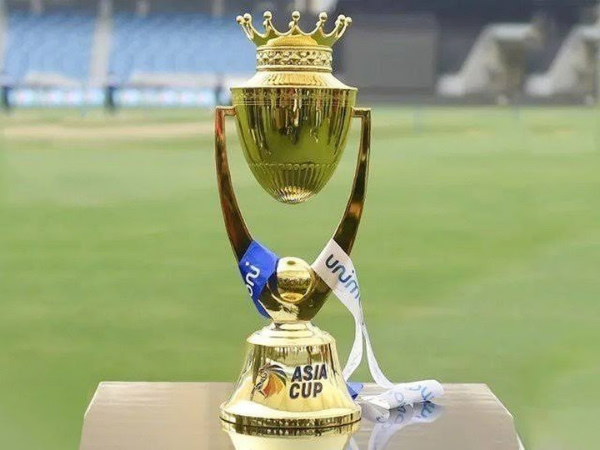
Asia Cup set to showcase cricket’s fiercest rivalries
The forthcoming Asia Cup, to be staged in the UAE from 9 to 28 September, represents far more than a regional tournament. It stands as a microcosm of cricket’s evolving dynamics, its geopolitical under tones and the accelerating commercial momentum of the T20 format.
Now entering its 17th edition, the tournament has matured into a premier preparatory stage for the continent’s cricketing giants as they prepare for global contests, such as the ICC T20 World Cup. By consciously alternating between the ODI and T20I formats to align with the international cricket calendar, the Asia Cup serves both as a testing ground for strategies and a spectacle for fans, ensuring relevance and continuity in an increasingly crowded cricketing landscape.
This year’s competition will bring together eight teams: India, Pakistan, Sri Lanka, Bangladesh, Afghani stan, and the three qualifiers – UAE, Oman and Hong Kong. The decision to include emerging cricketing nations reflects the Asian Cricket Council’s broader vision of expanding the sport’s footprint beyond its traditional strongholds.
These teams will be divided into two groups of four, with the top two from each group advancing to the Super Four stage before the tournament culmi nates in a high-stakes final. Such a structure not only enhances competitiveness but also provides smaller nations with invaluable exposure against world-class opponents, potentially inspiring future generations of cricketers across the region.
At the centre of the narrative, however, lies the fixture that commands global attention: India versus Pakistan on 14 September in Dubai. Few sporting rivalries tran scend sport itself with the intensity of this contest. It is a match steeped in history, politics and passion, draw ing not only millions of viewers across Asia but also an international audience riveted by its unique drama.
The match is often seen as a measure of national pride and cricketing supremacy, and in a T20 format where the margins are razor-thin, every delivery and stroke will carry immense weight. Defending champions India enter the tournament with the ambition of extending their record to a ninth title.
Under the leadership of Suryakumar Yadav, renowned for his innovative stroke play, and Shubman Gill, a rising star with an elegant technique, India’s squad is a blend of youth and experience. With bowling spearheaded by Jasprit Bumrah and complemented by Arshdeep Singh and Varun Chakravarthy, alongside dynamic all-rounders such as Abhishek Sharma and Tilak Varma, the team appears well-balanced and stra tegically versatile.
Yet, their dominance will be tested by equally determined opponents, with Sri Lanka’s spin arsenal led by Wanindu Hasaranga, Bangladesh’s ever improving unit, and Pakistan’s formidable pace attack all posing significant threats. Beyond the pursuit of silverware, the Asia Cup 2025 will shape tactical blueprints for the impending T20 World Cup.
Moreover, hosting the tournament in the UAE – a venue with world-class infrastructure and a cosmo politan audience – reinforces the region’s status as a hub for international cricket. As cricket navigates the challenges of modernity – franchise dominance, scheduling congestion and technological disruption – the Asia Cup remains a vital forum for reaffirming the sport’s heritage while embracing its future.
The 2025 edition promises not merely thrilling contests but also a vision of how Asian cricket can lead the global game into its next chapter.
.jpg)
.jpg)
.jpg)
.jpg)
.jpg)
.jpg)