.jpg)


.jpg)

 English daily published in Bengaluru & Doha

Maratha reservation on weak ground
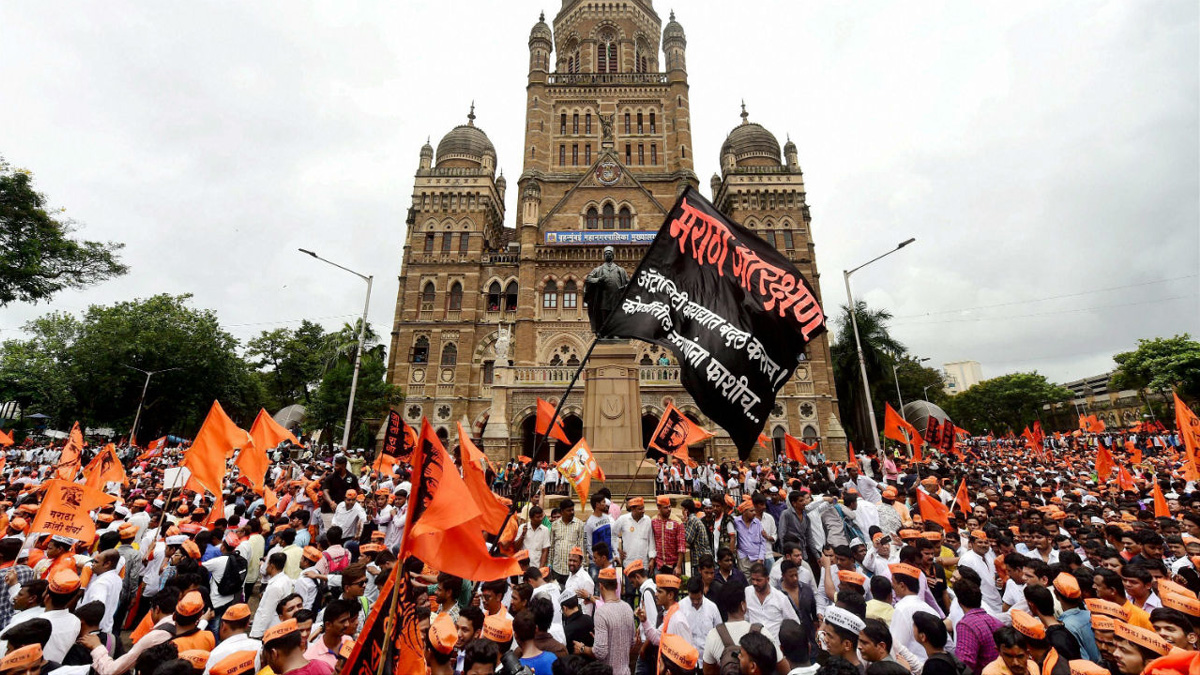
The Maharashtra Government may have landed itself into a soup by giving in to the demand by the Manoj Jarange Patil-led agitation for granting reservation to Marathas from the Marathwada region. The Fadnavis government was forced into passing a resolution to equate Marathas from the Marathwada region with Kunbis who fall under the Other Backward Communities category.
Patil-led mobs had paralysed central Mumbai for four days to press for their longstanding demand for reservation although the Marathas already enjoy a 10% quota in govt jobs and education under the Socially and Economically Backward Class (SEBC). But Patil had been demanding a quota under the OBC category.
The resolution has led to dissonance within the Mahayuti government led by Mr. Devendra Fadnavis and is likely to further complicate the reservation matrix in the state where Marathas have traditionally been a dominant caste with a series of individuals having been CMs.
They had been historically a ruling class with several dynasties having ruled from Pune, Indore, Gwalior and Baroda. No wonder that Mr Chhagan Bhujbal, a leading minister and one representing the breakaway faction of the Nationalist Congress Party (NCP), has voiced his opposition.
The move points to an absence of consultation within the ruling coalition. His opposition is based on the new entrant upsetting the complex matrix of OBC quota in the state which already includes 350 other backward communities. The resolution-based order is all likely to be challenged in the courts which may go by the socio economic statistics.
Marathas own over 75% of the land in the state as well as 86 of the 105 sugar mills besides controlling about 55% of educational institutions and over 70% of cooperative bodies. They have dominated the political landscape with 11 of the 20 chief ministers hailing from the community and around 60% of all MLAs belonging to the community since 1962.
Looked at from this angle, the order is least likely to fit the critrea The order takes cue from the report of the Shukre Commission which concluded its survey of the backwardness of the Maratha community in a mere 9 day (from Janu ary 23 to January 31, 2024). Findings of the Commission are rather contentious and provide a weak defence for the move.
Marathas form 28% of the state’s population. It had concluded that 84% of the Marathas fall in the non creamy layer, 21.22% of Maratha families being below poverty line, and 94% of farmers who have committed suicide are Marathas. These do not provide any concrete basis and empirical evidence of economic backward ness for claiming reservation.
The inferences drawn by the commission in the report are that 84% of Marathas fall in the non-creamy layer, 21.22% of Maratha families are below the poverty line, and 94% of farmers who have committed suicide are Marathas. All three are contentious claims.
Moreover, the current quota matrix in the state is already crowded with 52% of jobs and educational places being reserved for categories such as SC, ST, OBC, Vimukt Jati, Nomadic tribes and others. The 10% additional load would take the total over the cap of 50% fixed by the Su preme Court.
Given the history of previous attempts to give reservation to Marathas and setbacks in cases at the courts, the fresh move seems to have grim prospects of standing legal scrutiny. It stands on weak ground.
.jpg)
.jpg)
.jpg)
.jpg)
.jpg)
.jpg)