.jpg)


.jpg)

 English daily published in Bengaluru & Doha

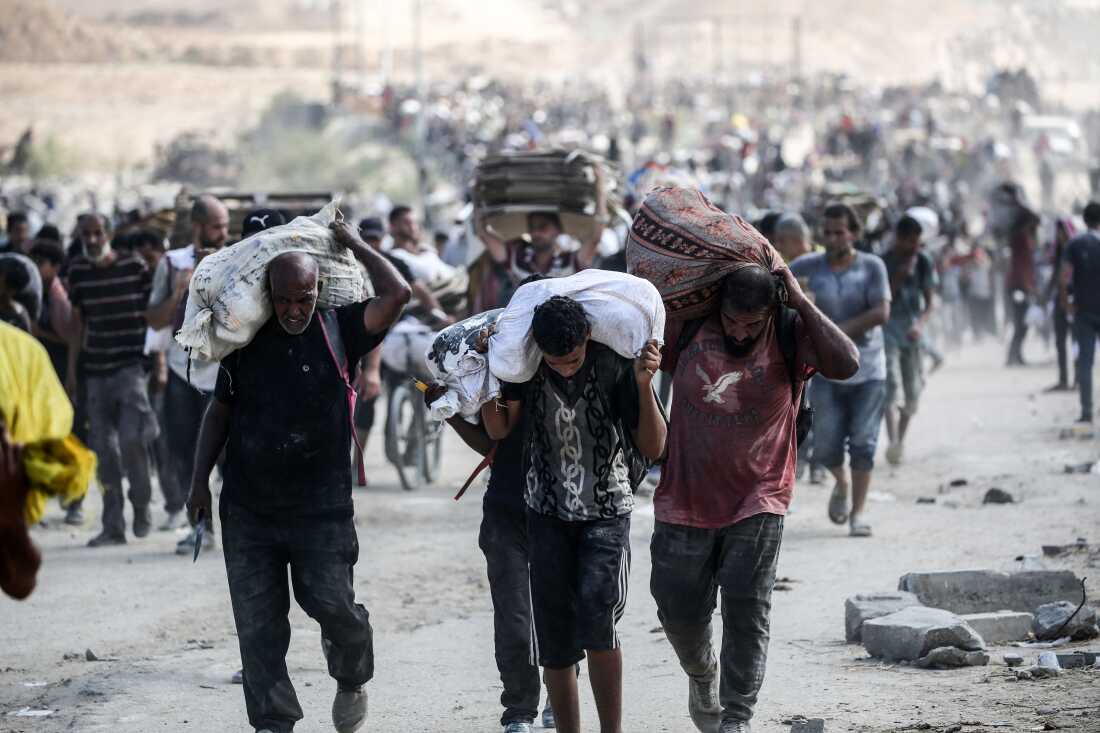
UN talks, Palestinians still bleed
While Palestinians across the Gaza Strip and the Israeli-occupied West Bank welcomed news that a flurry of Western countries has recognized a Palestinian state at the ongoing UNGA, many were skeptical whether the move will improve their dire circumstances.
France, Andorra, Belgium, Luxembourg, Malta, and Monaco announced or confirmed their recognition of a Palestinian state at the start of a high-profile United Nations meeting aimed at galvanizing support for a two-state solution to the Mideast conflict. Their announcements came a day after the United Kingdom, Canada, Australia, and Portugal did the same. More nations are expected to follow, in defiance of Israel and the United States.
Some hope these recognitions will lend legitimacy to a Palestinian state, while others dismissed them, saying they expected to be treated as human beings first.
Indeed, the recent shift among nations is unlikely to have much, if any, short-term impact on the ground, where Israel is waging a major offensive in famine-stricken Gaza City and expanding settlements in the West Bank. In the longer term, the creation of a Palestinian state alongside Israel in the West Bank, Gaza, and East Jerusalem, territories seized by Israel in the 1967 Mideast war is widely seen internationally as the only way to resolve the conflict, which began more than a century before Hamas’ Oct. 7, 2023, attack.
The war has left the territory in ruins, displaced nearly all Palestinians, and killed at least 65,000 people, according to Gaza’s Health Ministry. The ministry, part of the Hamas-run government and staffed by medical professionals, says women and children make up around half of those killed by Israel.
As expected, UN Secretary-General Antonio Guterres opened the annual meeting at the General Assembly with a plea to choose peace over war.
The emergency meeting on Gaza highlighted the isolation of the Trump administration, Israel’s closest ally. Guterres did not name Israel but said that nothing can justify the collective punishment of the Palestinian people.
Significantly, around three-fourths of the UN’s 193 member states now recognize a Palestinian state. It is ironic that Palestinian President Mahmoud Abbas was denied a US visa and could not attend the UNGA.
However, the UN, reeling under severe funding cuts by its biggest donor, the US, particularly after Trump’s second term—has been reduced to the status of a paper tiger, according to many geopolitical experts.
The West Bank is the hoped-for heartland of a future Palestinian state. Palestinians feel that Israeli military raids on Palestinian cities and towns, along with state-backed settlement expansion, have eroded their land, pushing the practical possibility of a contiguous Palestinian state out of reach.
Recognition is indeed a step in the right direction. But what is needed is not just a symbolic or nominal state, but a fully sovereign Palestinian state that preserves its borders based on those of June 5, 1967. Can the UN or the world ensure this? All of this recognition, in the end, is meaningless under Israeli occupation. Everything that is happening is just ink on paper.
.jpg)
.jpg)
.jpg)
.jpg)
.jpg)
.jpg)