.jpg)


.jpg)

 English daily published in Bengaluru & Doha

Fact-finding report exposes UP’s anti-Muslim crackdown
Bengaluru/Lucknow
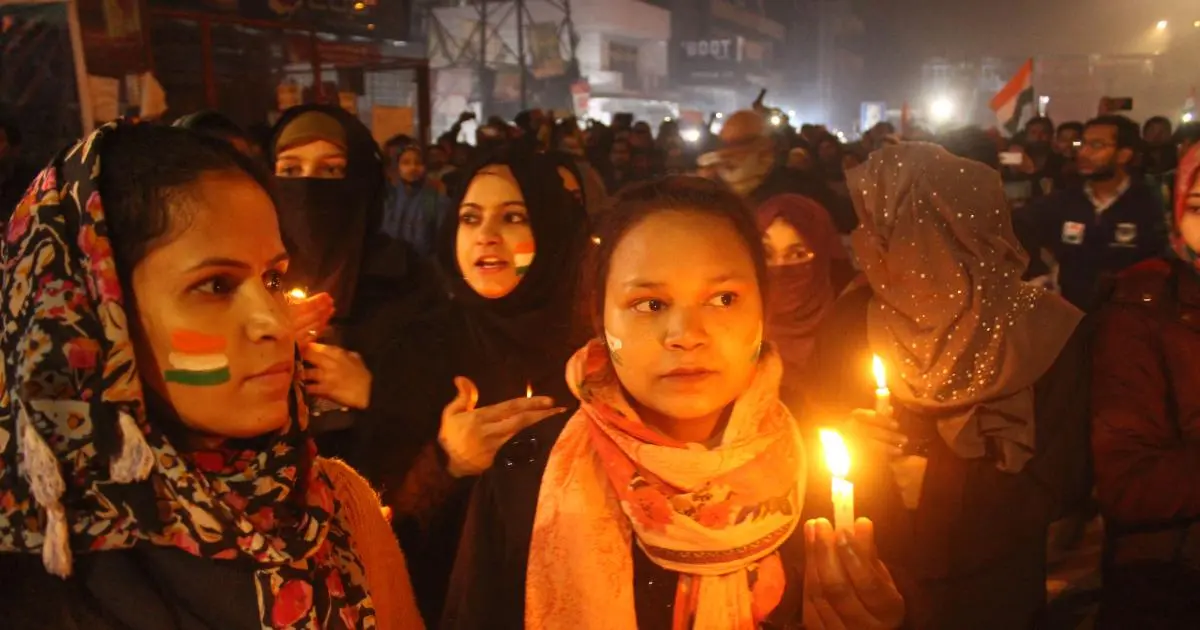
A fact-finding report released by the Association for Protection of Civil Rights (APCR), following the ‘I Love Muhammed’ demonstrations in Bareilly, has found that state authorities violated the human rights of members of the Muslim community.The findings come against the backdrop of a series of actions and remarks by Uttar Pradesh Chief Minister Yogi Adityanath, who critics say has been a polarizing figure, with his tenure marked by policies and rhetoric that undermine constitutional secularism and marginalize Muslims.
The report concluded, “Evidence suggests that authorities exercised aggressive and disproportionate measures affecting members of the Muslim community in response to a peaceful protest. Procedures relating to prior notice, lawful arrests, and due process were not followed, leading to violations of human rights and raising concerns about transparency and legality.”During the meeting held to release the report, speakers reflected on the bizarre heavy-handedness of the state’s actions, discussed the broader consequences of such conduct, and presented key findings from the report.
Yogi’s administration has been associated with the controversial use of bulldozers to demolish properties of individuals accused of involvement in riots, raising concerns about due process and human rights.Adityanath has also criticised the Waqf Board, accusing it of encroaching on public and historical lands and terming it a “land mafia.” Additionally, he has defended restrictions on namaz in public places, insisting that Muslims must show “religious discipline.” In recent speeches, the UP CM has questioned whether Hindus would feel safe “living among large Muslim populations,” further deepening the communal divide.
Journalist Prashant Tandon, who visited the affected areas, spoke of numerous instances of collective punishment. He recalled that there was no panic in the city, yet the internet was abruptly shut down.“Shops in the Lucknow market were sealed without reason. Their livelihood was threatened. This is beyond law and order, it was about teaching a lesson,” he said.
Advocate Mehfuzur Rehman Faizi highlighted the lack of due process by authorities.“Submitting a memorandum is a constitutional right. They were standing peacefully with it when the lathi charge began. There was no violence from the demonstrators at all. It was a contemptuous act. Also, the Supreme Court has made it clear that one violation cannot lead to multiple FIRs, there should be no double jeopardy. But here, FIRs were filed, shops were closed, houses searched. You cannot do that within the legal framework,” he said.
Speakers called the state’s actions bizarre and blatantly biased, saying it revealed a pattern of privileging one religion over another. Nadeem Khan, part of the fact-finding mission, noted that police filed FIRs against Muslim residents who went to complain, while members of Hindutva groups who opposed the banner and tried to disrupt the event in Kanpur faced no action.
Several speakers also warned of the radicalisation of institutions in the country, especially in states where the BJP holds power. Activist John Dayal said:“Our police force, civil services, judiciary, magistrates, sub-judges, you can see a change in their mindset. With this shift comes the radicalisation of institutions, which poses a greater danger to Muslims, Christians and tribals alike. In the end, the gravest danger will be to Hindus themselves, they will be next.”
Kavitha Srivastava, Chairperson of the People’s Union for Civil Liberties (PUCL), called for a collective struggle.“We have to fight both the larger battle and the individual ones like those hundred children who have been arrested and harmed. Uttar Pradesh has demonstrated that the state has a religion, and it privileges that religion over others. There is no mobilisation of Hindu youth against this theocratic state,” she said.
The APCR report, available on the organisation’s website, offers a detailed chronology of events, eyewitness accounts, and a legal analysis of the authorities’ actions. It concludes with an indictment of the state’s approach to peaceful dissent, warning that such practices erode constitutional protections and threaten the democratic fabric of the country.



.jpg)