.jpg)


.jpg)

 English daily published in Bengaluru & Doha

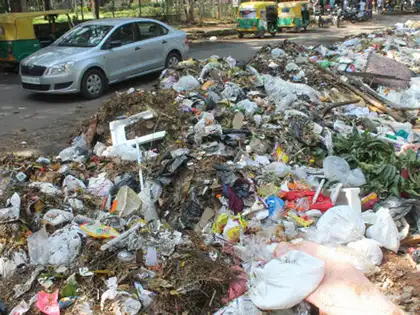
Bengaluru’s stinking garbage mess
When someone as powerful as Karnataka Deputy Chief Minister DK Shivakumar admits his helplessness in addressing Bengaluru’s garbage mess due to the presence of a powerful ‘garbage mafia’, there is obviously something terribly wrong with the manner in which garbage is being collected and processed in the IT City.
Bengaluru, according to sources, generates 3,500 MT of solid waste every day with civic workers called pourakarmikas arriving in vehicles and collecting them from door to door every morning.
While they could be doing their best to clear the refuse generated by households, the garbage problem in Bengaluru is much bigger - from business establishment and factories to the slums dotting the city, everyone generates garbage and most of them try the easy way out by throwing it on the wayside on in a nearby plot when no one is watching, instead of waiting for the garbage collector.
The result - there are several stinking and unhygienic garbage mounds in the city which seem to be growing in size with each passing day.
Not that the city has tried better ways of garbage management. Earlier, one had seen giant garbage bins being placed at street corners where citizens could dump garbage, which could then be taken away by garbage collectors.
That however could have proved unhygienic because of the stray dog menace or for other reasons like timely garbage collection. The segregation of wet and dry waste seems to have achieved reasonable success and has helped in easier garbage disposal. Citizens are much more aware about the need for avoiding dumping plastic waste along with their vegetable remains.
However, such awareness alone will not suffice in ensuring faultless garbage management. A lot more needs to be done and a lot more brainstorming will have to happen if innovative solutions have to come up for trash disposal.
Segregation and disposal of both wet and dry garbage will have to be explored at the local level. For this, local resident associations and NGOs can be roped in to lend a helping hand in ensuring smooth collection from every point. Awareness campaigns will also have to be launched among residents on the need to ensure timely delivery of garbage to the collection points and to ensure wet and dry waste do not get mixed in any circumstances.‘Black points’ will have to identified in the city where garbage somehow accumulates and tends to spill over onto the roads and nearby areas.
The ministers, legislators and new city corporations can even consider the formation of a garbage vigilance force which can be educated on the need to keep the city clean and on hygienic ways and modes to do it. They should be trained to clamp down on any activity which breaks the rules as far as garbage disposal is concerned and should also be empowered to imposes fines if needed.
Strong steps are obviously needed when one is dealing with a ‘problem’ as gigantic as 3500 tonnes of trash. This figure is sure to go up as Bengaluru grows and its population spirals much above the 1.5 crore mark. To sum up, garbage disposal just cannot be wished away; it needs an effective and fool proof strategy so that we are not left holding our noses at every city corner.
.jpg)
.jpg)
.jpg)
.jpg)
.jpg)
.jpg)