.jpg)


.jpg)

 English daily published in Bengaluru & Doha

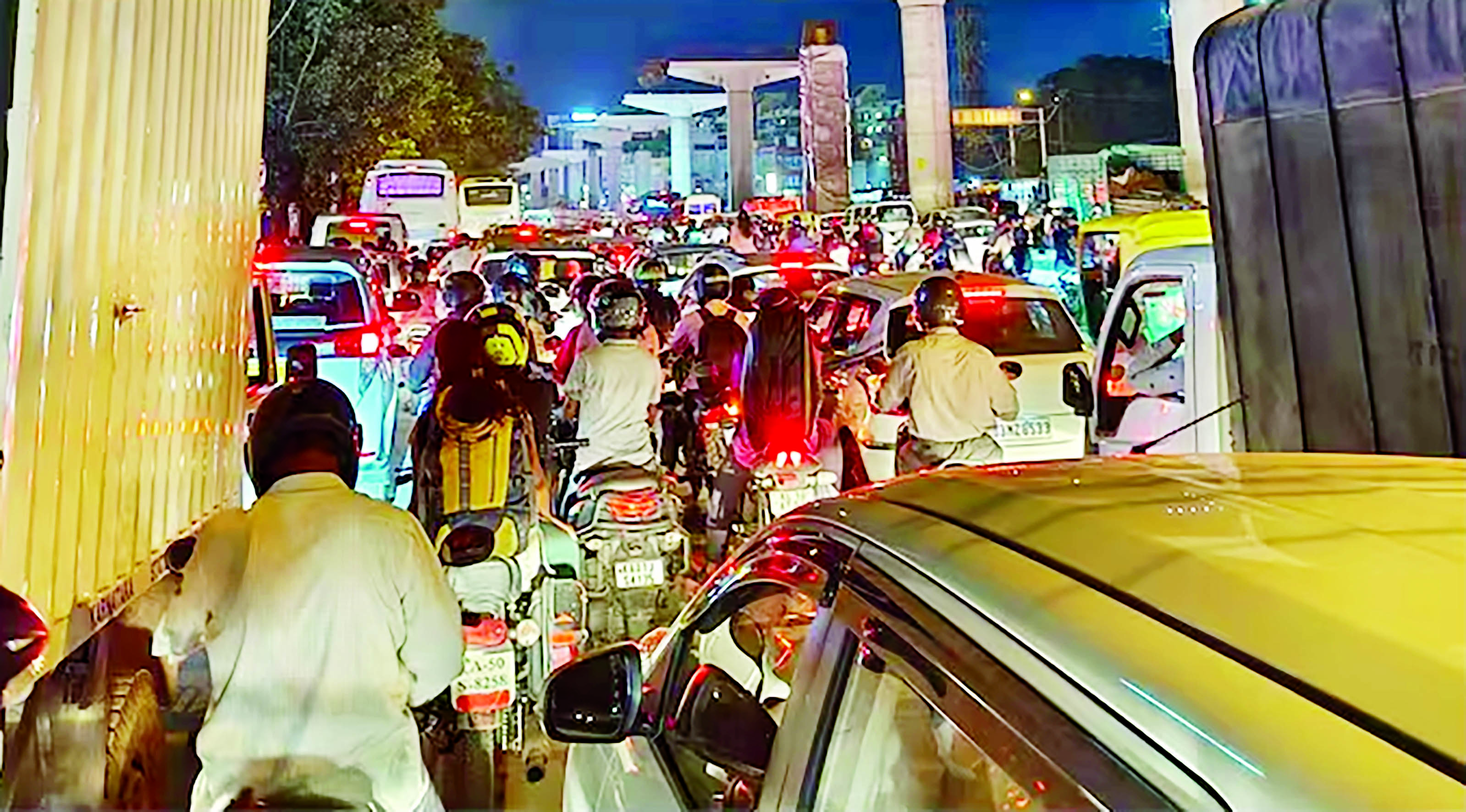
Shame solo drivers to ease Bengaluru gridlock, say experts
Bengaluru: With World Public Transport Day just gone by, it is a good time to examine where the faults lie in the city’s public transport system. While most of the city’s population relies on buses for daily commutes, the metro has also given a fillip to mobility.
Several other public transport projects are in the pipeline, but private vehicles continue to dominate Bengaluru’s roads. Many feel that all stakeholders must come together to find solutions to the problems that plague the city.
According to Vivekananda Kotikalapudi, an urban mobility adviser for GIZ India, the only way the city can move towards a better public transport system is by incentivising people to avoid using private vehicles. “We need a massive behavioural shift where people driving alone realise that this is not the right way to behave in society. We need to name and shame them. People must understand that when they are sitting alone in their car in traffic, they are the traffic.”
He suggested several measures, such as a government programme to levy a congestion fee and to educate citizens that in an urban setting, public transport is a better option than private vehicles. Another important point he raised was the role of the private sector, especially large multinational offices in the city.
“There are various ways companies can encourage employees to use public transport and should keep nudging them to do so. The BMTC can run more air-conditioned buses catering to professionals who need reliable transport to and from areas such as ORR and Electronic City. Private firms could also reduce the number of cabs they deploy and instead use buses or other vehicles that carry more people,” he said.
Pranav, a commuter, said that while the city has a good bus network, civic sense is often lacking. “The bus network is really good, especially in the city centre. But as you move towards the periphery, the connectivity weakens. There are missing routes in some areas. When I lived in Indiranagar, I took the metro every day—it was very convenient. But when they doubled the fares in one go, it was disappointing; they should have done it more gradually.
Also, people aren’t very civic-minded—everyone fights for space and often doesn’t queue,” he said.
With Bengaluru notorious for traffic congestion, the issue has become a major talking point in election manifestos. The Congress had promised to “create a system for seamless integration of Namma Metro, Suburban Rail Projects and Public Transportation Systems named after Puttanna Chetty”.
However, that appears to be a tall order at present, according to Krishna Prashant of CIVIC Bangalore. “It is clear that the government is prioritising private vehicular transport over public transport. This is evident from its focus on projects such as the tunnel road and the elevated corridor,” he said, adding that some of these projects were finalised undemocratically, without inputs from experts or the public.
While commuters like Pranav feel that having a private vehicle would solve many of their problems—such as the need to switch between modes of transport—mobility experts suggest that the city must collectively back public transport. They argue that it is the only way to decongest Bengaluru and allow people to move around without worsening pollution and traffic.
“The government must declare that it prioritises the lives of the majority who don’t use cars. Once that intent is established, experts from India and across the globe would be more than willing to help design an effective public transport system. That would be a good starting point,” Prashant said.



.jpg)

