.jpg)


.jpg)

 English daily published in Bengaluru & Doha

New labour codes may not yield desired results
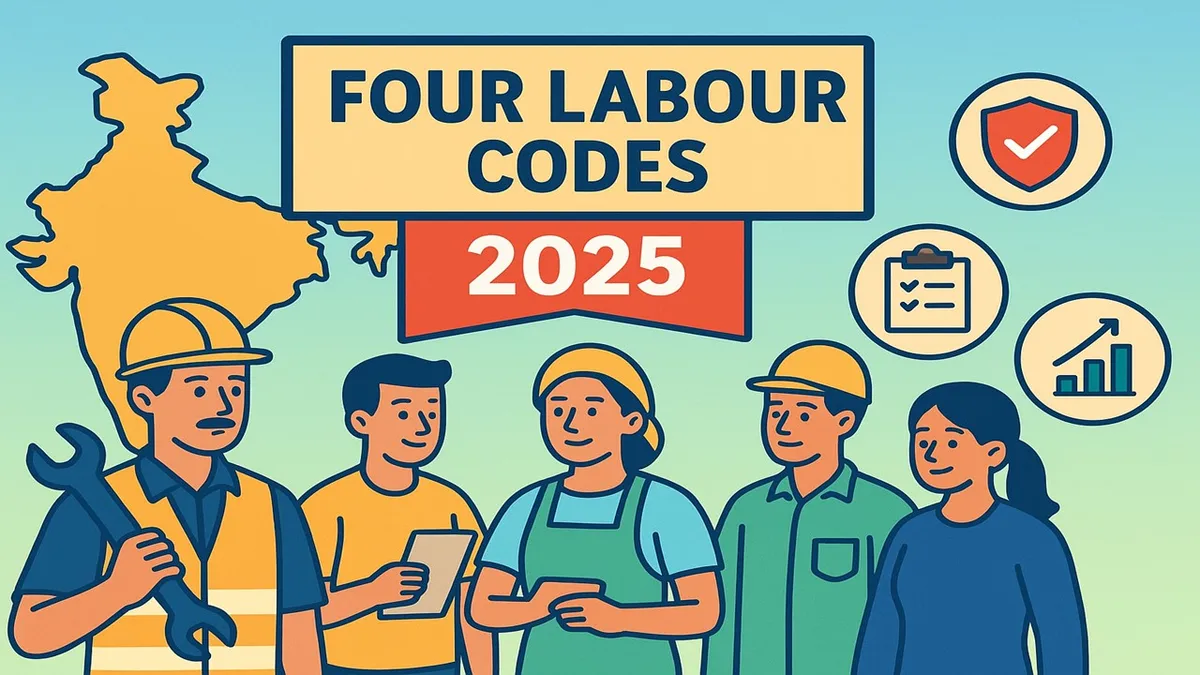
In an overhaul of labour laws, the government notified all four Labour Codes, ushering in major reforms, including universal social security coverage for gig workers, mandatory appointment letters for all employees, and statutory minimum wages and timely payment across sectors.
However, several labour unions and opposition parties protested against the government move saying these codes negate the right to strike, make union registration problematic, de-recognition of unions easy, and pave way to winding up labour courts and intro ducing tribunal for workers The four labour codes replace 29 existing workplace laws.
The government has described the rollout as an effort to simplify fragmented regulations dating back to the colonial era, modernise workplace conditions and create a unified framework for wages, social security, industrial relations and safety. While the government has framed the codes as a simplification exercise, they also enable easier hiring and firing and weaken several long-standing safe guards.
Although the labour ministry has held more than a dozen consultations with unions since June 2024, union leaders alleged they were sidelined and that their key objections were ignored. Even the reactions from industry have been mixed. While large manufacturers welcomed the move, having long criticised the country’s labour rules as restrictive, concerns have emerged from smaller firms.
The Association of Indian Entrepreneurs said the new structure could significantly increase operating costs for small and midsize enterprises and disrupt continuity across several sectors. With the notification now in place, states must now finalise their own rules to give effect to the codes. The biggest challenge of the new codes is that this transition will require sustained awareness efforts.
Al though the erstwhile labour laws since independence has discouraged formalisation, weakened enforcement, and perpetuated the dualism between highly protected workers in the organised sector, and the extensive informal workforce that operates beyond the reach of legal protections, change in mind set of labourers, entrepreneurs and unions alike will need time to seep in.
The transition will require sustained awareness efforts, capacity building, and the gradual development of new institutional practices. According to provisional estimates released by the Ministry of Labour & Employment, which utilise multiple administrative datasets and the RBI’s KLEMS database, employment has reportedly increased from approximately 47.5 crore in 2017-18 to around 64.33 crore in 2023-24, indicating a net growth of about 16.8 crore jobs.
Concurrently, the estimated unemployment rate has declined from approximately six per cent to about 3.2 per cent. A labour market that is both flexible and fair is not an oxymoron; it is possible to achieve. If India aims to attract investment, and progress, it requires a regulatory framework that rewards productivity, promotes formalisation, and safeguards workers regardless of the contractual nature of their employment.
India has undertaken a bold step in redefining the regulations that govern work. The challenge, now, is to ensure that this step becomes tenable, and has the endorsement of the workforce in question along with their representatives, the unions. Through sustained awareness, the political parties opposing the codes also need to be convinced of their benefits.
.jpg)
.jpg)
.jpg)
.jpg)
.jpg)
.jpg)