.jpg)


.jpg)

 English daily published in Bengaluru & Doha

The mythical king has embraced his fate
By Parth Pandya
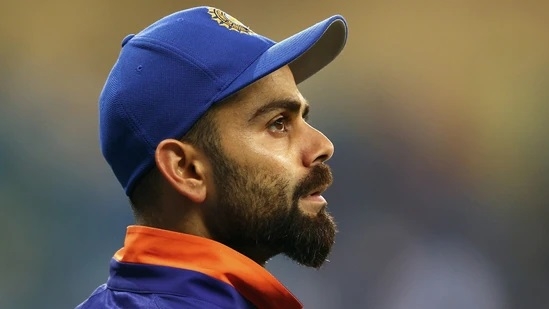
Kohli is the most definite post-Tendulkar superstar Indian cricket has produced. Unlike the players he grew up worshipping, Kohli cares little for the middle-class values of restraint and grace. Much of Kohli’s onfield shenanigans are happily presented as reflective of a ‘new India’.
In fact, if a legion of contemporary commentators were to be taken at face value, Test cricket continues to thrive against all odds exclusively at the mercy of Kohli. Kohli ‘loves’ Test cricket, we must be reminded every time the camera pans on him which is just about every other second. Unsubstantiated but deeply appealing adjectives like ‘intensity’ and ‘hunger’ have long dominated the sustained exercise of exceptionalising Kohli. His stature and aura have built a parallel industry that a lot of people and a lot of brands have fed off for years.
It is in this context when one examines the fast-changing dynamic between Kohli and the Board of Control for Cricket in India (BCCI), things suddenly start making much more sense.
The BCCI at its heart continues to remain a deeply feudal organisation. For all its money churning ability and the heavy coffers, its inner workings reflect a very orthodox culture where a coterie of politically connected strongmen take turns to rule. Sourav Ganguly, the current BCCI president and one of the country’s most loved cricketers was a consensus candidate settled on by the two warring factions. The invisible hand that would run the show however was going to remain of the strong Bharatiya Janata Party’s (BJP) inner circle with home minister Amit Shah’s son Jay Shah being appointed the board secretary.
The regime change signalled an end of days where the BCCI was a toothless entity run by a Supreme Court appointed Committee of Administrators (CoA). The board was back to being run by professionals who’d make little qualms about thoroughly establishing who’s in charge. The power vacuum in the board during CoA’s tenure meant Kohli managed to nearly monopolise power in ways his predecessors had hardly known.
Regardless of where one stands over Anil Kumble’s merit as India’s coach, the fact that Kohli managed to have one of India’s foremost cricketing names removed within a year of his appointment alludes to the kind of influence he had in matters outside his jurisdiction. Kohli basically overrode a call taken by the Cricket Advisory Committee (CAC) – at the time made of stalwarts like Ganguly, Sachin Tendulkar, and VVS Laxman. Following Kumble’s removal, the board had to extend the deadline for inviting applications of his replacement until Kohli’s preferred candidate Ravi Shastri formally applied for the job. And the CAC’s authority by then was beyond compromised. Shastri presided over other candidates just as the captain wanted.
Now, few would suggest Kohli’s exclusive and unquestioned domination in these matters was unearned. His extraordinarily high output with the bat and his immense commercial poten- tial in the mar- kets meant he became a big- ger brand than many thought was possible. The team’s failure under Kohli to win any relevant piece of silverware in limited over formats and some baffling selections leading into big tournaments never gained currency till his personal stock was soaring. With a dip in form, his decisions as leader too stood to be belatedly scrutinised.
By opting to step down as T20 captain, Kohli provided the board with an opening to considerably size down his giant shadow on Indian cricket. Citing a rather technical explanation of wanting to maintain uniformity in both white-ball formats, Kohli was practically sacked as ODI captain.
When Kohli all but called Ganguly a liar in front of press dismissing the latter’s claim that the board had pursued him into not giving up the T20 captaincy, the writing was on the wall. Chief selector Chetan Sharma has since backed Ganguly’s claim making it two men’s word against one’s so far but the truth mattered far less than the fact that the working relationship between the Indian captain and BCCI president had become pretty much untenable.
It didn’t help that some of the more recent public positions Kohli has taken in the recent past – including calling out the communal nature of online abuse faced by his teammate Mohammed Shami – has for obvious reasons not sat too well with the right wing nationalists who are de facto in charge of running Indian cricket today.
But while projecting Kohli as a victim of politics has a certain appeal and effect, facts are rather boring and as usual disrupt the flow of a good story. Kohli has pretty willingly remained a poster boy of the regime and has hardly minded his own public image being levera
.jpg)
.jpg)
.jpg)
.jpg)
.jpg)
.jpg)