.jpg)


.jpg)

 English daily published in Bengaluru & Doha

Is Indian cricket overlooking domestic excellence?
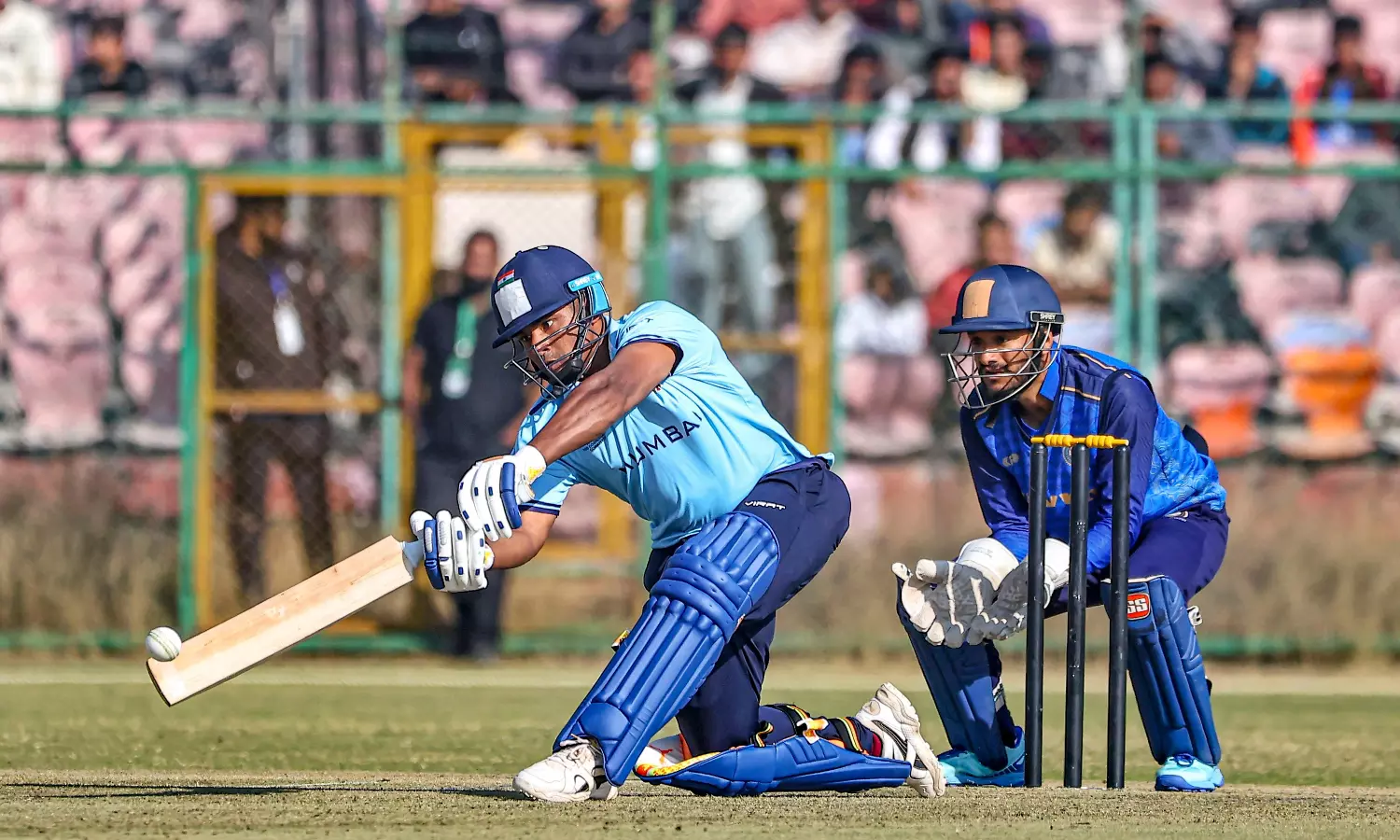
Sarfaraz Khan’s blistering 157 in the Vijay Hazare Trophy should have been a celebration of India’s formidable domestic system. Instead, it has reopened an uncomfortable and recurring debate: does excellence in domestic cricket still count when it comes to national selection? The knock, coming with characteristic authority and urgency, once again underlined a paradox at the heart of Indian cricket — prodigious performance without proportionate reward.
Few modern domestic batters have compiled numbers as staggering as Sarfaraz’s. Since the 2019–20 Ranji season, he has averaged well above 65, with multiple double hundreds and match-defining innings across conditions. In an era when consistency is prized rhetorically, his continued marginalisation raises awkward questions about how merit is defined by India’s selectors. When former chief selector and batting great Dilip Vengsarkar publicly wonders what more a player must do to earn a fair look-in, the issue can no longer be dismissed as routine selection noise.
The broader concern is not merely about one player. It is about the signalling effect that such decisions send to the vast domestic ecosystem. India plays more first-class matches than any other nation, supported by a deep pyramid of Ranji, Duleep, Irani and limited-overs tournaments. This structure has historically been the bedrock of India’s rise as a cricketing power. Legends from Sunil Gavaskar to Rahul Dravid were products of relentless domestic excellence before international stardom followed.
Yet the modern selection discourse appears increasingly shaped by reputation, perceived “fit”, and white-ball versatility. The rise of franchise cricket, especially the IPL, has subtly altered evaluation metrics. Strike rates, athleticism and television-friendly narratives now compete with — and at times overshadow — the grind of four-day cricket. While such evolution is inevitable, the danger lies in allowing format bias to distort red-ball judgement.
India’s recent Test inconsistencies only sharpen the irony. Over the past two years, collapses against high-quality bowling have exposed frailties in technique and temperament. Ironically, these are precisely the attributes that prolific domestic batters tend to cultivate. As former India coach Anil Kumble once remarked, “Domestic cricket is where you learn patience, problem-solving and resilience — qualities no shortcut can teach.” Ignoring that reservoir risks weakening the very foundation Test cricket depends upon.
Selectors often argue that “team balance” and “specific roles” dictate choices. That logic has merit, but it becomes questionable when exceptional performers remain perpetually on the fringes. Meritocracy cannot be conditional or cosmetic. If sustained excellence across seasons does not translate into opportunity, domestic cricket risks becoming a ceremonial pathway rather than a genuine gateway.
There is also a psychological cost. Thousands of young cricketers toil across India’s maidans and smaller centres, believing performance will speak for itself. When it does not, cynicism replaces aspiration. A system perceived as opaque erodes trust, no matter how well-intentioned its custodians may be. Indian cricket, with its depth and resources, can afford experimentation — but not at the cost of credibility.
Selection must remain a transparent conversation between performance and potential, not a closed loop of familiarity and favour. Sarfaraz Khan’s latest innings is not merely a statistical feat; it is a reminder knocking loudly on the selectors’ door. The question, then, is not whether India has talent in abundance. It always has. The more pressing question is whether its gatekeepers are still listening to the runs.
.jpg)
.jpg)
.jpg)
.jpg)
.jpg)
.jpg)