.jpg)


.jpg)

 English daily published in Bengaluru & Doha

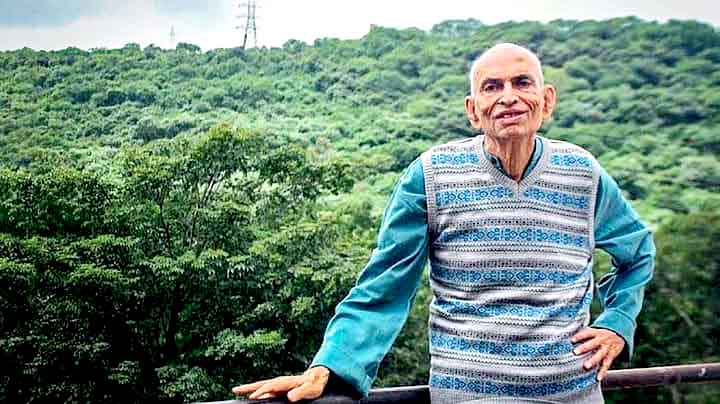
Ecologist par excellence
In the death of eminent scientist Madhav Gadgil, the nation has lost an ecologist who remained steadfast to his commitment against any damage and destruction to the Western Ghats. Gadgil who died at the age of 83 on Wednesday, was one who confined himself not merely to boardroom discussion to conserve nature but had grassroots engagement with people and activists who worked relentlessly to preserve environment and safeguard the interest of the people who inhabited the forest, others whose livelihoods were entwined with the land, rivers, hills, forests and the wildlife.
His monumental report on the conservation of Western Ghats as the head of the Western Ghats Ecology Expert Panel (WGEEP) presented to the Government in 2009 pleaded for declaration of 75% of the hills that span over 1,600 kilometres across six states of peninsular India, as the ecologically sensitive zone didn’t find approval of the powers-that-be. It was considerably diluted by the High Level Working Group (HLWG) headed by space scientist K. Kasturirangan who brought the sensitive zone to merely 35% in his report submitted two years later. Gadgil remained opposed to any dilution and considered it an epitaph for the mountainous region that supplies water to all the rivers of Peninsular India.
A die-hard ecologist, Gadgil was wedded to the cause of conservation of nature and associated himself with movements and campaigns advocating conservation of nature in its myriad forms. It was his love for nature that persuaded him to return to India after a PhD from Harvard. He was a pioneer of several initiatives to preserve the nature and was instrumental in conceiving and creating the Nilgiri Biosphere Reserve in 1986 and in organizing the first ever census of wild elephants. His demise has orphaned the cause of environmental protection at a time when businesses and real estate lobbies are out to exploit the nature with the savagery never experienced before.
.jpg)
.jpg)
.jpg)
.jpg)
.jpg)
.jpg)