.jpg)


.jpg)

 English daily published in Bengaluru & Doha

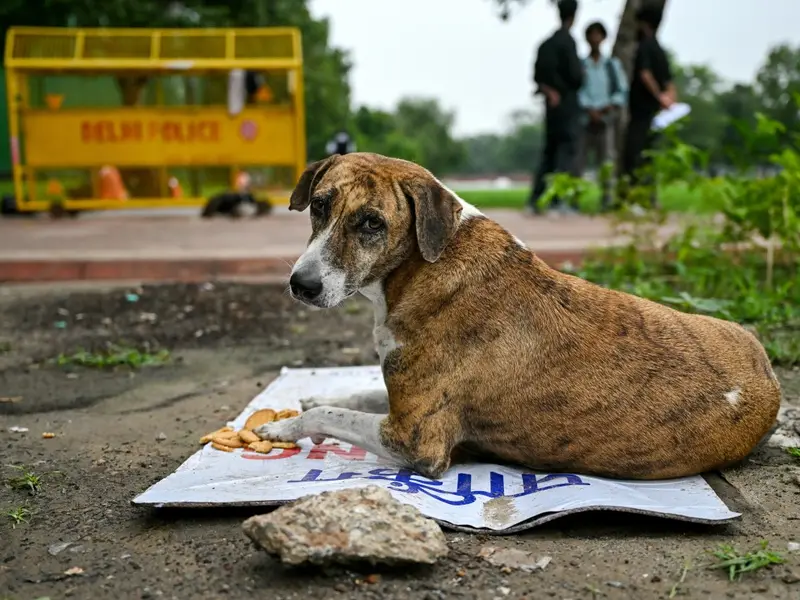
Making public spaces safe
Making the public spaces safe should occupy priority concern for our civic authorities. But even a cursory look would suggest that it is not merely stray dogs that pose a threat to users of roads and footpaths. The flex banners with protruding nails are no less a menace than the commonplace strays. Every anniversary and personal achievements by our politicos are announced through such banners which come up on lamp posts, street name boards, railings and trees, occupying every conceivable space where public gaze can reach.
Despite bans imposed by the municipal bodies, they keep popping up in public places with total impunity. Though required for short-lived purposes, they continue to linger on long after the anniversaries and conclaves have faded from the public memory. Earlier this year, three fans of actor Yash lost their lives on January 8 while installing flex boards in Suarangi village of Gadag district in the state. A flex board in Nelamangala near Bengaluru sparked the public outrage when it hit a scooter rider last November causing his death.
Of late, Chinese manja—a synthetic, glass-coated nylon string, used by the kite-flyers—has been in news for claiming increasing number of lives of commuters on city thoroughfares. The manja, banned on the advice of National Green Tribunal, is stated to have claimed nine deaths this January in the state of Gujarat itself where kite-flying is taken up during the Uttarayan festival. Entangled in manja, a family of three—a couple and their daughter—fell to its death 70 feet below from a flyover.
A five-year old girl had her throat slit while riding a scooter with her father in Hyderabad earlier this month. Thin and invisible, the manja-coated strings prove fatal for commuters before their lethality could be realised. Nothing has deterred the kite-flyers from using the manja as law and order authorities have no clue about its source of supply, storage and distribution. Not these alone, it is not uncommon to observe a host of wires criss-crossing our urban skies, several of them hanging loose with their ends split leaving the unsuspecting passers-by vulnerable to their nightmarish consequences.
Even worse is the case of wires and fibres jutting out of underground ducts that regularly prove fatal when monsoon deluge submerges the roads and pedestrian pathways alike. Among the strays, dogs are not the only ones to blame. A good number of members of the cattle have nowhere to go than wander on the streets of our shiny metropolises with gay abandon. Having had their productive as well as reproductive worth behind them, they are outlaws capable of defying every rule in the book of statutes.
It is time the guardians of law thought of rendering the public spaces safe. Mere prohibition and bans would scarcely help. The civic administration can efficiently sanitise public spaces only when an alert, agile and aware citizenry chips in with equal enthusiasm.
.jpg)
.jpg)
.jpg)
.jpg)
.jpg)
.jpg)