.jpg)


.jpg)

 English daily published in Bengaluru & Doha

When politics enters pitch, cricket the loser
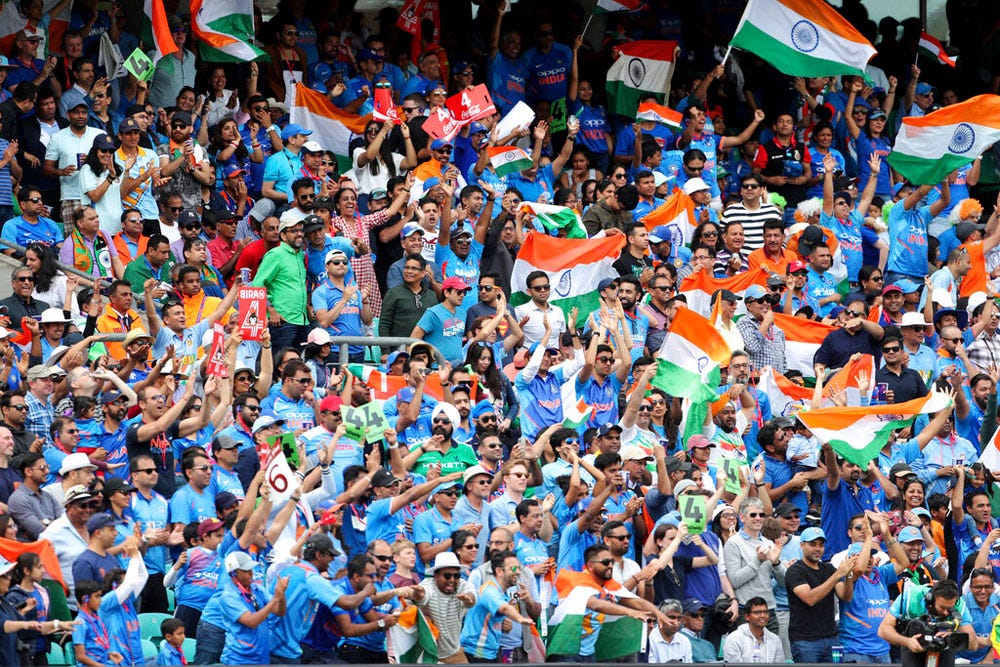
Sport is often romanticised as a rare neutral ground – a space where national flags flutter, but political fault lines momentarily fade. Cricket, in particular, has long claimed this moral high ground, presenting itself as a civilising force capable of uniting bitter rivals through shared rules and mutual respect. Recent events surrounding the upcoming Cricket World Cup, however, reveal how fragile that ideal has become when politics is allowed to intrude unchecked. Pakistan’s refusal to play India in the World Cup, framed as an act of solidarity with Bangladesh, is emblematic of how political signalling now dictates sporting decisions. Far from being a matter of principle rooted in sport, the move has triggered a cascade of consequences that threaten the credibility of international cricket. The ICC is reportedly staring at losses exceeding Rs 4,500 crore, a figure that reflects not merely broken fixtures but eroded broadcast value, sponsor unease and declining fan confidence. Bangladesh’s demand to shift matches from India to Sri Lanka was not based on logistical impossibility or player safety, but political discomfort. When the ICC refused, Bangladesh chose to abstain from participation. At the heart of this decision lies a deeper grievance – the denial of participation to a Bangladeshi player bought by KKR in the IPL. Adding fuel to the fire, former England captain Nasser Hussain has sparked an online debate by questioning whether the ICC would treat India the same way it treated Bangladesh in the lead-up to the 2026 T20 World Cup. This is not unfamiliar territory for cricket. In earlier years, IPL matches involving Sri Lankan players were denied permission to be held in Chennai due to geopolitical tensions. While security concerns must always be taken seriously, the selective application of political caution sets a worrying precedent. When politics begins to dictate who plays, where they play, and against whom, athletes are reduced to symbols rather than professionals. Careers painstakingly built over decades can be derailed overnight by decisions taken far from the boundary line. Fans, too, are casualties – denied contests that embody rivalry without hostility and competition without conflict. More dangerously, such interference weakens institutions meant to safeguard sport’s independence. The ICC’s inability to enforce neutrality exposes the limits of its authority, inviting future boycotts and strategic withdrawals whenever political winds shift. Once this door is opened, tournaments cease to be competitions and become negotiations. Sport cannot, and should not, be entirely divorced from global realities. Yet there is a vital distinction between acknowledging political contexts and surrendering sporting integrity to them. Cricket’s power lies precisely in its ability to transcend politics, not mirror it. If the game is to retain its moral authority and global appeal, its administrators must draw firmer lines – or risk presiding over a sport where politics always wins, and cricket always loses.
.jpg)
.jpg)
.jpg)
.jpg)
.jpg)
.jpg)