.jpg)


.jpg)

 English daily published in Bengaluru & Doha

Second leopard sighting puts south B’luru residents in spot
Bengaluru
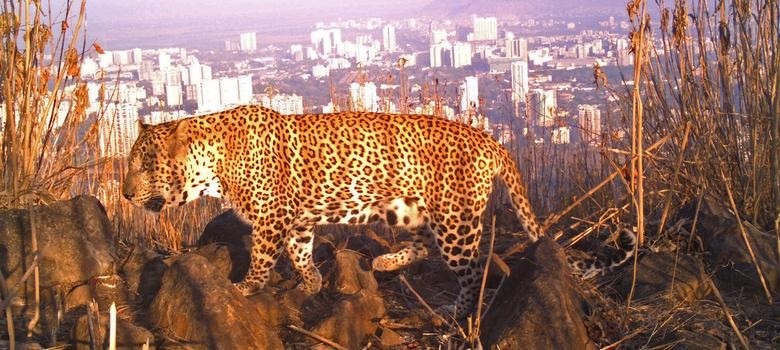
Residents of south Bengaluru are on edge following a second sighting of a leopard in the Anjanapura area near JP Nagar 9th Phase. The animal was captured on CCTV footage entering the courtyard of a residential house on Tuesday, a week after it was first spotted roaming the streets. The latest incident has heightened public concern over safety and prompted calls for swift action by the authorities. “The presence of leopards in the city is a reality,” said Ganesh V, Assistant Conservator of Forests (ACF), Bengaluru South Division.
He noted that Bengaluru has one of the highest leopard populations among Indian cities, which explains why sightings of the big cats along the city’s fringes have become fairly common. He added that the leopard population has increased over the past few years and is expected to rise further. Leopards, he said, instinctively avoid human settlements but have recently ventured into such areas in search of prey, mainly stray dogs and livestock. He clarified that there is no indication that they are deliberately targeting humans.
“Bengaluru has a dedicated leopard task force,” he said, adding that the team, under the Urban Forest Division of the Karnataka Forest Department, monitors the outskirts where leopard movement is frequent. The unit uses tools such as camera traps, cages and thermal drones, and has established helplines for residents to report sightings. ACF Ganesh also pointed to the challenges of relocating captured leopards, warning that releasing them in a new area could disrupt the local ecological balance and trigger territorial conflicts. There is also a risk that the animals may return to nearby human settlements.
If leopards could speak
“The prey base for leopards has changed drastically due to the scarcity of natural prey, forcing them at times to turn to dogs,” said Kushal N, wildlife biologist and research scholar, Department of Zoology, Bangalore University. However, he noted that such incidents remain relatively rare; if leopards primarily relied on dogs, it would be reflected in higher stray dog mortality.
“They have roamed and lived here for a very long time. It is only now that people are noticing them through CCTV cameras operating round the clock,” said Yashas Bharadwaj, conservationist and founder of Wildaholic. Echoing other experts, he emphasised that leopards have been present in these areas for generations; it is only with the advent of cameras and social media that citizens have begun actively discussing their presence.
He also referred to traditional wisdom, which advised avoiding venturing out at night — both to give nocturnal animals their space and to ensure human safety. Wildlife activist Joseph Hoover noted that many recent settlements on the outskirts overlap with territories historically frequented by leopards. “Residents in these areas must be aware, educated and sensitive to the presence of wildlife,” he said. Hoover stressed that coexistence is vital, describing it as one of the most effective ways to mitigate human-wildlife conflict.




.jpg)
