.jpg)


.jpg)

 English daily published in Bengaluru & Doha

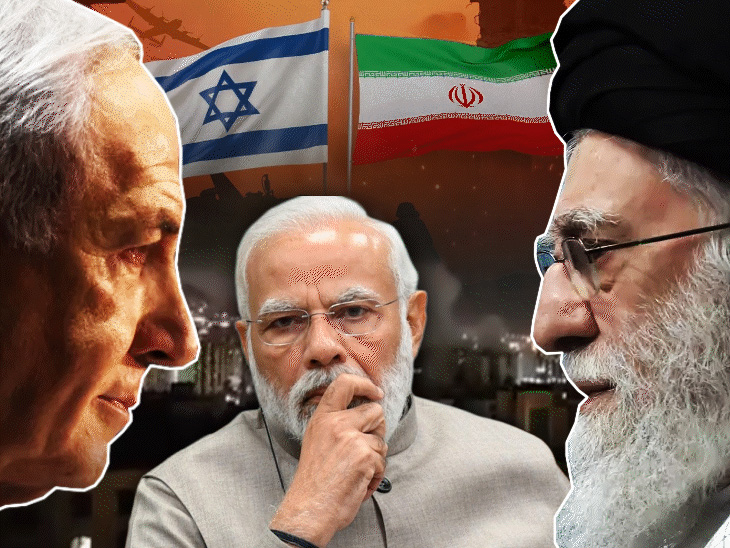
Modi’s stoic silence on Iran war, signals compromise
India’s silence on the assassination of Ali Khamenei, and on the unprovoked aggression on Iran by the US-Israel combine, came under much expected criticism from the opposition parties. The silence exposed Modi’s compromised foreign policy and lack of spine to stand up against Trump and Netanyahu, and it also exposed a new alarming shift in India’s foreign policy; abandoning old trusted allies like Russia, and even Iran for imperialist US and Zionist Israel.
Unfortunately, under Modi, India is headed for a pro-imperialist foreign policy. It has done away with concepts like non-alignment which it had stood for over decades and helped the nation earn a respected place among the global community of nations.Both India and Iranian civilizations share deep cultural roots. Despite modern geopolitical challenges, this shared civilizational DNA remains a foundation for goodwill and cooperation. But perhaps not anymore under the saffron party, which prefers selective narratives from history, preferably anything which has no connection with Islam, or Islamic culture. India’s Imports from Iran was US$1.06 Billion during 2024, according to the United Nations COMTRADE database on international trade. Indian Basmati rice exports constituted a major chunk of exports to Iran, now with the indefinite war, that is gone.
Shockingly, India, which already spent $500 million of Indian taxpayer’s money to build the Chabahar Port in Iran, was blasted by Israel just 24 hours after the Indian Prime Minister visited Israel. Not a word of condemnation came from Modi, or Jaishankar. After repeated threats, bullying and finally subjugation under tariff threats, Modi succumbed to Trump’s arm twisting tactics and reportedly promised to quit buying Russian crude, in lieu of reduced tariff at 18%. Now India is forced to purchase expensive crude oil from the US, which the US is getting at dirt-cheap prices from Venezuela.
Indian businesses will suffer due to the one-sided trade deal in which India will pay 18% tariffs if they want to sell their products in the US while the US will pay absolutely 0% tariffs when they sell their products in India. For India, each $1 increase in crude adds roughly $2 billion to the annual import bill, putting pressure on the trade balance. Oil-sensitive sectors such as oil marketing companies, paints, tyres, aviation and chemical companies may face margin compression.
India’s current account deficit, which is 1.2% of its GDP, would be widened by 50 basis points for every $10/ barrel rise in oil price. But Washington has warned New Delhi that it will monitor India’s Russian oil imports and any attempt to resume purchases could lead to a renewal of punitive tariffs. That makes any supply disruptions due to the Iran conflict even more problematic for India. But Modi seems least bothered.
.jpg)
.jpg)
.jpg)
.jpg)
.jpg)
.jpg)