.jpg)


.jpg)

 English daily published in Bengaluru & Doha

When war destroys history
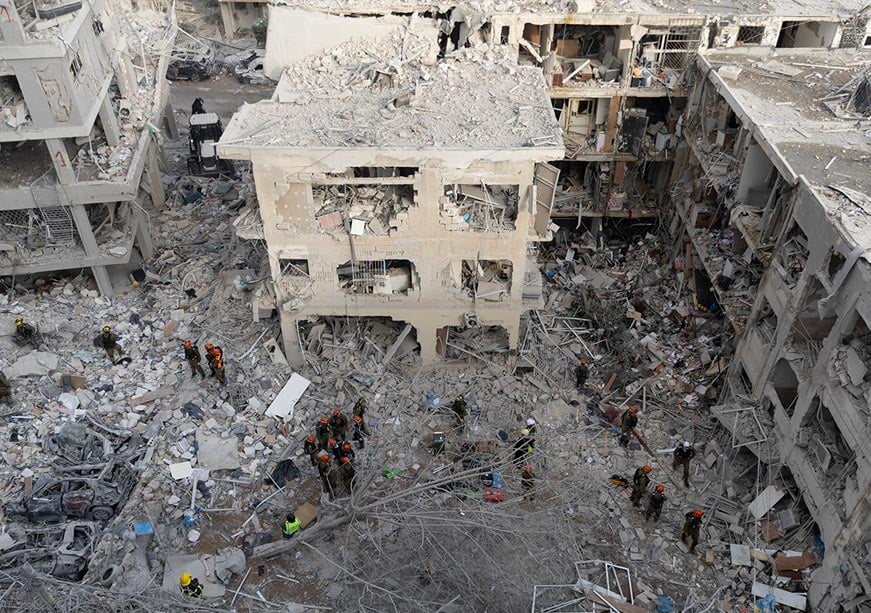
A bullet kills a person in a moment. The loss is mourned, remembered and re- corded. But when war destroys a cen- turies-old monument, there is no funeral, only silence and an irreversible loss to human his- tory. War has always taken lives, but it also erases heritage. Unlike human life, which renews itself, destroyed monuments are lost forever. Structures of stone and art do not regenerate. Their destruction leaves a permanent void in collective memory. History offers stark rem- inders.
During World War II, the German city of Dresden saw the destruction of the Church of Our Lady, a ba- roque landmark. Though later rebuilt, it still stands as a symbol of loss. Similar concerns arise today as conflicts con- tinue to damage historical sites across regions. ltural landmarks, often unrelated to military objectives, suffer irreversible harm. These monuments are not merely buildings but re- positories of civilisational memory, art and identity. Lebanon’s ancient sites, including the temples of Baalbek and heritage areas in Tyre, have also faced damage in past conflicts.
Such losses diminish humanity’s shared legacy. International frameworks like the 1954 Hague Convention were established to protect cultural heritage during war. However, enforcement remains inconsist- ent. Global institutions must act more decisively to prevent further destruction. The loss of a life is tragic, but the loss of heritage affects generations. Wars may end and borders may change, but destroyed his- tory does not return. Protecting cultural heri- tage is essential to preserving identity, memory and the continuity of civilisation.
.jpg)
.jpg)