.jpg)


.jpg)

 English daily published in Bengaluru & Doha

The price of ‘clear roads’: Why Bengaluru’s street vendors fear new policy
Bengaluru
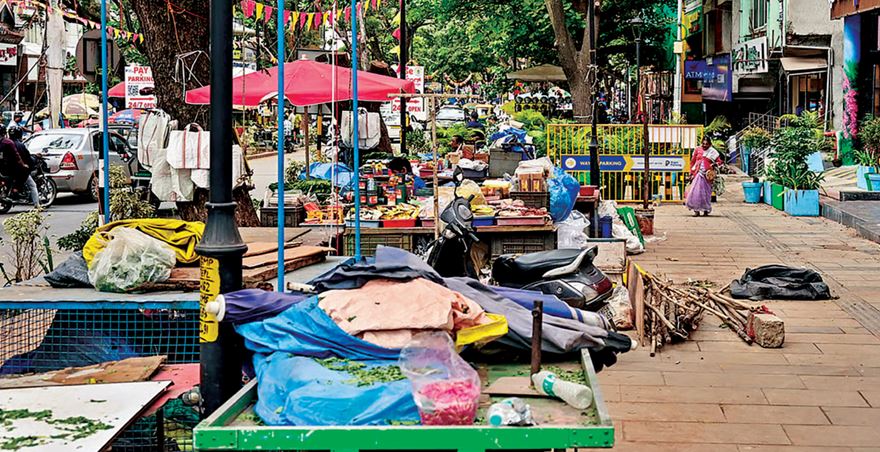
The Greater Bengaluru Authority (GBA) has directed all five city corporations to remove unauthorised street vendors operating on main and sub-roads where they obstruct pedestrian movement. The directive comes after Deputy Chief Minister D.K. Shivakumar on Friday announced a new policy to prohibit street vending on main roads in Bengaluru, with the initiative intended to clear footpaths, reduce traffic congestion, and ensure that only registered vendors operate in public spaces.
However, the move has drawn strong criticism from street vendors and activists in Bengaluru. “The government should be pro-people, not pro-capitalist or pro-corporate. Street vendors must be considered and provided with designated spaces,” said social activist Tanveer Ahmed. He added that, irrespective of new developments and urban planning initiatives, such sections of society should be accommodated, as markets and street cart vendors have existed for decades, with many vendors spending long hours on the roadside, braving harsh weather conditions in an effort to earn a livelihood.
“We are not opposed to regulation, but we want it to be implemented in a manner that benefits pedestrians, street vendors, and the public at large,” said Vinay Sreenivasa, Executive Committee Member of the Karnataka Pragatipara Beedhi Vyaparigala Sangha. He added that everyone has a right to the street, including street vendors, and that several Supreme Court judgements and existing laws protect their rights. He further noted that the perceived conflict between street vendors and pedestrians is, in many ways, being created, as street vendors provide significant benefits to citizens, especially common people.
Who will be affected?
Pasha, a fruit salad vendor near MG Road, has been operating his cart in the city for over 26 years. Speaking to News Trail, he said he has four children and has been able to support his family solely through this business. Expressing concern over the policy, he said, “What would we do if such rules are imposed? Where would we go?” Another vendor, Narasimha, a flower seller from JP Nagar who has been in the trade for 25 years, expressed strong opposition to the policy, stating that it would severely affect poor and hardworking street vendors.
“We are only trying to earn a minimal income to make ends meet. Unlike big stores, we are willing to negotiate prices even when we are not earning much ourselves. Yet, the government treats us this way,” he said. Several vendors that News Trail interacted with said they were unaware of the policy and feared that once it is strictly enforced, it could deprive them of their primary source of livelihood.
“We already work on the streets, and if they remove us, we will be forced to live on the streets,” said Madhav, a vendor. Nagamma, another street vendor who has been in the trade for nearly 40 years, echoed similar concerns, stating that the impact would extend beyond individual vendors.
“This will not affect just one vendor, but an entire family,” she said.




.jpg)
