.jpg)


.jpg)

 English daily published in Bengaluru & Doha

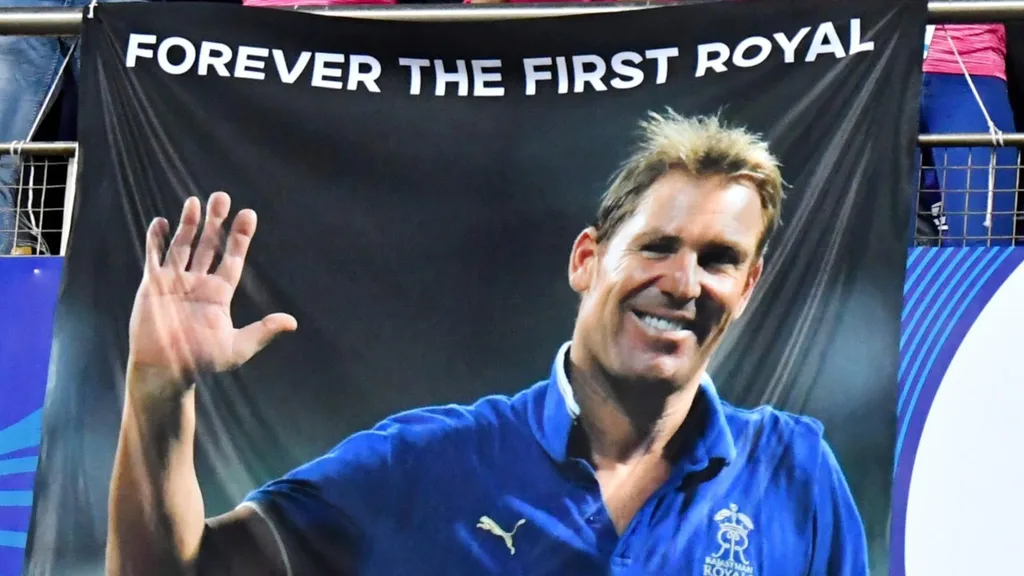
Warne’s wager and IPL’s billion-rupee revolution
In the spring of 2008, when the Rajasthan Royals placed their faith in Shane Warne, the move felt bold, even eccentric. Warne was not merely appointed captain; he was handed the keys to the entire cricketing operation. In an era when franchise sport in India was still embryonic, such sweeping authority was almost unheard of. Yet, nearly two decades on, it is difficult to view that decision as anything but prophetic – not merely for what it achieved on the field, but for what it revealed about the future of sport as a business.
Warne’s deal was as unconventional as his genius. For every season he played, he earned a 0.75% ownership stake – an arrangement that blurred the lines between player and proprietor. Over four seasons, that stake rose to 3%, a modest figure on paper that now reads like a case study in sporting foresight. Consider the numbers. The Royals were acquired for roughly ?630 crore in 2008.
Today, the same franchise commands a valuation of ?15,290 crore, following its recent sale. Warne’s 3% stake, in today’s terms, translates to an eye-watering ?450-460 crore. This is not merely a story of individual gain; it is a stark illustration of how dramatically the Indian Premier League has transformed the game’s economics.If further proof were needed, it has arrived almost immediately. Royal Challengers Bengaluru – now a title-winning side – has been sold for over ?16,660 crore.
That figure is not just a valuation; it is a statement. Even success, while valuable, is no longer the sole driver of worth. In the IPL, narrative, marketability and audience scale have decisively reshaped the equation, elevating franchises into global sporting assets of extraordinary value. Indeed, the IPL has not just grown – it has fundamentally altered the global sporting hierarchy. With an estimated brand value hovering between ?90,000 crore and ?1,00,000 crore, and a 2023-27 media rights deal worth ?48,390 crore, the league has become a commercial powerhouse.
On a per-match basis, it ranks second only to the National Football League and comfortably rivals, if not surpasses, the National Basketball Association and Major League Baseball in revenue intensity. To continue describing the IPL as merely a cricket tournament is, therefore, to miss the point entirely. It is, instead, a finely tuned commercial enterprise – one that has mastered the art of scarcity, spectacle and scale.
Fewer matches ensure higher value per game; a vast and engaged audience guarantees unmatched broadcast returns; and franchise valuations continue to soar in a manner that would have seemed implausible in 2008. If anything, Warne’s story serves as both a metaphor and a warning. Those who recognised the IPL’s potential early have been richly rewarded. Those who continue to underestimate it risk misunderstanding the very direction in which global sport is headed.
.jpg)
.jpg)
.jpg)
.jpg)
.jpg)
.jpg)