.jpg)


.jpg)

 English daily published in Bengaluru & Doha

SC status is not portable
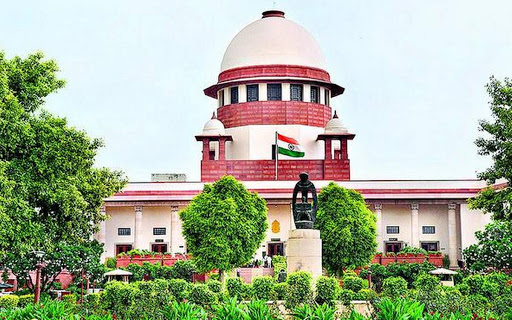
The Supreme Court has set the final seal on the contentious status of Scheduled Castes individuals if they choose to convert to Islam or Christianity. The apex court on March 24 ruled that an individual would forfeit the SC status upon conversion to religions like Christianity and Islam. In doing so, the court has gone by their own claim of these faiths being egalitarian in nature and declared that the caste is not a portable entity across religions and remains confined to Hinduism and faiths like Sikhism and Buddhism which civilisationally belong to India.
For a long time, the organisations related to Church had argued for extension of SC status to those who have converted to Christianity from Hinduism. The plea was mainly guided by the fact that the SC converts from Hinduism to Christianity retained their untouchable status despite conversion. The new ruling has made it abundantly clear that Dalit tag as well as attendant reservation benefits wouldn’t be applicable to such converts.
Though Muslims have never demanded the SC status for converts from SC communities, caste and caste-like features do exist within India’s Muslim community. However, while hierarchy, ascending order of holiness and descending order of lowliness, endogamy, occupational structure and sense of social superiority or inferiority are all too evident among Muslims, features such as untouchability, unseeability and interdining are totally absent.
All that can be said is that though Muslims do have castes like Ansari, Qureshy, Khalifa, Kasab, Darzi, Kunjra, Rayeen, Mansoori, Chhaparband, Dervish, Takara et al, these do not pose a big obstacle to upward mobility of individuals as it does in the case of Hindus. The SC ruling has for once for all cleared the fog and made it clear that caste is endemic to Hinduism and faiths with their origin in India rather than transcending religious borders.
.jpg)
.jpg)
.jpg)
.jpg)
.jpg)
.jpg)