.jpg)


.jpg)

 English daily published in Bengaluru & Doha

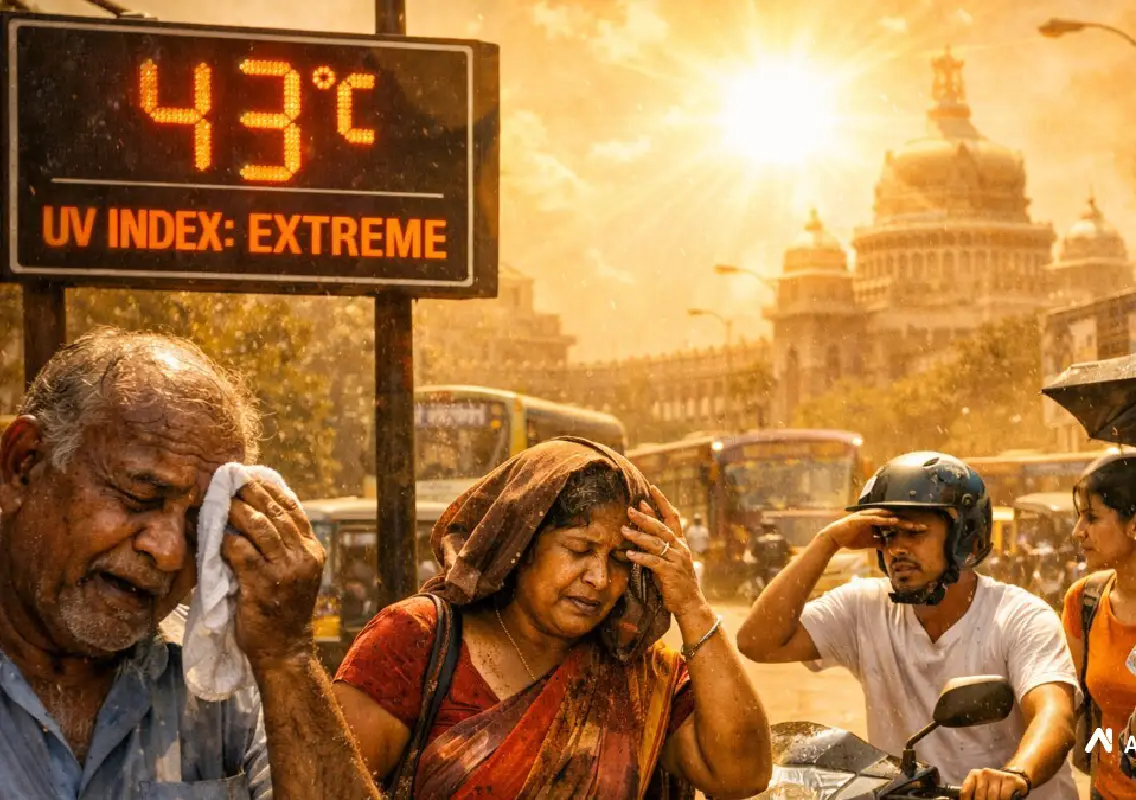
Stay safe in extreme UV: How to protect your skin & eyes at UV Index 13
Bengaluru
Are you experiencing a burning sensation in your eyes or noticing sunburn on your skin? The cause could be the sharp rise in ultraviolet (UV) index levels, which have reached as high as 13, considered extreme for this summer in Bengaluru. Medical experts have advised citizens to remain well hydrated by consuming adequate amounts of water and tender coconut to prevent dehydration and maintain overall health. However, alongside heat-related concerns, several physical symptoms linked to high UV exposure are also being reported.
Individuals who spend extended periods outdoors, particularly for work or travel, are considered most at risk and have been urged to take appropriate precautions to safeguard their skin and eye health. Don’t forget your sunscreen & long sleeves Dr Neema Sandra Dias, Consultant Dermatologist at TriLife Hospital, Bengaluru, has reported a growing number of patients experiencing sun-related skin issues, especially after vacations. “Even 15 minutes of sun exposure is enough for many people to develop sunburn”, she noted, adding that patients commonly present with redness, a burning sensation, and visible skin damage resembling staining.
She also highlighted an increase in polymorphic light eruption, a sun-triggered allergic reaction that causes itchy, skin-colored lesions on exposed areas such as the forearms, arms, neck, upper back, and ears. The condition has been observed predominantly among two-wheeler riders, prompting Dr Neema to strongly advise the use of thicker clothing to minimise UV exposure while commuting. She also noted a rise in cases of melasma, a form of skin pigmentation, particularly among women.
While these conditions may initially appear mild or temporary, Dr Neema warned that repeated sun exposure can lead to more serious long-term effects, including a high risk of skin cancer. She stressed the importance of sun protection regardless of how long one is outdoors. She recommends using a broad-spectrum sunscreen with UVA and UVB protection, ideally SPF 50 with PA++ or PA+++, applied 10 - 15 minutes before sun exposure and reapplied every three hours.
She also advises consulting a doctor if any skin concerns arise, rather than relying on home remedies. Make UV glasses an outdoor essential “Avoid rubbing your eyes and do not splash water directly when irritation occurs, as this may further irritate the cornea or conjunctiva”, said Dr Preethi V, Medical Superintendent at Nethradhama Super Speciality Eye Hospital, Bengaluru. She noted that splashing water is typically recommended only when a foreign particle enters the eye, whereas most mild irritation can subside by keeping the eyes closed and avoiding exposure to intense sunlight.
Instead, she advised the use of cool compresses over the eyelids and tear substitute eye drops from verified brands or those prescribed by a doctor, stating that these are safe and effective. Dr Preethi further cautioned against looking directly at the sun, warning that it can burn the retina and lead to solar retinopathy, potentially causing vision impairment.



.jpg)

