.jpg)


.jpg)

 English daily published in Bengaluru & Doha

End the war, open economic corridors
With the peace talks between the US and Iran to end the Gulf war collapsing in Islamabad early on Sunday, the world is back on the brink. Even in the best of times, there is no clarity regarding what US President Donald Trump plans to do, with most of his messages giving out mixed signals. However, before concluding the news conference in the Pakistan capital, Vice President J.D. Vance, who represented the US in the talks, said, “We leave here with a very simple proposal, a method of understanding that this is our final and best offer.
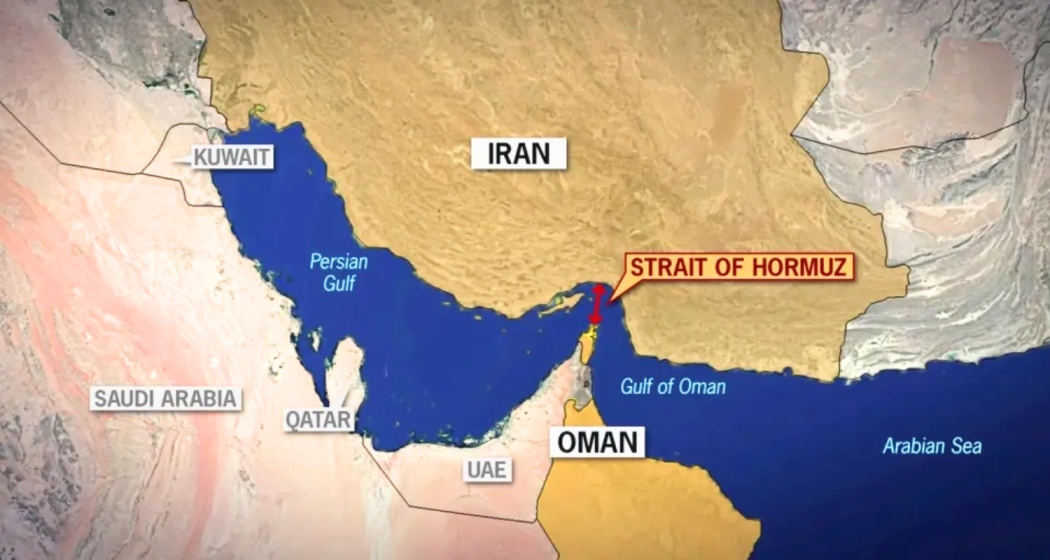
We’ll see if the Iranians accept it.” This indicates that the door for future talks has been left ajar rather than slammed shut. Irrespective of what unfolds, the war — which was started by the US and Israel on February 28 while talks were going on in Geneva regarding Iran’s nuclear facilities — has already done enough damage not just in the region, but across the entire world. The status of the Strait of Hormuz, a vital artery handling 20% of global oil transportation and currently restricted to selective passage, was among the reasons that led to the collapse of the Islamabad talks.
Oil prices have already skyrocketed by 50%. On April 11, World Bank President Ajay Banga said the “cascading impact” of the war would hinder global growth for years, regardless of whether the talks in Pakistan succeed. S&P Global projected that global growth would slow to 3.2% this year because of the “largest energy shock on record”. The World Bank warned that in a worst-case scenario where the war endures (a distinct possibility now), global growth could be slashed by a full percentage point, while inflation could surge by 200 to 300 basis points.
For emerging markets, it is a catastrophe, with inflation potentially hitting 6.7% and growth dropping as low as 2.6%. On April 9, IMF Managing Director Kristalina Georgieva warned that even if peace is achieved, the “scarring effects” will lead to a permanent hit to global living standards. The IMF warned that 45 million more people will suffer from food insecurity as a direct result of this war.
Small island states and poorer, energy-importing nations -- the least involved in the war -- are being hit the hardest. The question that we must ask is: why should uninvolved countries and people keep paying a price for this conflict? This is something the US and Israel have to ponder and answer for. If the “US has already won the war”, as Trump repeatedly claims, hostilities must end forthwith, for talks to resume and economic corridors to be opened for the benefit of everyone in the world.
.jpg)
.jpg)
.jpg)
.jpg)
.jpg)
.jpg)