.jpg)


.jpg)

 English daily published in Bengaluru & Doha

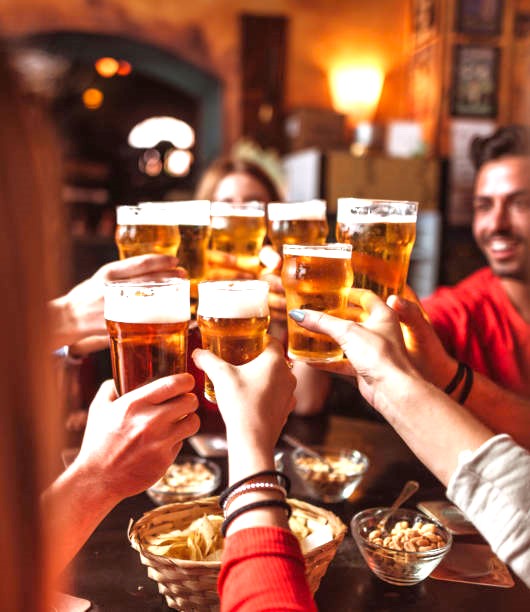
Kids, at the bar, going out of hand
Bengaluru
In Bengaluru, a steady surge in the number of pubs and microbreweries has become increasingly visible, with new establishments opening frequently across established hotspots and gradually expanding into newer localities. Widely regarded as the country’s pub capital, the city is home to a large base of alcohol consumers and food enthusiasts eager to explore new culinary and social experiences.
Pub boom meets weak regulation
However, regulatory oversight concerns have intensified despite the city’s economically significant nightlife, with scrutiny focusing on underage drinking and unauthorised entry, prompting calls for stricter enforcement and more robust compliance mechanisms.
Easy access, rising risks among youth
Around 33% of adolescents in Bengaluru’s pre-university and undergraduate colleges report alcohol use, far exceeding the national rate of 7.9%. Studies further indicate that nearly 30% of underage urban consumers have driven intoxicated, contributing to about 11% of road fatalities in 2022 linked to drunk driving.
Experts stress that the police, the excise department, and other relevant authorities share the joint responsibility of ensuring that existing laws are strictly enforced, particularly those aimed at preventing illegal practices such as allowing minors into liquor-serving establishments and serving them alcohol.
Enforcement questioned, accountability debated
“Pub owners are flouting regulations to maximise profits, while the state excise department appears to be turning a blind eye as it boosts tax revenues,” said Bhaskar Rao, alleging systemic lapses that enable underage access rather than prevent it. He further noted that, instead of suspending or cancelling licences of establishments found violating regulations, authorities often impose nominal fines, which fail to deter repeat offences and may inadvertently encourage continued non-compliance.
R. Venkatesh Kumar responded to the allegations, stating that each department operates with budget estimates reflecting expected revenue, which may be revised if unmet. He emphasised that revenue collection in the excise department is not pursued stringently, and that regulatory enforcement remains its primary focus. “We ensure that our officers conduct continuous inspections to verify that all licensees comply with regulations and that no illegal activities occur on their premises. Any violations detected are dealt with promptly and firmly,” he said, speaking to News Trail.
The Commissioner further stated that the department has adopted technological interventions to closely track inspections carried out by officers, including geo-fencing and facial recognition systems. These tools ensure inspections are conducted regularly and transparently. He noted that in the event of any violations, the system enables authorities to hold officers accountable and question them alongside licensees, helping to detect any suspected collusion.
Bhaskar also underlines the role of parents in monitoring their children’s activities and behaviour. “Children from affluent backgrounds, with significant disposable income, have become a key target group for businesses serving alcohol. In many cases, parents are unaware of where their children are going or what they are doing, and that needs to change,” he said. He further noted that concerns extend beyond underage drinking, pointing to a rise in cases of underage driving, some of which have resulted in fatal accidents.
In several incidents, parents have been seen stepping in primarily to shield their children from legal consequences rather than addressing the root issue. “We typically visit these establishments before 8 pm, when checks tend to be minimal. In some cases, there is no verification at all if one’s name is on the guest list,” said a second-year student, explaining how entry into pubs and clubs serving liquor is often secured despite existing ID verification norms.
Another student said that bouncers at entry points often assume she is above 18 and do not request identification. In cases where ID is sought, she presents a digitally altered Aadhaar card on her phone. Many underage individuals use similar methods, and security personnel are aware of the practice but often overlook it.



.jpg)
