.jpg)


.jpg)

 English daily published in Bengaluru & Doha

Heatwave raises hidden health risks as doctors warn of kidney strain
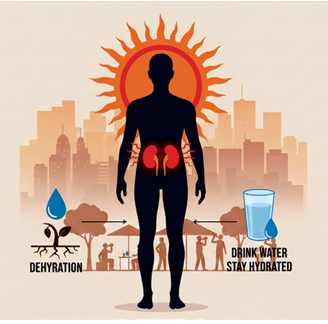
Bengaluru - With the heatwave in Bengaluru unsettling residents, doctors have warned that extreme heat can affect health in ways many people may not recognise. While dehydration and heatstroke are widely known risks of prolonged sun exposure, fewer people are aware of how heat-related illnesses (HRIs) can impact internal organs such as the kidneys. Consultant physician at Asian Hospital, Dr Charu Dutt, said, “When the body consistently loses f luids without adequate replacement, the kidneys come under direct strain.
We are now seeing more cases of kidney stones and infections linked to dehydration. Maintaining hydration is one of the simplest yet most impor tant ways to stay healthy during a heatwave. Heat stress also leads to elec trolyte imbalances, particularly sodium and potassium depletion, which can impair neuromuscular function and aggra vate underlying renal and metabolic conditions.” Older people and children are particularly vulnerable, especially if they have pre-existing conditions.
Dr Vikramjeet Singh, Senior Consultant in Internal Medicine, said, “People often underestimate how dangerous prolonged heat exposure can be. Continuous exposure can lead to heat exhaustion and heatstroke, and can worsen conditions such as hypertension, cardiac ailments and respiratory issues. This is especially true for the elderly, young children and outdoor workers.”
Meanwhile, the Ministry of Health and Family Welfare has advised hospitals in Karnataka to prepare for the heatwave by setting up dedicated heatstroke management rooms equipped with thermometers, fans and ice packs. Lead Consultant at Aster Hospital, Dr Suchismitha Rajamana, outlined key preparedness measures. “Hospitals must establish rapid response units to handle emergencies. Facilities should include ice blankets, ice tubs and normal saline cooled to around 4 degrees Celsius.
Clear standard operating procedures are essential to ensure timely treatment,” she said. According to Dr Raja mana, Aster Hospital has already implemented such measures. “We have taken the Health Department advisory seriously and have systems in place. We are also procuring specialised equipment such as ice blankets, ice tubs and cooling fans, and have constituted a rapid response team to manage such cases effectively,” she added.



.jpg)

