.jpg)


.jpg)

 English daily published in Bengaluru & Doha

Manipur: A forgotten state mired in fear, fatigue
Bengaluru
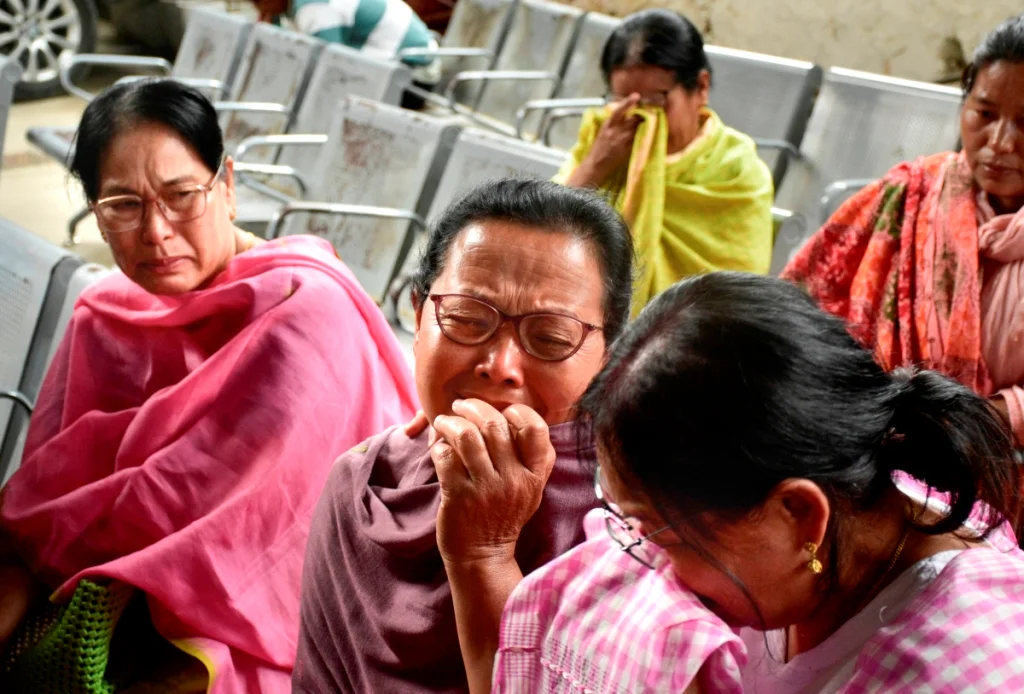
Manipur is burning again, and the silence surrounding it is as troubling as the violence itself. The northeastern state has been gripped by ethnic conflict since May 2023 – a crisis that has claimed over 200 lives, displaced more than 60,000 people, and left thousands of homes destroyed. The latest escalation, an April 2026 bomb blast in Bishnupur district that killed two children – a five-year-old boy and his six-month-old sister – has once again pushed the state to the brink. Their mortal remains were handed over to family members on May 2, after being kept in the mortuary for 25 days, as the family refused to accept them while demanding swift justice and accountability.
Fresh shutdowns, violent protests, and heightened security have followed, underscoring a grim reality: nearly three years on, the conflict shows no signs of resolution. “I used to closely follow developments in Manipur, but it began to take a serious toll on my mental health. What is happening there should not be happening,” said David Jangminlien, a doctoral student at the National Institute of Advanced Studies, Bengaluru.
‘We are being ignored’
For many Manipuris living outside the state, the crisis is not merely political – it is deeply personal. Several residents in Bengaluru said any meaningful understanding of Manipur requires acknowledging its complex ethnic composition and historical fault lines – factors they believe have been consistently overlooked by both authorities and the wider public. “We, as citizens, are not happy with how both the central and state governments have allowed this issue to drag on without being resolved.
It increasingly feels as though there is no real effort to solve it, perhaps because those in power continue to benefit from the situation,” said Prakash (name changed). He added that while the state once showed promise in sectors such as industry and tourism, the ongoing violence has pushed Manipur back by at least 15 to 20 years. Prakash’s family lives in the Imphal Valley, where daily life has been upended. Businesses have been disrupted, and communities are constantly drawn into tense discussions shaped by fear and uncertainty. He described a volatile atmosphere on the ground, with security forces using tear gas and other measures to control crowds during frequent flare-ups.
'Fading national conscience'
“I feel completely disoriented – nothing is functioning in an orderly manner. We cannot make plans because violence can erupt anytime, anywhere,” said another Manipuri resident in Bengaluru. “The situation remains dangerous and unpredictable.” Beyond the violence, there is also a quieter, more insidious issue: neglect. “Manipur may not have the most advanced infrastructure, but the number of athletes and international medal winners it produces is extraordinary,” said Raj (name changed). “Yet the state barely receives recognition.”
He pointed out that popular representations of the Northeast in Indian cinema remain shallow and stereotypical, reflecting a broader national disconnect. Despite the scale of the crisis – hundreds killed, over 60,000 displaced, and fresh civilian deaths as recently as April 2026 – Manipur rarely dominates national discourse. “Manipur has been, and continues to be, neglected,” he said. And as the violence drags into its third year, one question remains: how long can a crisis of this magnitude be ignored?
.jpg)
.jpg)