.jpg)


.jpg)

 English daily published in Bengaluru & Doha

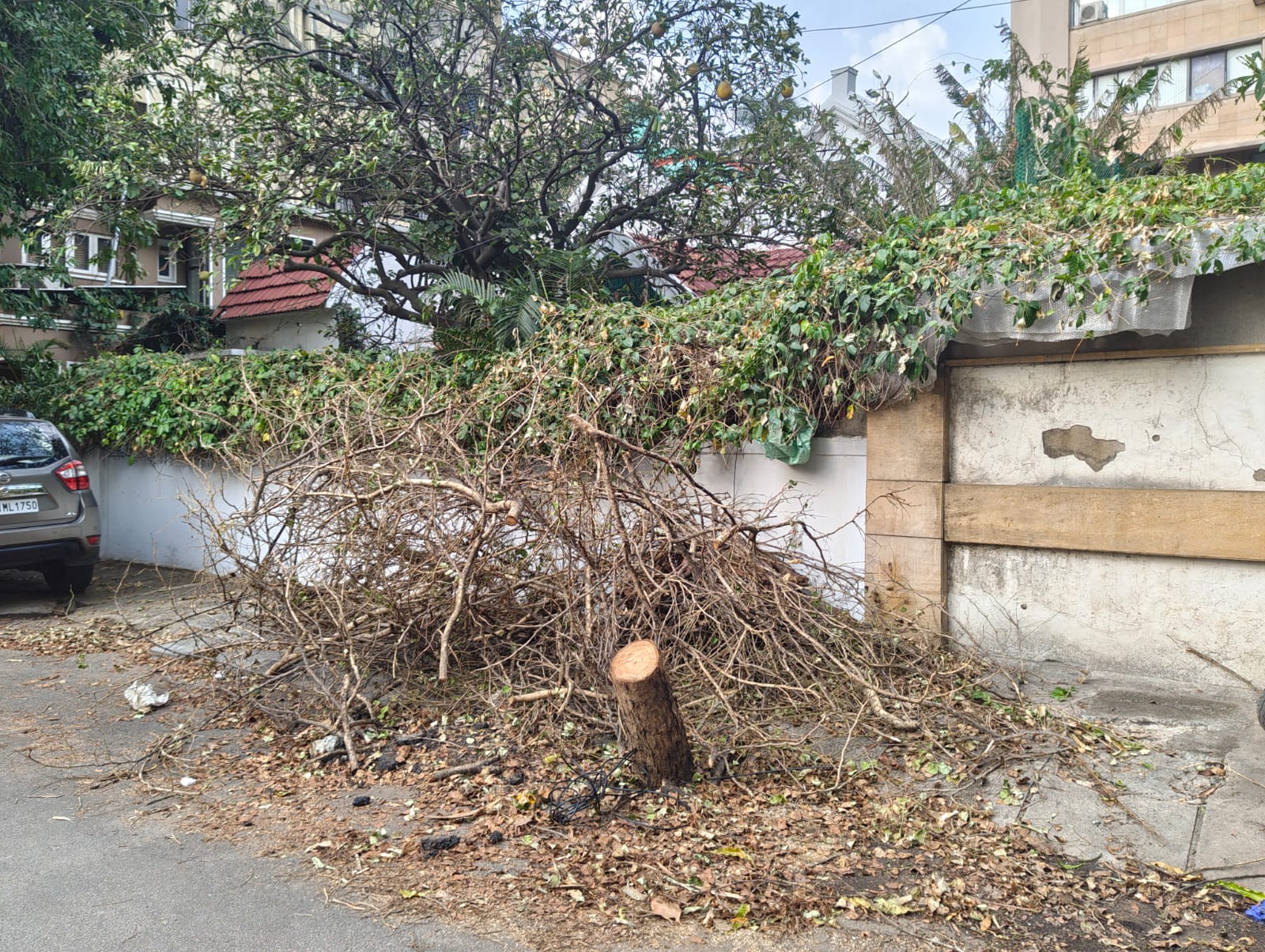
Civic apathy exposed further as log debris chokes B'luru roads
Bengaluru
The thunderous rainstorm on April 29 truly brought Bengaluru to its knees, triggering widespread traffic gridlock, severe waterlogging across key roads and underpasses, and the fall of nearly 400 trees, many of which are yet to be cleared, continuing to disrupt daily movement. According to data released by the Greater Bengaluru Author ity (GBA), a total of 498 trees and 1,254 branches fell across the five city corporations between April 29 and May 4. The authority stated that 491 trees and 1,199 branches have been cleared.
However, ground reports from several parts of the city suggest otherwise, with fallen trees and branches still strewn across roads and footpaths, obstructing pedestrian movement and disrupting vehicular traffic. “They cut a tree which was in a risky position and would have fallen. They picked up the cut logs but left these branches here,” said a security guard at a gated community on King Street in Shantala Nagar, where a heap of branches continues to occupy the footpath. Such instances highlight delays and gaps in the clearance process.
A similar situation persists on Rest House Road near the Shri Varasiddhi Vinayakana Temple, where a large fallen tree has re mained uncleared since the storm. The obstruction has significantly narrowed an already congested stretch, further compounded by ongoing road or footpath work on the opposite side, making movement difficult for both pedestrians and commuters. “My team and I conduct a census of trees across the city regularly and inform the Deputy Conservator of Forests (DCF) when we identify trees in dangerous positions or dried branches at risk of falling,” said environmentalist Alexander James, adding that they also coordinate with the police and the Bangalore Traffic Police (BTP) for support.
However, he termed the situation a “complete failure and negligence” on the part of the GBA corporations and the Forest Department, stating that many of the incidents could have been prevented. “We had already flagged several critical trees in advance,” he said. Explaining the structural vulnerability of trees in the city, he said, “We are on the Deccan Plateau. The ground is rocky, so tree roots do not grow deep but spread laterally. In contrast, in northern regions with softer soil, roots penetrate deeper. This is the reality we must plan for.”
Urban strategist Vinod Jacob echoed the concern, calling for a more scientific approach to managing Bengaluru’s green cover. “We urgently need better and more systematic maintenance of the city’s tree canopy. Current efforts appear to be knee-jerk reactions, with tree pruning and upkeep addressed only during the monsoon,” he said. “Authorities must deploy ade quate manpower and equipment for timely interventions, rather than resorting to firefighting during crises. These obstructions affect both pedestrians and vehicles, worsening congestion in already strained corridors,” he added.




.jpg)
