.jpg)


.jpg)

 English daily published in Bengaluru & Doha

In Bengal,RSS proved what social engineering can deliver
The Bharatiya Jana Sangh (BJS) was founded on October 21, 1951, in Delhi and was established by Syama Prasad Mookerjee, a prominent leader from Bengal. Though officially formed in Delhi, the party’s ideological roots and early electoral base in 1951-52 were heavily influenced by Bengal. This is the first time since independence that the BJP has swept the elections and formed the government in the state from where their founder belonged.
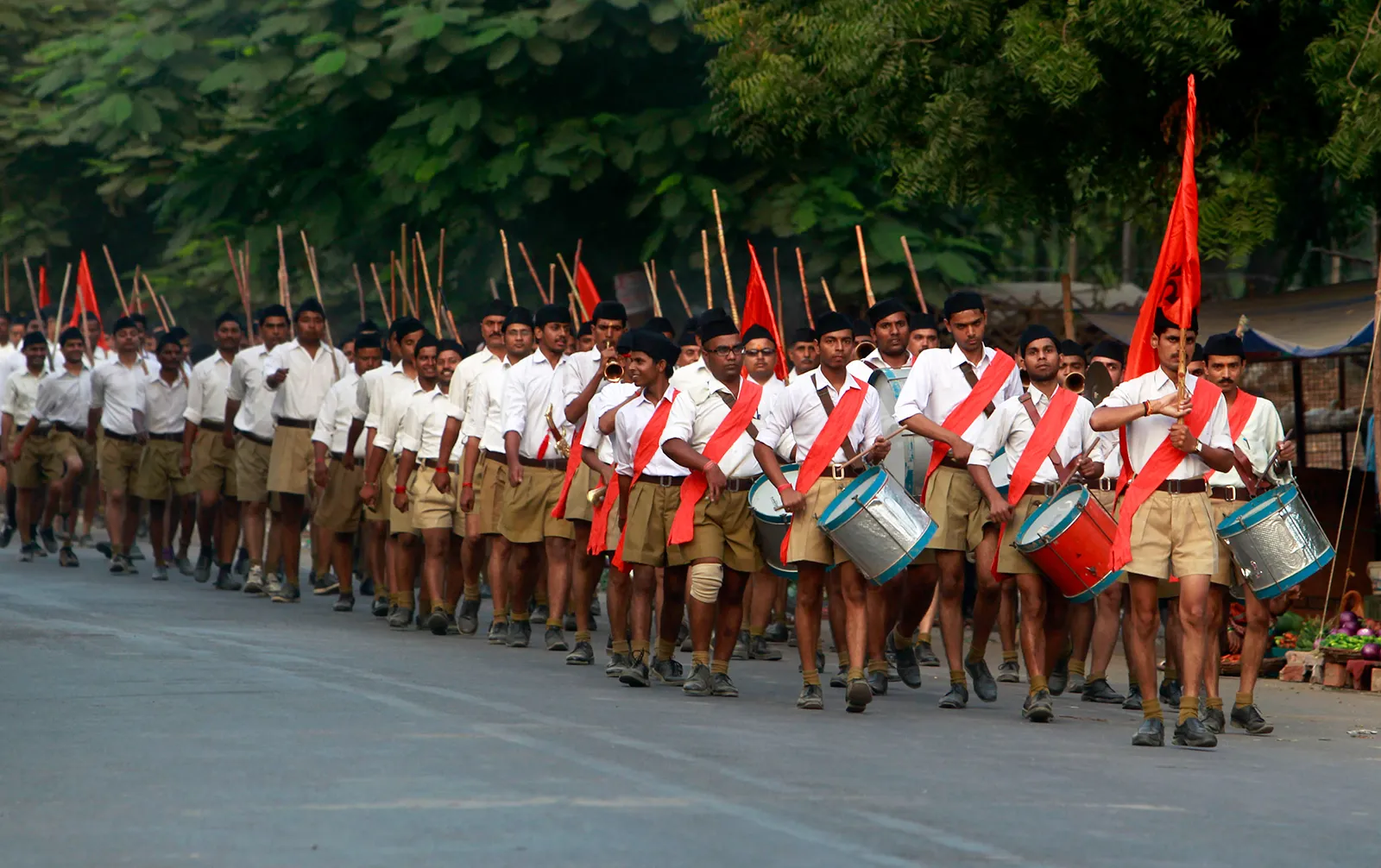
What unfolded in Bengal Assembly elections 2026, is not just a battle of ballots, it was a war of master social strategy engineered by the RSS from the shadows. It is the outcome of a long-term social project that has steadily worked to dissolve internal Hindu fault lines, caste, sub-regional identities, and class divisions while replacing them with a singular, cohesive political consciousness. Simply put, the Hindu vote consolidation behind the BJP professed Hindutva.
Nearly 2 lakh voter awareness meetings across roughly 250 constituencies, with 14 affiliate organisations penetrating every imaginable social layer, from students and labourers to women and tribal communities.RSS has deployed a calibrated, almost clinical model through Lokmat Parishkar meetings, totalling roughly 700 per constituency, designed to clarify public opinion. What these meetings have effectively done is reframe the electoral choice itself: from a routine democratic exercise to a perceived ‘fight for existence’ for Bengali Hindus.
It may not be out of place to say , the quiet campaign by several Sangh Parivar organisations highlighting the condition of Hindus in Bangladesh after the regime change, along with fears surrounding Jamaat, also played a crucial role in consolidating Hindu support.The most striking success of this effort lies in what Bengal historically resisted, and that was Hindu consolidation beyond caste lines. Unlike states where caste arithmetic dictates political outcomes, Bengal’s Hindu society was never electorally unified. What makes this strategy particularly potent is its subtlety. It literally swept away the carpet from below the TMC’s feet, without allowing it to guess the extent of the damage done .
This shift signals the emergence of a new socio-political template in Bengal, one where identity, not ideology, becomes the primary axis of politics.
For BJP’s opponents, it presents a far more complex challenge than countering a political rival. It is a case of how sustained, decentralised, and culturally rooted mobilisation can achieve what high-voltage politics often cannot: reshape the very instincts of an electorate. That shift is the fruit of a long-game strategy executed with quiet precision by the Rashtriya Swayamsevak Sangh (RSS).
.jpg)
.jpg)
.jpg)
.jpg)
.jpg)
.jpg)