.jpg)


.jpg)

 English daily published in Bengaluru & Doha

Bengaluru’s monsoon woes stem from civic apathy, say experts
Bengaluru
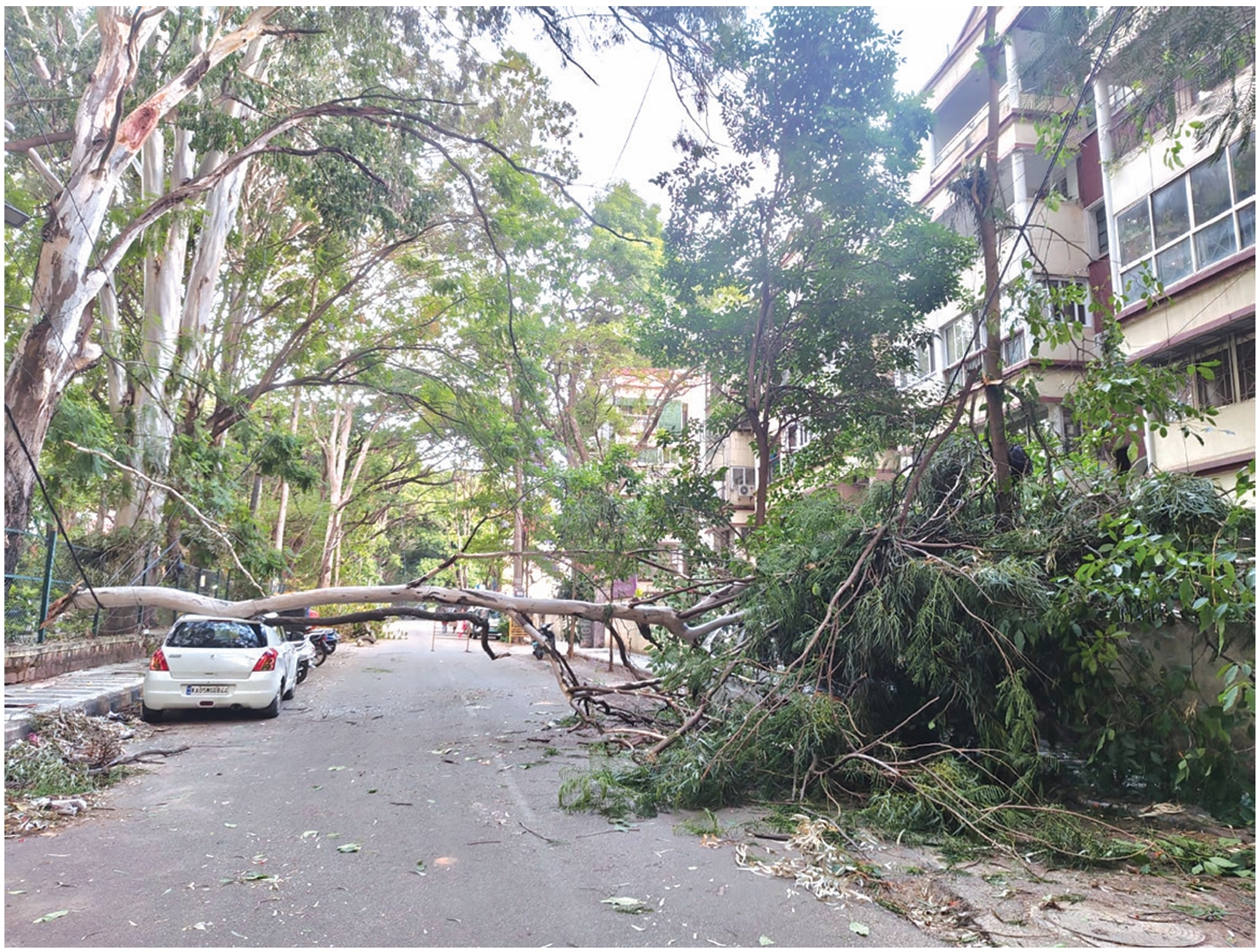
Bengaluru has been witnessing intense thunder storms and heavy rainfall over the past few weeks. While the showers have restored the city's much-celebrated cool weather, they have also exposed persistent civic shortcomings, leading to widespread waterlogging, flooded and damaged roads, uprooted trees, and disruptions to power supply caused by fallen branches and damaged electrical lines.
Experts argue that these recurring issues highlight the failure of civic agencies such as the Greater Bengaluru Authority (GBA) and the Bengaluru Water Supply and Sewerage Board (BWSSB) to undertake adequate precautionary measures ahead of the monsoon season.
“A few weeks ago, we conduct ed a survey of trees across the city and submitted a report to the Deputy Conservator of Forests (DCF), identifying trees that were in a hazardous condition, including those that were diseased, partially damaged, or at risk of collapse. We recommended their removal and replacement with fresh saplings. However, no action was taken. Following the recent heavy rains, many of these trees fell, resulting in significant damage and disruption”, said environmentalist Alexander James.
He also attributed the city's waterlogging problems to poor maintenance of drainage infrastructure. “The GBA has neglected the sew age and stormwater drainage sys tems. Natural water channels leading to lakes have been blocked, causing rainwater to accumulate on roads instead of flowing into water bodies”, he said.
Drawing a contrast between rural and urban landscapes, he noted that traditional water channels, or rajakaluves, in villages enable rainwater to flow into agricultural lands and lakes, which then serve as vital water sources during summer. “In urban areas, lakes have been closed off and replaced by concrete structures. Greedy individuals and the land mafia have encroached upon these water bodies, leaving no natural channels for water to flow. Consequently, water stagnates on the roads”, he added.
Urban strategist and environmentalist Vinod Jacob said that Bengaluru's monsoon-related challenges are largely preventable and stem from a lack of sustained action by civic authorities. “Every monsoon, citizens are forced to endure the same avoidable hardships. Heavy rainfall is not a new phenomenon, but the measures and promises aimed at preventing flooding continue to remain unfulfilled”, he said.
“Desilting and drain-cleaning operations should be entrusted to a single accountable contractor, with the mandatory removal of debris from roads and adjoining areas treated as a priority. We also need sustainable and cost-effective interventions, such as installing modular drain filters at intervals of around 200 metres. These filters can be periodically opened and cleaned to remove plastic, cloth, and other waste that obstructs water flow”, he explained.
He further noted that proper road gradients, scientifically designed roadside filtration systems, and the installation of additional drainage vents at low-lying locations could significantly reduce incidents of waterlogging across the city.
“Agencies such as the Greater Bengaluru Authority (GBA) and the Bengaluru Solid Waste Management Limited (BSWML) must work in close coordination to ensure regular debris clearance during the monsoon. They should also focus on known flood-prone areas and implement practical engineering and maintenance solutions to mitigate recurring flooding”, he added.
“The live storage in all four Cauvery reservoirs combined has now fallen below 20% of their total ca pacity, while the India Meteorological Department has forecast below-normal rainfall. C4C have repeatedly highlighted the looming water crisis facing Bengaluru. The government must immediately begin work on a war footing to transform Bengaluru into a ‘Sponge City’ if Namma Bengaluru is to be saved. Tunnel projects can wait”, said Raj Dugar, founder of Citizens for Citizens (C4C).
Dugar cautioned that Bengaluru is facing an unprecedented water challenge as reservoir levels con tinue to decline rapidly amid growing uncertainty over rainfall. He said the city must prioritise long-term, sustainable water management measures instead of focusing solely on large infrastruc ture projects




.jpg)
