.jpg)


.jpg)

 English daily published in Bengaluru & Doha

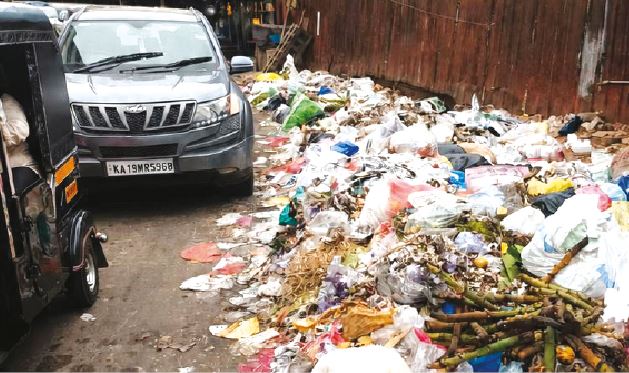
Plastic waste everywhere: Citizens demand strict fines and accountability
Mangaluru
As the monsoon clouds gather over coastal Karnataka, hundreds of volunteers, students, civic workers and environmental activists are once again stepping out to clean drains, riverbanks, beaches and public spaces. Yet a troubling question continues to haunt those engaged in these efforts: why are the same locations filled with plastic waste year after year despite countless awareness campaigns and cleanup drives? Across Dakshina Kannada district, indiscriminate dumping of plastic waste remains a persistent problem.
Roadsides, vacant plots, streams, stormwater drains and public spaces continue to serve as unofficial dumping grounds, creating environmental hazards and increasing the risk of flooding during the rainy season. Environmentalists say the issue has moved beyond awareness and now demands strict enforcement. Citizens are increasingly calling upon the district administration to impose heavier penalties, increase surveillance at dumping hotspots and hold offenders accountable. Among those who have witnessed the problem firsthand for more than a decade is Vivek Alva, Trustee of Alva’s Education Trust, Moodbidri.
For the past 12 years, Alva and hundreds of students have been participating in annual drives aimed at preventing plastic waste from entering the sea. “What we throw away eventually comes back to us,” he says, emphasizing the direct connection between irresponsible waste disposal and environmental degradation. Every year before the monsoon, volunteers fan out across the Bengre, Kasba and Sasihithlu estuaries, the sensitive ecological zones where rivers merge with the Arabian Sea. Their mission is simple but challenging: collect as much plastic waste as possible before swollen rivers carry it into the marine ecosystem.
The quantity of waste recovered is staggering. Tonnes of plastic bottles, carry bags, food packaging, footwear, thermocol and other non-biodegradable materials are removed annually from these estuaries. Yet the following year, volunteers return to find the same locations littered once again. “The saddest part is that despite years of awareness campaigns and cleanup drives, the volume of waste has not reduced significantly. We continue to collect truckloads of plastic every year.
That clearly shows the problem lies not in cleanup efforts but in public behaviour,” Alva says. He also points to neighbouring Udupi district, where local bodies have actively imposed fines on those found dumping waste in public places. “Udupi has shown that enforcement is possible. Fines are being imposed and people are becoming more conscious about waste disposal. The question many citizens are asking is why Dakshina Kannada has not adopted a similarly strong approach,” he observes.
The issue is particularly visible during the monsoon when plastic waste dumped in towns and villages is carried through drains, streams and rivers before reaching estuaries and eventually the sea. Environmentalists warn that the impact extends far beyond aesthetics, affecting marine life, fisheries, biodiversity and even human health through microplastic contamination. While educational institutions, youth groups, NGOs, Rotary clubs and environmental organizations continue to conduct cleanup drives, many citizens believe voluntary efforts alone cannot solve the problem.
A comparison often drawn by environmentalists is with neighbouring Goa, where waste management regulations are enforced far more rigorously. Anil HT from Madikeri, who recently visited Goa, says the difference is immediately noticeable. “Drivers carrying tourists are extremely careful about maintaining cleanliness. Many of them warn passengers not to throw waste outside the vehicle and keep collection bags inside the vehicle for garbage. The fear of fines and strict enforcement has created a culture of responsibility,” he explains. According to him, littering in public places attracts swift action, making people think twice before violating the rules. “In Goa, people fear the consequences.
Here, unfortunately, many people feel they can throw waste anywhere without being questioned. We often see people collecting waste only to dump it elsewhere on the roadside. That mindset has to change,” he says. Public frustration over the issue recently found expression on social media when a strongly worded post demanding immediate action against violators gained widespread attention. The post called upon authorities to either begin imposing meaningful fines on offenders or step aside for those willing to take decisive action. The message resonated with many citizens who are increasingly tired of seeing public resources repeatedly spent cleaning the same locations.
Recent reports indicate that fines are being collected in certain gram panchayats for violations related to waste management and improper disposal. However, activists argue that enforcement remains inconsistent and insufficient to create a real deterrent. A recent multi-departmental meeting convened in Moodbidri taluk discussed the growing challenge of plastic waste and illegal dumping. Representatives from various government departments reviewed the issue and explored coordinated measures including stricter enforcement, monitoring of dumping hotspots, improved waste management practices and greater public participation.
Alva views the discussions positively and hopes they will lead to action on the ground. “Multiple departments coming together to discuss the issue is encouraging. If the decisions are implemented effectively and consistently, it can become the starting point of a real solution,” he says. Environmental experts warn that plastic waste is no longer merely a cleanliness issue. Clogged drains contribute to flooding, stagnant water creates breeding grounds for disease-carrying mosquitoes and plastic entering rivers and seas threatens fragile ecosystems. The environmental and economic costs are ultimately borne by society as a whole.
As Dakshina Kannada prepares for another monsoon, citizens say awareness campaigns must be backed by visible enforcement. Volunteers may continue removing tonnes of plastic from rivers, beaches and estuaries every year, but unless those responsible for dumping waste are identified and penalized, the cycle is unlikely to end. For many environmentalists, the solution is no longer another cleanup drive but a clear message that littering and illegal dumping will carry consequences. Until then, the same volunteers will continue returning to the same locations, collecting the same plastic waste and asking the same question year after year.

.jpg)

.jpg)