.jpg)


.jpg)

 English daily published in Bengaluru & Doha

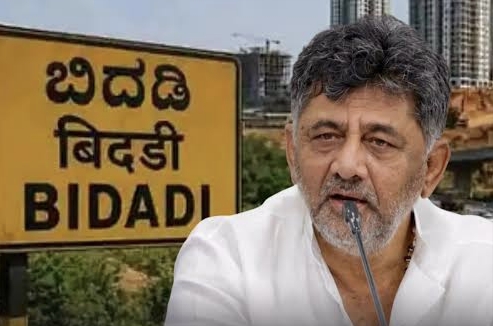
Bidadi Township, recipe for city-centric growth
It seems the Bidadi township idea is now unstoppable and the government is no mood to resile from its stand. As per the blueprint, the Greater Bengaluru Development authority (GBDA) is going ahead with its plan to build the Bidadi Smart City which has now been rebranded as Greater Bengaluru Integrated Township (GBIT), a project resurrected from 2006 files. Lure of handsome amount together with some parcel of the developed plots being promised to the farmers in lieu of their land, has almost won the majority of them to agree to the proposal. As per the plan, the GBDA will acquire over 7,400 acres across nine villages to build India’s first AI-powered Work-Live-Play city.
The farmers’ argument that the live stock owners are a source of six lakhs litres of milk daily for the dairies supplying milk to Bengaluru and around two lakh coconut trees would be cut down, simply lack the force to roll back the official plans. Even the proposal to hold a referendum among the land-losing farmers fails to gain the traction among the main stakeholders, again the farmers. Of the 7,400 acres demarcated for the notification for acquisition by the GBDA, the Government already owns 830 acres. The promise of compensation— starting from around Rs. 2 cr. to Rs. 2.7 cr per acre is too salivating for the households, to resist and refuse the offer. Furthermore, if not the farmers, their younger descendants are either too enamoured or dependant on urban occupations to be wooed back to tilling of land or rearing the livestock.
Given these premise, the project is all but a fait accompli. Yet there are questions that elude answers. Firstly, should Bengaluru continue to be developed regardless of the degraded quality of life it offers to the majority of its denizens? It is long since it lost its Green city tag. The latest to strike at the city’s reputation is the Tom Tom Traffic Index which rates Bengaluru as the second most congested city after Mexico City. It has ‘progressed’ in rating from 6th most congested city in 2023 and third in 2024. Statistics suggest that piped water reaches only 42% of its inhabitants. Others have to rely upon tanker water mafia or borewells where the water table is dipping to unfathomable depths. While the city still has fewer slums—413 to 597 declared and notified ones with roughly 6 to 10 lakh people residing there—satellite mapping reveals existence of 2,000 in formal settlements accounting for roughly 16 to 20 per cent of city’s people.
If they were to be believed, there is looming spectre of more finding themselves in slum condition, given the scarcity of affordable dwellings. Secondly, what happened to the promise of developing other hubs of economic growth such as Chitradurga, Haveri, Harihar, Hassan or Shivamogga. Should this ‘city of future’ be the “be all and end all” of the Karnataka’s economic development story? Thirdly, with satellite towns of yore such as Whitefield, Yelahanka and Kengeri having fused into the solid urban megalopolis that Bengaluru has become while contributing over 50 percent of the State’s GDP, what guarantee is there that the new initiatives such as GBIT and renaming of Tumkur as Northern Bengaluru wouldn’t ultimately lead the authorities to turn a blind eye to equitable growth of all regions?
.jpg)
.jpg)
.jpg)
.jpg)
.jpg)
.jpg)