.jpg)


.jpg)

 English daily published in Bengaluru & Doha

Tackling the drought
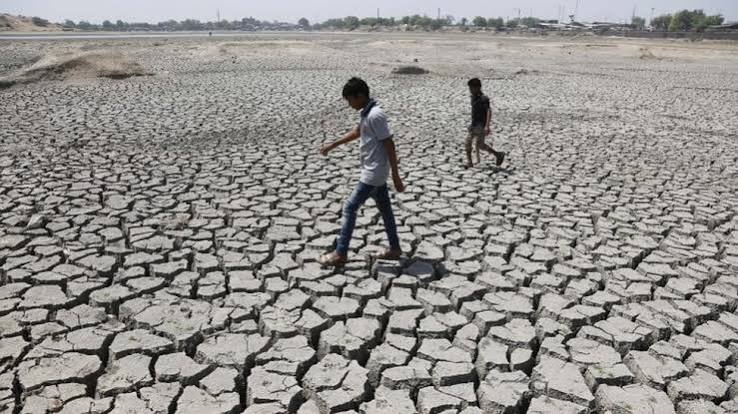
The state of Karnataka faces a severe drought in the wake of severely deficient rainfall this year. Official reports indicate that a little over half of the state’s 236 taluks are facing drought due to inadequate rainfall. While the state should have received 144 mm of rainfall during the early 25 days of the Southwest Monsoon over the state, it has received merely 83 mm.
The dreadful spectre of super El-Nino looms large as the Indian Meteorological Department has predicted only 92% of the average annual precipitation. True to what has been predicted, the state of Karnataka has had 43% deficient rainfall. If the monsoon continues to play truant during the remaining days of the rainy season, drought would become a certainty.
While the government would be keeping its fingers crossed over the days ahead, the administration must initiate steps to tackle the drinking water scarcity which is likely to hit a wide spectrum of sectors. Reports indicate that major reservoirs such as Kabini and Harangi which are the initial recipients of rain inflows from the Western Ghats, are running dry.
Krishnaraja Sagar Dam, the main source of drinking water for Bengaluru metropolitan area, has just about onefourth of its storage capacity—3,011 tmc feet against 11.390 tmc feet and the water level stands at 80 feet against the full reservoir level of 124 feet.
The total live storage across the four major reservoirs in Cauvery basin stands at an alarmingly low 15.769 tmc feet which constitutes approximately 13.7 % of their total combined capacity Impact of the low storages is all likely to trigger drinking water crisis in major cities of the Cauvery basin such as Mysuru and Bengaluru. Distr ibut ion through irrigation canals comes next.
The government may have to issue a directive to reduce use of water in non-essential sectors such as construction in order to prioritise supplies of water for drinking and for livestock. The impact on hydroelectric production is yet to be assessed. It is pertinent to remember that 70% of the state’s power comes from hydel reservoirs.
While the government has taken up supply of water through tankers to scarcity-hit villages and has also hired private borewells in 669 severely affected villages, it needs to question itself if it needs to go ahead with projects like the Bidadi township which would only aggravate the situation with water requirement in the Cauvery basin already overstretched. It will also be in order for the administration to advise farmers to avoid excessive planting of water-intensive crops such as paddy and sugarcane.
Amid all the brouhaha over drought, the meeting of the chief ministers of three states to jointly inaugurate the newly installed crest gates of 33 spillways of Tungabhadra Dam in Koppal district should bring cheer to inhabitants of the Deccan Plateau. Such bonhomie over sharing of water resources in the region augurs well for the states ahead of the peak monsoon.
.jpg)
.jpg)
.jpg)
.jpg)
.jpg)
.jpg)