.jpg)


.jpg)

 English daily published in Bengaluru & Doha


Hubballi-Dharwad to convert garbage into fuel as Rs 157 crore project nears completion
Hubballi,
The mounting mounds of garbage at the Hubballi and Dharwad dump yards, which have long been an eyesore and an environmental hazard, are set to be eliminated with the implementation of a massive Waste-to-Energy project. Spearheaded by the National Thermal Power Corporation (NTPC) through its subsidiary Vidyut Vyapar Nigam Ltd (NVVN), a Rs 157 crore processing plant is nearing full operational capacity and is scheduled for a complete launch by January 2027.
Union Minister Pralhad Joshi, who then was the minister for coal, took an interest in this initiative, inspired by a similar successful model in Varanasi championed by the Prime Minister, aims to convert dry municipal solid waste into usable charcoal. The plant, sprawling across an eight-acre site boasts the capacity to process 200 tonnes of dry waste per day. On Friday, Union Minister Joshi visited the spot and inspected the facility. In a recent 72-hour trial run, the facility successfully produced 250 tonnes of charcoal.
The process involves segregating the dry waste including non-biodegradable plastics cleaning it of soil and dust, removing moisture, and subsequently heating and pulverizing it to create briquettes. These briquettes will then be supplied to thermal power plants to be Hubballi. The mounting mounds of garbage at the Hubballi and Dharwad dump yards, which have long been an eyesore and an environmental hazard, are set to be eliminated with the implementation of a massive Waste-to-Energy project. Spearheaded by the National Thermal Power Corporation (NTPC) through its subsidiary Vidyut Vyapar Nigam Ltd (NVVN), a Rs 157 crore processing plant is nearing full operational capacity and is scheduled for a complete launch by January 2027.
Union Minister Pralhad Joshi, who then was the minister for coal, took an interest in this initiative, inspired by a similar successful model in Varanasi championed by the Prime Minister, aims to convert dry municipal solid waste into usable charcoal. The plant, sprawling across an eight-acre site, co-fired with coal for electricity generation. Notably, the plant is highly energy-efficient.
While it requires external electricity for the initial processing cycle, it subsequently captures the combustible gases generated during the heating process to fuel its own operations. As a result, the facility relies on the external power grid for only 20% of its energy needs, utilizing its own generated gas for the remaining 80%. The Hubballi-Dharwad Municipal Corporation (HDMC) will supply the waste to the plant free of cost.
The project is expected to yield multiple civic and economic benefits, including the generation of over 200 local jobs. Furthermore, it will save the HDMC approximately Rs 11 crore annually in dump yard maintenance costs, prevent the frequent fire outbreaks at the dumping sites, and eliminate the risk of heavy penalties from the Pollution Control Board and the National Green Tribunal.
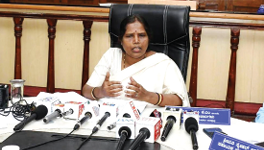
Joshi while addressing media said, to address wet waste, an agreement has been reached with the Bharat Petroleum Corporation Limited (BPCL). BPCL is setting up a dedicated gas production unit in Dharwad that will process 150 tonnes of wet waste daily, ensuring a comprehensive, sustainable waste management ecosystem for the twin cities. The union minister said, it was first implemented in the Prime Minister’s Varanasi constituency, and I also expressed an interest that similar kind of facility should also be set up here and later it was approved but finding a suitable land for the project consumed lots of time.
However, the plant has completed the trial run and the operations are all set start by January 2027. Speaking to News Trail, Vijaykumar R, Deputy Commissioner (Dev), HDMC said, HDMC has provided the land and the facility operates on a Build, Own, Operate (BOO) model for a 30-year period. "The HDMC's responsibility is solely to provide the land, supply 25,000 liters of water daily, and ensure the doorstep delivery of 160 tonnes of dry waste every day.
The operator is completely responsible for running the plant, managing labor, and paying utility bills for the next three decades." The twin cities currently generate between 600 to 650 tonnes of waste daily. Using a fleet of over waste, the HDMC has optimized auto-tipper vehicles. 400 vehicles, the HDMC will identify and collect high-calorific-value dry waste—approximately 250 to 280 tonnes—and transport it directly to the new facility, he said.
Beyond producing renewable energy, the plant will directly resolve one of the twin cities' most pressing environmental hazards: landfill fires. Refuse-Derived Fuel (RDF) and dry waste in local landfills have historically been highly susceptible to catching fire, releasing toxic fumes into surrounding neighborhoods. By continuously diverting dry waste directly from compactor stations to the new plant, the HDMC aims to permanently end these fire hazards, said Vijaykumar.
.jpg)
.jpg)