.jpg)


.jpg)

 English daily published in Bengaluru & Doha

The slow death of open public spaces
Bengaluru
Bengaluru has struck a deal with the devil by sacrificing its public recreational spaces for developmental gains. Parks, playgrounds, and open spaces have steadily given way to concrete and infrastructure projects. Yet, the city continues down the same path, trading away the very spaces that allow its people to breathe, all in the name of progress.
"Civic amenities are a constitutional entitlement. Every area is expected to earmark at least 20% of its land for civic amenities such as playgrounds, children's parks, community gathering spaces and exercise areas. These provisions are clearly laid down in local bylaws, but they are rarely implemented as intended”, said Priya Chetty Rajagopal of Heritage Beku.
She said several studies have documented Bengaluru's shrinking green cover and expanding built-up areas, calling the transformation "a massive blow" when compared with the city's landscape in the 1970s. "People need places to live, but they also need space to breathe. As the city continues to grow at an exponential pace with little room left to expand, it is up to citizens to stand up and say, 'You cannot keep doing this.' The loss of open spaces often goes unnoticed because it happens gradually, with encroachments creeping in bit by bit", she said.
Nawaz (name changed), a long-time Bengaluru resident, said he has witnessed large playgrounds where children once played and socialised being replaced by concrete developments. "Playgrounds once fostered camaraderie among children and helped build a strong sense of community. Today, many youngsters spend their leisure time at pickleball courts, gyms or cafés.
Recreational spaces have become increasingly commercialised, and meaningful community interaction is declining, with only the elite able to afford many of these spaces”, he said. He recalled that the site where the current Doordarshan Kendra stands was once a bustling football ground.
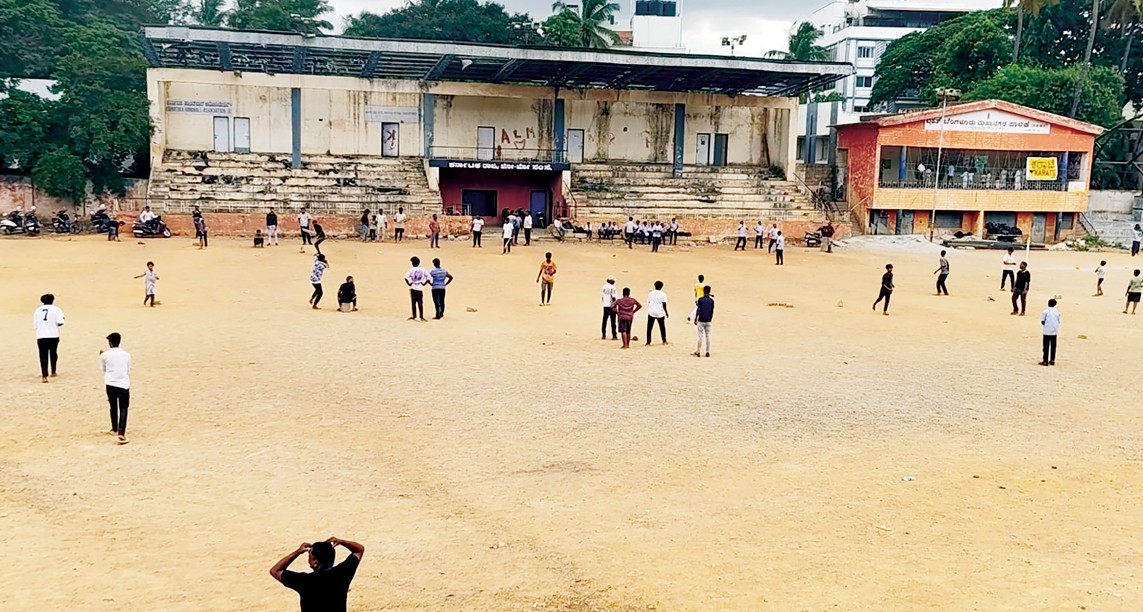
Similarly, the Government School playground in Pottery Town, the Shivajinagar Stadium also known as 'Chota Maidan' and the playground on Haines Road in Shivajinagar were all public recreational spaces that have since been taken over for government development projects, he said.
Paid subscription of playgrounds
Concretisation of public spaces and the growing commercialisation of recreational facilities are making it increasingly difficult for citizens to access free spaces for leisure, exercise and community interaction. Open grounds have traditionally served as inclusive spaces where communities gather, children play freely, and people of all ages can walk, relax and socialise without financial or infrastructural barriers.
However, residents and urban experts say these spaces are rapidly disappearing. "Earlier, there was limited infrastructure, but there were vast open playgrounds. Today, everything has become commercialised. Ensuring children have access to free public play spaces is essential”, said Vinod Jacob, urban strategist and environmentalist.
He pointed out that many playgrounds are being converted into paid sports arenas. "Open playgrounds are often the only places where children from economically weaker backgrounds can play without paying. These public spaces must be preserved for everyone instead of being commercialised into exclusive arenas”, he said.
The shrinking number of playgrounds, coupled with poor maintenance of existing ones, often forces children to play on streets, exposing them to traffic hazards while also posing risks to commuters and pedestrians. "When children do not have safe spaces to play, they risk becoming socially isolated and increasingly dependent on electronic gadgets”, a resident said.



.jpg)
