.jpg)


.jpg)

 English daily published in Bengaluru & Doha

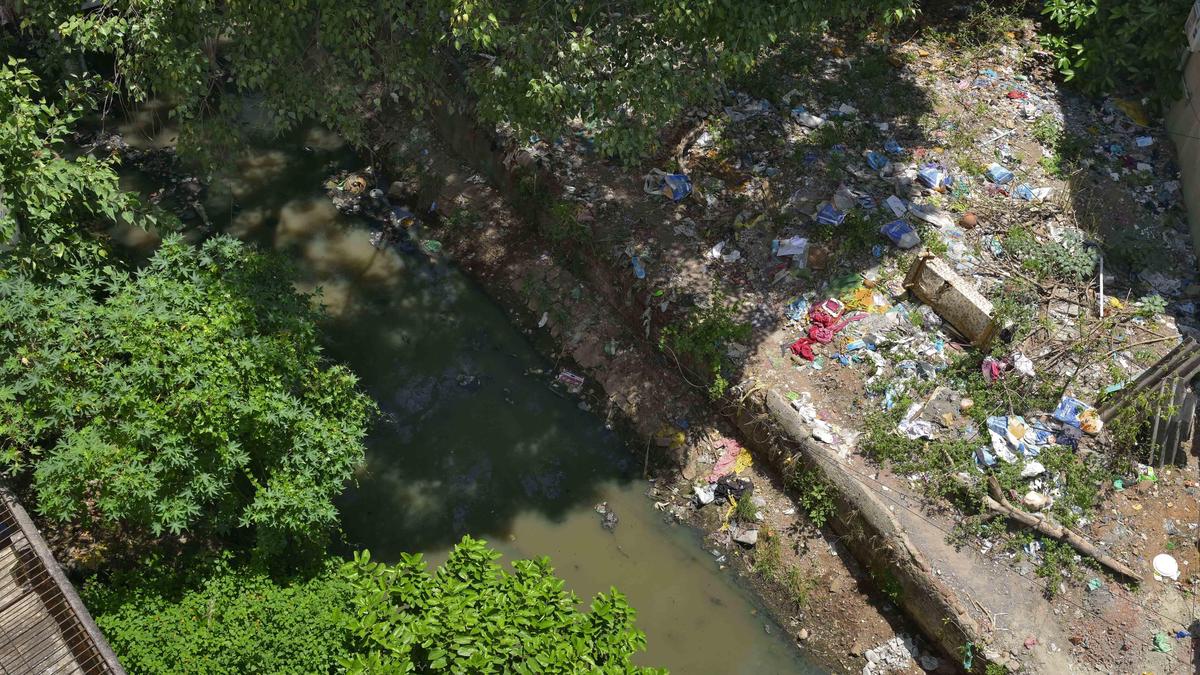
Sewage in storm-water drains raises stink in M'luru
Mangaluru
What was built to protect Mangaluru from urban flooding has now become the centre of a growing environmental controversy Residents of Vamanjoor have alleged that newly constructed stormwater drains along NH-169 are being misused to carry untreated sewage from apartments and commercial establishments, raising serious questions about civic oversight, environmental safety and public health. The anger among residents is unmistakable.
Over the past several weeks, written complaints have reached the offices of the Deputy Commissioner, Mangaluru City Corporation (MCC), Karnataka State Pollution Control Board (KSPCB), the National Highways Authority of India (NHAI) and other government agencies. Citizens say they are tired of watching infrastructure created with public money for flood mitigation being transformed into an open sewage channel. "It is painful to see this happening before our eyes," says local resident Dhananjaya Suvarna, who has been actively pursuing the issue.
"A stormwater drain is constructed to carry rainwater. Instead, untreated sewage is being allowed to flow into it. If authorities permit this today, tomorrow every stormwater drain in the city could become a sewer line. This is not development; it is the misuse of public infrastructure." Residents say the issue goes far beyond the foul smell that now hangs over the locality. The stormwater drain eventually joins the natural drainage net work before flowing into the Phalguni (Gurupura) River, a vital source supporting drinking water schemes in several downstream villages.
They fear that untreated sewage entering the river could eventually contaminate water sources, harm aquatic life and create long-term environmental damage that may not be immediately visible. Another major concern is the impact on flood management itself. Storm water drains are designed to rapidly discharge rain water during heavy down pours. When these drains are continuously used to carry sewage, they accumulate sludge, grease and solid waste, reducing their carrying capacity.
Residents fear that when intense monsoon rains arrive, these very drains may overflow, leading to flooding of roads, homes and commercial establishments. "The city spends crores on flood mitigation projects, but if stormwater drains are converted into sewage channels, what is the purpose of these investments?" asks Suvarna. "When the rains come, the public will once again pay the price for administrative negligence." Residents have also questioned whether apartment complexes have functional sewage treatment plants and whether wastewater disposal systems were verified before occupancy certificates and other approvals were granted.
They argue that illegal sewage connections could not have appeared overnight and demand accountability from every department responsible for monitoring urban infrastructure. According to local residents, repeated representations have yielded little visible action. This has only deepened frustration and eroded public confidence in the enforcement mechanisms of civic agencies. Several residents are now considering pursuing legal remedies if immediate corrective measures are not taken.
Following mounting public pressure, Mangaluru North MLA Dr. Bharath Shetty inspected the site along with officials from the Mangaluru City Corporation and other departments. During the inspection, he directed officials to identify illegal sewage connections, issue notices to violators and ensure that wastewater is disposed of only through authorised treatment systems. Residents have welcomed the inspection but insist that the real test lies in sustained enforcement rather than one-time visits.
The Vamanjoor episode exposes a larger urban challenge confronting Mangaluru. As the city expands with wider highways, apartment complexes and commercial developments, infrastructure planning must go hand in hand with strict environmental compliance. A stormwater drain and a sewage line serve entirely different purposes, and blurring that distinction undermines years of planning and significant public investment. For the people of Vamanjoor, this is not about one drain or one neighbourhood.
It is about protecting rivers, safeguarding public health and ensuring that taxpayers' money is not wasted through negligence and poorenforcement. Their message is clear - stormwater drains must remain stormwater drains. If illegal sewage connections are ignored today, the city risks turning one of its flood-control solutions into yet another environmental crisis.
.jpg)

.jpg)