.jpg)


.jpg)

 English daily published in Bengaluru & Doha

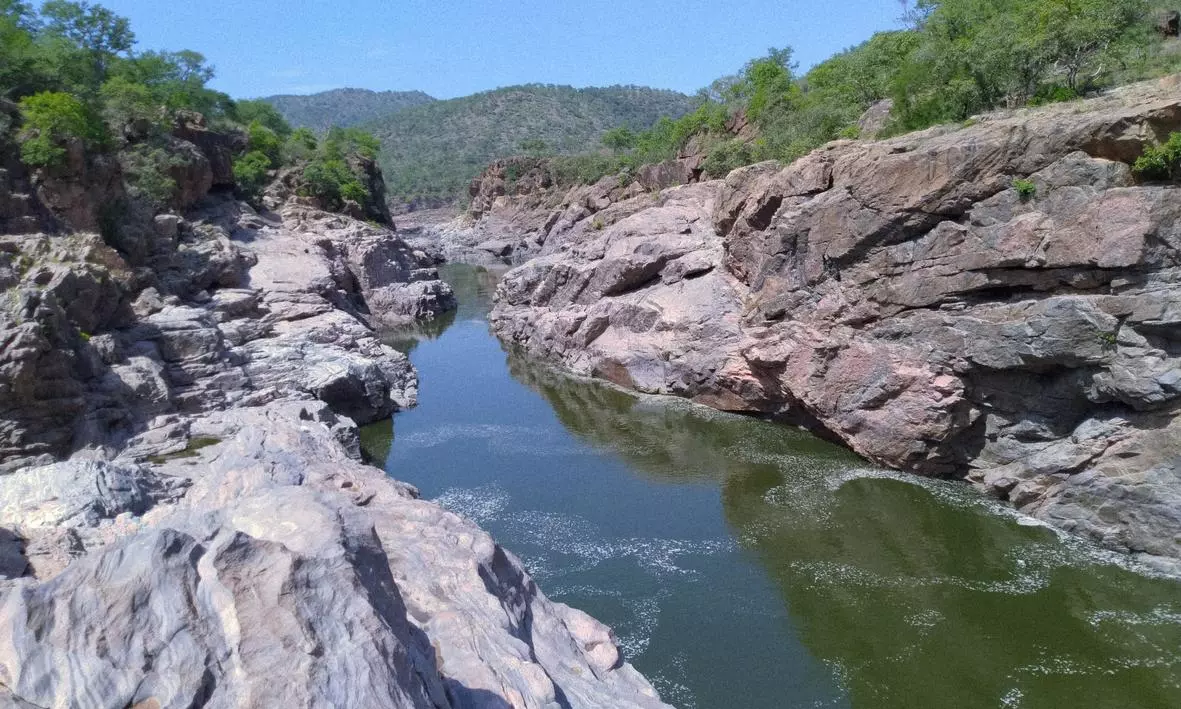
K’taka within its right to build Mekedatu project
Karnataka’s proposal to construct the Mekedatu balancing reservoir has long been a thorny issue with Tamil Nadu, often leading to clashes over share of water of the Cauvery River. Historically, Tamil Nadu used about 602 thousand million cubic feet (TMC) of the total yield of the Cauvery River and in 1924, it signed an agreement with Karnataka, effective for 50 years. On the insistence of Tamil Nadu, the Cauvery Water Disputes Tribunal (CWDT) was formed in 1990 by the Union government. Recently, Tamil Nadu Chief Minister C Joseph Vijay has sought Prime Minister Modi’s intervention to ensure that no statutory or administrative approval is granted to Karnataka’s proposed Mekedatu project unless it is consistent with the Tribunal’s 2007 award and the Supreme Court’s 2018 judgment on the sharing of the river’s waters.
The letter was perhaps prompted the Ministry of Jal Shakti’s Parliament reply on July 27, which stated that the Supreme Court’s judgment of February 16, 2018, “does not expressly stipulate that Karnataka should obtain the consent of the lower riparian States before constructing a structure across the River Cauvery”. In his letter to Modi, Vijay invoked Clause XI of the Cauvery Tri bunal Award which states: “Any upper riparian State shall not take any action so as to affect the scheduled deliveries of water to the lower riparian States”.
The tribunal passed its order on February 5, 2007 in which of the 740 TMC of water available for utilisation, 419 TMC was awarded to Tamil Nadu, and 270 TMC to Karnataka. Karnataka opposed the verdict and filed a petition in the Supreme Court claiming 312 TMC of water. The Supreme Court increased Karnataka’s share of the Cauvery waters to 284.75 TMC. In the verdict, the three-judge bench of the Supreme Court underlined that the drinking water requirement of Karnataka has to be placed on a higher pedestal.
Tamil Nadu says that increased upstream storage could enable Karnataka to regulate flows in a manner detrimental to downstream releases during dry years. Karnataka, however, has clarified that Mekedatu is intended primarily as a balancing reservoir for supplying drinking water to Bengaluru, replenishing the regional groundwater table and generating hydropower. Karnataka maintains that the project within its territory will benefit both states, as the surplus water stored can be managed between the two during a distress year.
The Karnataka government has submitted the detailed project report to the Union government. Only after clearance from the Union Ministry of Environment, Forest, and Climate Change, the Union Ministry of Jal Shakti and Forest Ministry green signal, it will be able to proceed withe the project whihc is crucial to meet the water needs of Bengaluru. So, Karnataka is within its right to implement the project and Tamil Nadu is prematurely jumping to conclusions, pandering to poular sentiment in that state.
.jpg)
.jpg)
.jpg)
.jpg)
.jpg)
.jpg)