.jpg)


.jpg)

 English daily published in Bengaluru & Doha

Narrative control has its limits
Narrative control has been the most distinctive feature of the government led by Prime Minis ter Narendra Modi during the last 12 year. While keeping himself scrupulously away from unscripted interviews, the dispensation he presides has ensured that the print and television news no longer provoke the government in a major way. While a majority of the media organisations and TV channels opted for co optation, the ones refusing to sacrifice their indepen dence were bought over by the corporate houses close to the power that be. Yet others are subjected to legal pressures, income tax raids and restriction of access to news sources within the government.
No wonder why India’s standing has dropped to 157th on World Press Freedom Index 2026, slipping six places from the one in 2025. Of late, it has been focusing upon controlling the digital media, including social media. It was not long ago that Cockroach Janta Party leader Abhijit Dipke com plained of his Instagram account being hacked. The news channels in the national capital were instruct ed not to give publicity to CJP. The media corridors in Delhi are abuzz of being warned against publishing Rahul Gandhi’s pho tographs along with reports of crackdown on protestors at Jantar Mantar on July 20. These instances essentially raise the question as to why Modi dispensation gets rattled by the students’ protests and their public ity in the media.
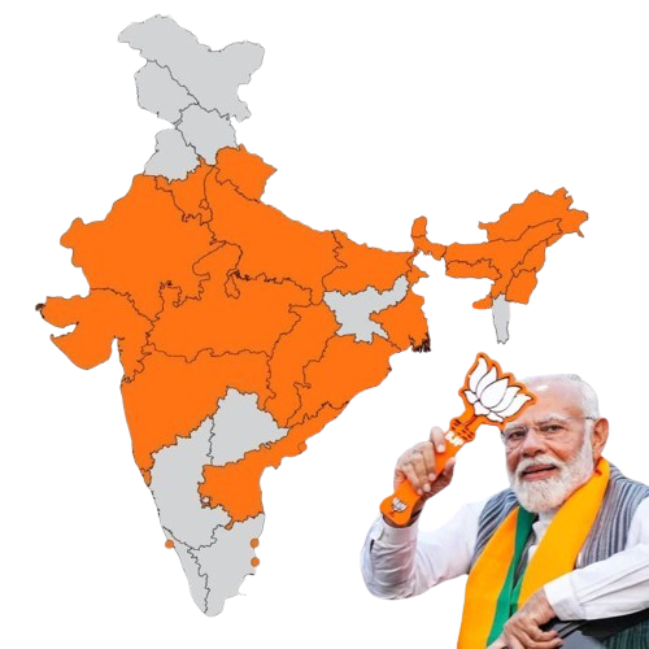
Why should a govern ment that has won elections after elec tion, has finished the electoral challengers one by one, is ruling 21 of the 28 states, is led by a larger than life figure of a charismatic leader is so afraid of an organization which lays no claim to political lead ership. Why a government which has finished all the political challengers one by one, ruling in 21 of the 29 states, led by a larger than life, charismatic figures, has won elec tion after election, is so afraid of a group which has only an online presence and lays no claim to political lead ership? Why it is so worried with emerging narrative on administrative incompetence in the wake of exam paper leaks.
Obviously this government’s power is heavily dependent on narrative control. It has simultaneously been aggressively marketing the achievements and burying its failures.Youth angst matters a lot as of today. For many the frustration has turned into cynicism. They feel they re main unseen except elections and unheard during normal times. Memes floated by thousands of those fond of Cockroach Janta Party have assumed the language of protest. A viral joke by the protestors carries more meaning with youth than a hundred press conferences by the Opposition leaders. The issues raised by the CJP activists are finding resonance among the hoi polloi.
Unemployment, paper leaks, corruption, incompe tence and the political defections and the common perception that the system works only for those who have wealth and power form the crux of the grouse of the GenZ. The movement that appears juvenile at its best and chaotic at its worst, has tapped into anger of the people effectively which conventional politics had failed to address. The 40-day protest at the Jantar Mantar has shown that narrative control has destroyed the credibility of the mainstream media—both print and the televi sion—and the popular frustration is finding alternative vents for expression. Narrative control has its limits. It has been shown that those limits have been breached.
.jpg)
.jpg)
.jpg)
.jpg)
.jpg)
.jpg)