.jpg)


.jpg)

 English daily published in Bengaluru & Doha

Greens flag ecological cost of Hebbal tunnel
Bengaluru
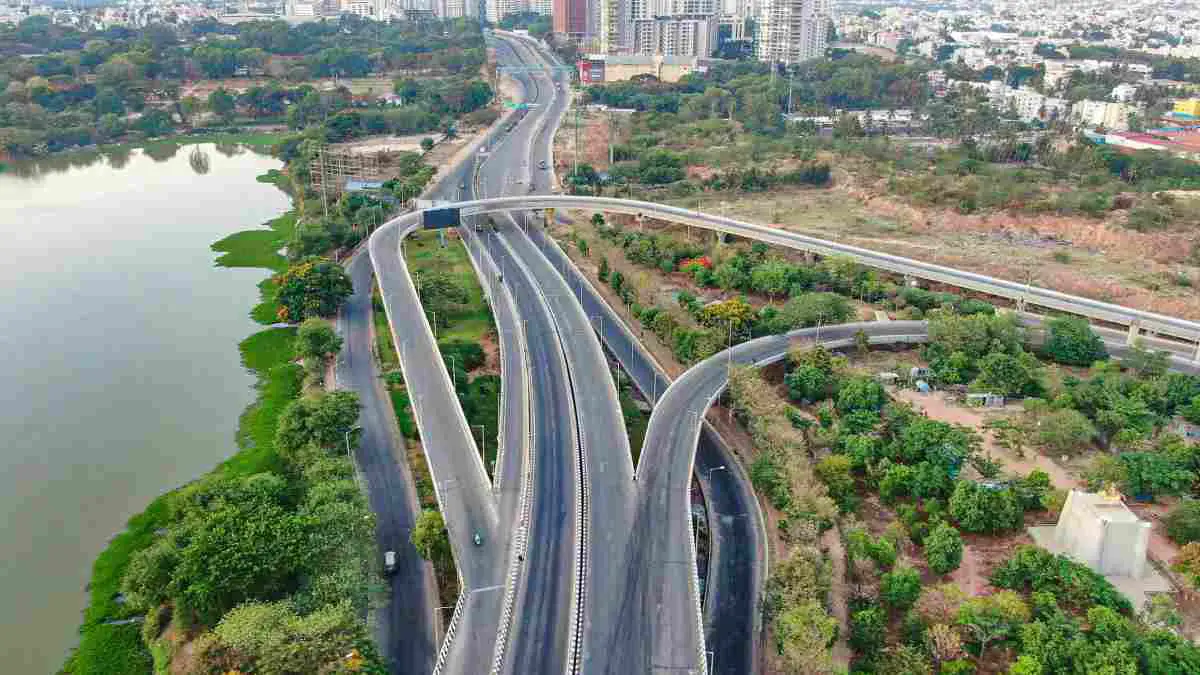
The Rs 1,140-crore Hebbal Short Tunnel Project, proposed to ease severe traffic congestion at North Bengaluru’s Hebbal Junction, has become the centre of a growing debate over in frastructure development without adequate scientific assessment. Environmentalists and citizens have raised concerns about the project’s potential ecological impact, including possible disturbance to the 150-acre lakebed of Hebbal Lake and the proposed felling of nearly 893 trees, and have filed petitions challenging the project.
On Thursday, during the hearing of a public interest litigation (PIL) filed by concerned citizens, the High Court directed the State government to submit an affidavit within 10 days clarifying whether any scientific study had been conducted before the approval of the project to assess the ecological impact of the proposed short tunnel project on Hebbal Lake.
“I welcome the observations made by the bench, as it has taken note of the potential environmental damage that could arise from the proposed short Hebbal tunnel. The government will now have to file an affidavit and state whether any environmental impact study has been conducted or not.
However, there is still a possibility that it may try to avoid a detailed assessment,” said Dattatraya T Devare, Trustee, Bangalore Environment Trust. He urged the High Court not to accept the government’s affidavit at face value. “If the bench subjects the affidavit to proper scrutiny, there is still some hope,” he said.
Environmentalist Alexander James said Hebbal Lake is one of Bengaluru’s oldest and largest lakes, and projects such as the Hebbal Tunnel and proposed Metro works could disrupt the lake’s ecology and affect surrounding trees. “The city may need solutions for traffic congestion, but drilling a tunnel beneath the lake is not something we, as ecologists, would advise,” he said.
James stressed that alternative measures should be explored to ease congestion at Hebbal Junction. “Traffic flow can be realigned and managed through other interventions,” he added. He also said that he and several other citizens have been working to raise awareness through signature campaigns and public outreach efforts.
“If the project eventually receives clearance, it would be a disaster from an ecological perspective,” he warned. “To decongest Bengaluru, and Hebbal in particular, is certainly necessary, but a tunnel is not the only solution,” said Umesh Gowda, a resident of Jakkur. He suggested that extending the existing Hebbal flyover could have been consid ered as an alternative.
Gowda further said that the government appears to be treating the project as a prototype for future tunnel projects in the city. “We do not yet know what the long-term repercus sions will be once this project is completed,” he said.




.jpg)
