.jpg)


.jpg)

 English daily published in Bengaluru & Doha

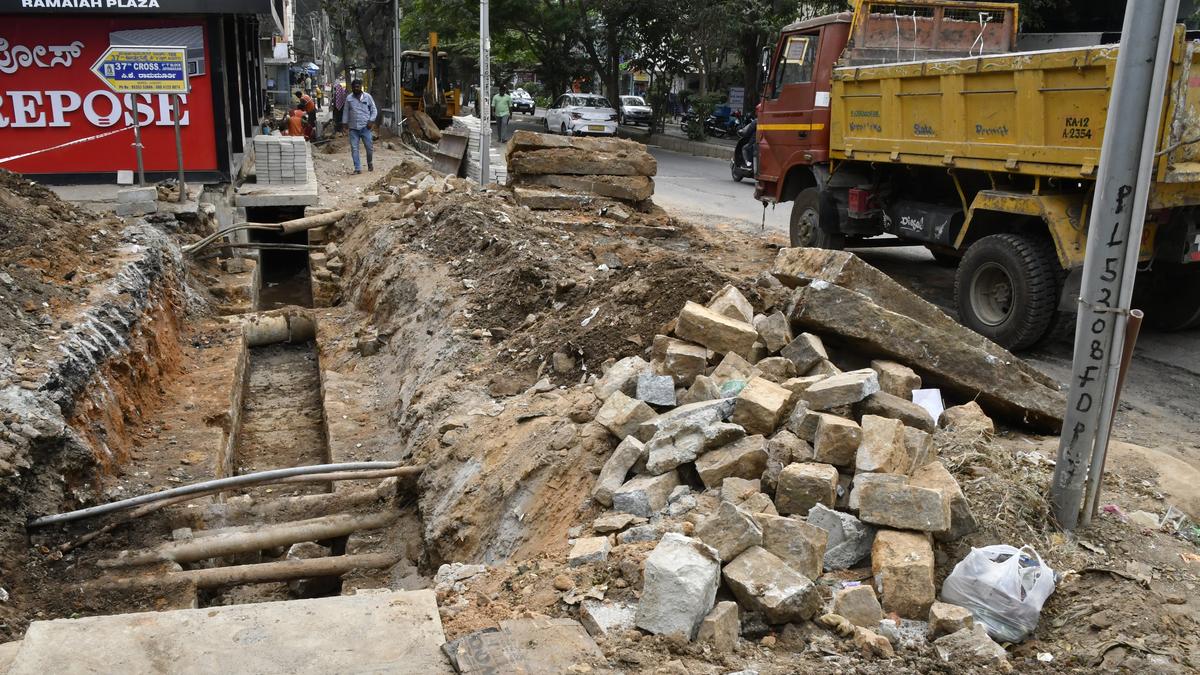
Bengaluru now infamous for deaths due to civic apathy
Bengaluru holds an infamous record for six consecutive years now; it recorded the highest number of deaths due to civic negligence among metropolitan cities in India. The city faces intense scrutiny over public infrastructure safety, with reports highlighting recurring civic negligence fatalities, construction accidents, and near-misses due to falling metal sheets, trees, unmanaged potholes, exposed or dangling electricity cables, and open or crumbling drains, on busy transit corridors.
Rapid urbanization and mass transit expansions have severely strained oversight and safety enforcement. High profile incidents ranging from collapsed scaffolding and viaduct components to recent accidents like soil wall cave-ins at underpass sites have raised alarm regarding contractor accountability and adherence to safety protocols. Bengaluru reported 17 deaths due to negligence of civic agencies in 2024, the sixth straight year that it topped metro cities in such incidents, as per the National Crime Records Bureau (NCRB) report.
While safety takes the spotlight, it’s hard not to notice how other things are compounding the issue. Water scarcity is becoming more real. Traffic, waste management, and over crowding are turning Bangalore into a tough place. Bengaluru’s 2025 population was estimated to be around 14 million, an enormous boom from its humble population of 746,000 in 1950, as per United Nation’s World Population Review.
To solve the crisis, the government is undertaking and considering multiple high-profile projects: from a North South tunnel corridor connecting Hebbal and Silk Board junction (two junctions that see severe traffic congestion), and elevated corridors to the ambitious 40.5 km double decker flyover beneath the metro line. But transport and mobility experts opined that most of these projects essentially add more lanes or roads. This makes private vehicle ownership and use more attractive, while congestion worsens.
Not to mention, lack of full-proof safety measures. The risks posed by the metro construction work are amplified many times by the urban environment, with lines located in a complex environment, such as densely populated urban areas surrounded by high-rise buildings and intensive underground pipelines. The occurrences of accidents are often related to the complex geological conditions of metro engineering, the construction environment, the suboptimal level of safety monitoring at the construction site, and other human factors.
However, two significant risks in metro-related accidents are site workers' lack of safety awareness and site safety monitoring. The incidents in Bengaluru are attributed to alleged negligence on the part of the contractor deputed by the Bangalore Metro Rail Corporation Limited (BMRCL). Bottomline is, there is a need for better safety mea sures in any public infrastructure project in and around Bengaluru, and more stricter compliance.



.jpg)

