.jpg)


.jpg)

 English daily published in Bengaluru & Doha

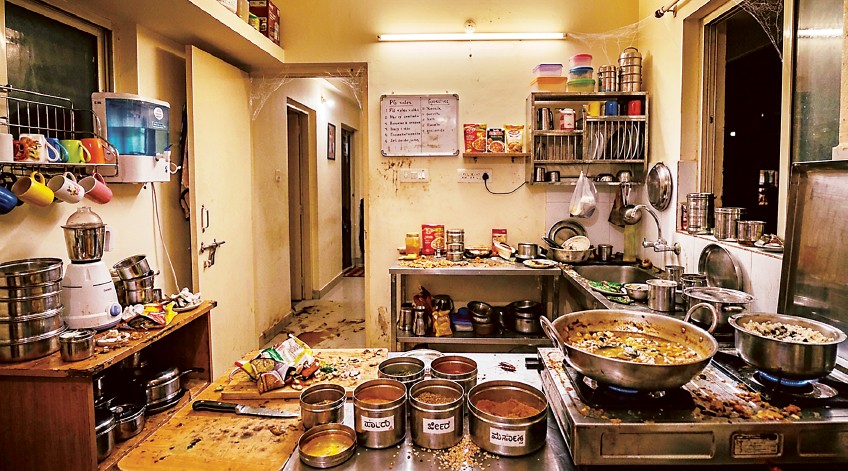
'Cockroaches, preservatives, stale grub' in PGs
Bengaluru
Living away from home is one of the hardest adjustments for many people, and the first thing they often miss is the comfort of home-cooked food. Since most Paying Guest (PG) residents are not permitted to cook in their rooms, they are left with little choice but to blindly trust the food provided to them. While recent food safety inspections by the Karnataka Food Safety and Drug Administration Department have sparked widespread discussion about hygiene violations and the storage of stale food in restaurants and eateries, including five-star establishments, the kitchens of PG accommodations in Bengaluru have largely remained out of the spotlight.
PGs in the city are predominantly occupied by students and working professionals, particularly those employed in the IT sector. Several occupants allege that the meals provided often fall short of basic food safety and hygiene standards, with complaints ranging from undercooked rice and vegetables to unhygienic kitchens to finding hair in the food.
“There used to be a lot of cockroaches in the kitchen. Although we were not allowed to enter, it was clearly visible even from far. After we reported it, they started keeping the kitchen door shut”, said Jeet, a student staying in a paying guest accommodation, referring to a previous PG that he eventually left because of unhygienic conditions and poor-quality food. He added that apart from cockroaches, rats were also spotted in the premises on several occasions.
According to Jeet, the turning point came when cockroaches were found in the food being served to residents. He claimed that despite repeated complaints, little was done to address the issue. “The management kept changing, but nothing really improved. I eventually stopped eating there and moved out", he said, calling for stricter enforcement of food safety regulations and frequent inspections by
authorities.
Low quality, high charges
“Food provided in PGs is often not financially viable. A significant amount is added to the total fee in the name of food, which is a hefty sum for students, especially those who do not come from privileged backgrounds”, said Reuben (name changed), a working professional living in a PG. He shared that he had previously stayed in a PG that offered food and witnessed how the food service was treated more as a source of profit than as a basic necessity.
“The quality assured to us at the time of admission is not what is provided later. Many PGs in college areas maintain good standards at the beginning of the academic year, but the quality drops day by day”, he said. Reuben further alleged that additives or preservatives were sometimes used in rice to make it appear puffier and more filling, causing residents to consume less while feeling full sooner. “That rice is not healthy. Along with carbohydrates, you may also be consuming unnecessary additives”, he said.
He also pointed to the repeated use of cooking oil and leftover oil for several days, an issue that many PG residents frequently complain about.
“As a former student, my friends and I faced several health problems because of poor food safety practices in our PGs. That is why we shifted to a PG that does not provide food. Now I can choose what I eat, cook for myself if I want to, or order from outside and make sure the food I consume is fresh and healthier”, he said.
Neeraj, another working professional, shared a different perspective, saying that his PG, like many others in the city, caters largely to the North Indian population among residents. As a result, the menu is dominated by North Indian dishes such as roti-sabzi, dal, and rice, which may not suit the palate of many South Indian residents.




.jpg)
